Written By | Staff Writer

As a Tororo agribusiness struggles to buy even a sixth of the oilseeds it needs, the raw-material squeeze behind Uganda's edible oil shortfall exposes a decade-long gap between ambition and the farm gate
Agriculture
In a small processing shed in Podut Village, Magola Sub-county, on the edge of Tororo District, a machine operator named Robert Odikor spends his mornings pouring soybean oil into bottles for AgriNet, a local agribusiness that has built its future on turning eastern Uganda's groundnuts and soybeans into cooking oil, animal feed and groundnut paste. It is steady, unglamorous work. But it masks a problem that is quietly bleeding the company and, by extension, the country's ambitions to feed itself.
AgriNet needs roughly 1,444 tonnes of oilseeds a year to run its plant at full capacity. Over the past twelve months, the company has managed to lift its purchases from just 120 tonnes to 240 tonnes — an improvement, but still barely a sixth of what its machines can handle. The gap is not a failure of AgriNet's buyers or its balance sheet. It is a symptom of a shortage that runs the length of Uganda's oilseed economy, from the smallholder plots of Teso and West Nile to the boardrooms of the Ministry of Agriculture, Animal Industry and Fisheries in Entebbe.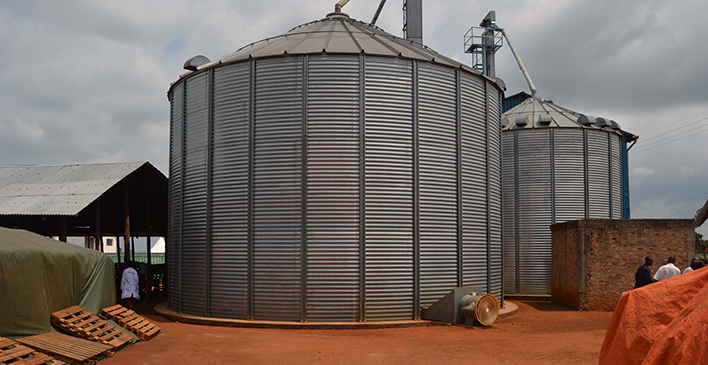
The scale of the national shortfall is stark. Uganda's annual demand for vegetable oil stands at around 450,000 metric tonnes, but domestic production — split roughly evenly between oil palm grown on the islands of Kalangala and Buvuma and the combined output of sunflower, sesame, groundnuts and soybeans grown by hundreds of thousands of smallholder farmers — reaches only about 80,000 metric tonnes. That leaves a deficit of some 370,000 tonnes that must be plugged with imported crude palm oil and refined products, at a cost the country's own agriculture officials have put at roughly $300 million a year in foreign exchange.
It is a bill Uganda has been paying, in one form or another, for more than a decade. The country's mills — there are 112 of them registered nationally — have the theoretical capacity to process far more than they do. Industry estimates put achievable capacity utilisation at around 85 percent; in practice, the sector limps along at closer to 48.8 percent. Put simply, Uganda has built more crushing and refining capacity than its farms currently feed, which is precisely the mismatch playing out at AgriNet's plant in Tororo.
"Poor crop yields and post-harvest losses" are the specific culprits cited for the shortfall reaching processors like AgriNet, and agronomists and industry figures who have studied the sector for years say those two problems are deeply intertwined. Groundnut and soybean yields on smallholder farms in eastern and northern Uganda remain well below their genetic potential, hemmed in by poor-quality seed, limited access to fertiliser, and erratic rainfall that has grown more unpredictable as climate patterns shift. What farmers do manage to harvest is then vulnerable to losses that can strip away a third or more of the crop before it ever reaches a processor's gate — inadequate drying, poor storage, pest damage and, in the case of groundnuts especially, the ever-present risk of aflatoxin contamination from fungi that thrive in humid, badly ventilated stores.
That combination — modest yields further eroded by post-harvest waste — means that even in a reasonably good season, there is simply not enough raw material moving from the farm to the factory floor. Processors are left competing for a shrunken pool of grain, driving up prices for the oilseed that does reach the market while starving mills of the volumes they need to spread their fixed costs. It is a vicious cycle: underused capacity raises the cost of every litre of oil the mills do produce, undercutting their ability to offer farmers the kind of reliable, attractive prices that would encourage more planting in the first place.
Government has not been blind to the problem. In 2021, the Ministry of Agriculture launched the National Oilseeds Project, a seven-year, multi-donor programme scheduled to run through 2028 with the explicit goal of closing the raw-material gap from the farm side. NOSP is targeting 120,000 smallholder households directly, with a further 356,000 households expected to benefit indirectly through improved seed systems, extension services and market linkages, concentrated on the same four crops at the heart of AgriNet's troubles: sunflower, sesame, groundnuts and soybeans. Notably, the project has mandated that 60 percent of its direct beneficiaries be women, who make up the backbone of oilseed cultivation and processing labour in much of eastern and northern Uganda.
It is too early to say whether NOSP will close a gap this wide. Similar efforts — including the earlier, IFAD-backed Vegetable Oil Development Project focused heavily on palm oil in Kalangala — have narrowed but not eliminated Uganda's reliance on imports. Cheap imported crude palm oil, often landing at prices domestic oilseed farmers struggle to match, has repeatedly been blamed by industry groups for undercutting local production even as government has tried to expand it, a tension that continues to shape investment decisions in the sector.
For a company like AgriNet, the arithmetic is unforgiving in the meantime. Every tonne of soybean or groundnut it cannot source locally is a tonne of capacity sitting idle — capital tied up in machinery, staff like Robert Odikor kept on the payroll, but throughput far below what the business plan assumed. Scale that dynamic across 112 mills nationally, and the result is an industry that is, by its own numbers, running at barely half strength, even as Uganda spends hundreds of millions of dollars a year buying from abroad what it should, in principle, be able to grow at home.
The stakes go beyond company balance sheets. Cooking oil is a staple household purchase, and its price is felt in every kitchen; a shortfall met largely through imports leaves Ugandan consumers exposed to swings in global vegetable oil markets and the shilling's exchange rate against the dollar. For farmers, the flip side of the shortage is opportunity: a market structurally short of supply should, in theory, reward those who can reliably grow and store groundnuts, soybean, sunflower and sesame with strong, sustained prices. Whether that promise translates into more hectares planted and more grain safely stored will depend on whether initiatives like NOSP can do what a decade of piecemeal efforts have not — get enough good seed, extension advice and reliable storage to smallholders quickly enough to feed mills that, for now, are left waiting.
Back in Tororo, that wait continues one bottle at a time. AgriNet's plant is running, its workers are employed, and its market — a country buying $300 million a year in oil it could be growing — is not going anywhere. The question the raw-material shortage poses is not whether demand exists, but whether Uganda's farms can be made to answer it before the next season's imports are already on order.



