Agriculture
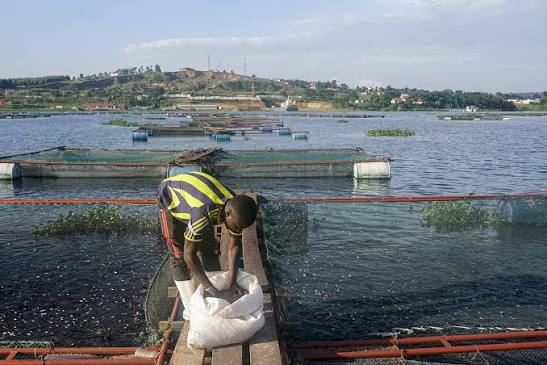
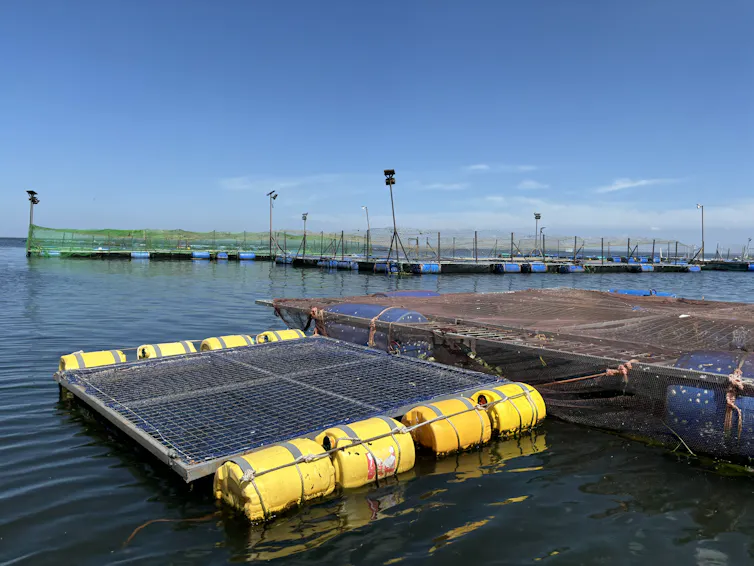
Uganda's aquaculture sector has grown from a marginal experiment into one of East Africa's fastest-expanding food industries, and a regional trade analysis published this week puts a striking number on that transformation: cage-based tilapia production has grown 173-fold in fifteen years, from around 800 tonnes in 2006 to more than 138,000 tonnes by 2021. Today more than 2,000 licensed cages dot Lake Victoria and Lake Albert, aquaculture output stood at roughly 101,000 tonnes as of 2022, and Uganda now ranks fourth among African aquaculture producers with a 4.4 percent continental share — a rapid rise that is now colliding with warnings from environmental regulators about how much further the lake can absorb.
The boom is easy to explain on paper. Uganda's wild capture fisheries, once dominated by Nile perch and tilapia hauled straight from Lake Victoria, have stagnated for years under the weight of overfishing, illegal gear and cross-border enforcement disputes — the same pressures that pushed the country toward stricter fisheries licensing this month. Cage farming offered a way to keep production growing without the lake giving any more than it already had: stock a floating enclosure with fingerlings, feed them intensively, and harvest in six to eight months rather than waiting on a wild population to recover. Industry figures show the shift has been dramatic — in the early 2010s only 28 cage farmers were formally registered nationwide; that base has since expanded into the thousands of cages counted today, most concentrated around Jinja, Namayingo and other Lake Victoria landing sites, with a smaller but growing presence on Lake Albert.

The employment case is real. Cage aquaculture is estimated to support around 60,000 jobs today, up from roughly 34,000 two decades ago, spanning cage construction, feed supply, fingerling hatcheries, harvesting labour and transport to urban markets. At the Masese Cage Fish Farmers Cooperative near Jinja, chairman Magumba Majidu has described feed as the industry's dominant cost driver, consuming more than 70 percent of operating expenses — a figure that explains both why cage farming remains capital-intensive and why the cooperative model, pooling costs across roughly 200 mostly youth members, has become a common entry point for smallholders who could not otherwise afford to farm alone.
That capital barrier is the sector's single biggest constraint on further growth. Setting up even a modest cage costs in the order of $350, with fingerlings adding a further $270 or more before a farmer has produced a single fish, and feed costs recurring throughout the six-to-eight-month grow-out cycle. Surveys of would-be cage farmers in southwestern Uganda have repeatedly identified lack of financing, rather than lack of interest or lake space, as the binding constraint — a gap that has effectively concentrated much of the industry's growth among better-capitalised operators and a handful of foreign-owned farms in Jinja district, even as government messaging promotes cage farming as a smallholder opportunity.
Uganda's regulatory posture has been comparatively permissive, and that is precisely what is now drawing scrutiny. Kenya has pursued similarly rapid expansion — more than 4,000 cages on Winam Gulf by 2023 and a vertically integrated commercial player, Victory Farms, producing at a 10,000-tonne scale with over 700 direct employees — while Tanzania has taken a markedly more cautious regulatory approach to cage licensing on its share of the lake. The contrast has become a live policy question for the East African Community's shared fisheries body, since a fish kill or disease outbreak in Ugandan or Kenyan waters does not respect a national boundary in a lake the three countries share.

The environmental case for caution is backed by measurements, not just speculation. Researchers studying cage clusters on Lake Victoria have recorded ammonia concentrations of 0.14 to 0.2 milligrams per litre in the water immediately around cages — above the roughly 0.08 mg/L threshold considered toxic to tilapia themselves — alongside documented eutrophication and algal bloom risk from the volume of uneaten feed and fish waste that settles beneath densely packed cages. A dissolved-oxygen-linked fish kill in 2016 was estimated to have destroyed roughly $4,300 worth of stock in a single incident, and a further mass die-off was recorded in Wakiso district waters in January 2021. Dr Barirega Akankwasah, executive director of the National Environment Management Authority, has co-published environmental impact findings on the sector, while Dr Eshete Dejan of the IGAD Environment Programme has cautioned that poor cage-farming practices could cause irreversible damage to the lake if left unmanaged.
There is a genetic dimension to the risk as well. Dr Richard Ogutu-Ohwayo, a fish biology specialist at the National Fisheries Resources Research Institute (NaFIRRI), has pointed to the danger of farmed tilapia escaping cages and interbreeding with wild populations, diluting genetic diversity that has already been narrowed by decades of overfishing and past species introductions in Lake Victoria. Traditional fishermen operating near cage clusters report a related but more immediate nuisance: wild fish congregating beneath the cages to feed on spilled pellets, complicating conventional fishing in areas adjacent to licensed cage sites.
The government's regulatory response so far has leaned on incremental fixes rather than a moratorium. A directive requiring cage operators to shift toward floating feed — which fish can consume before it sinks and decomposes, cutting nutrient loading — has been issued, and calls for quarterly environmental monitoring and multiple daily water-quality checks have circulated among industry advocates such as former SON Fish Farm managing director Robert Osinde. But zoning of the lake into designated cage-farming areas, systematic waste monitoring and cumulative impact assessments across clusters of cages — rather than farm by farm — remain limited, and enforcement of existing fisheries regulations is widely described within the sector as weak.
The stakes of getting the balance right extend well beyond the lakeshore. Uganda's per capita fish consumption sits at roughly 6 kilograms a year, far below the 17.5 kilograms recommended by the FAO and World Health Organization, meaning aquaculture growth is not simply an export or foreign-exchange story but a domestic nutrition one, particularly for lakeside communities where fish remains the cheapest available animal protein. Export markets add a further layer of urgency: Uganda has in the past secured European Union clearance for farmed fish and animal product exports, a market access win that would be jeopardised by any high-profile disease outbreak or environmental incident traced back to poorly managed cages.
What happens next is likely to be decided less by the industry's impressive growth numbers than by whether regulators can catch up to them. Uganda has demonstrated, over fifteen years, that cage aquaculture can scale rapidly when capital and lake access are available. The unresolved question — one shared with Kenya, and one Tanzania's caution implicitly poses to both its neighbours — is whether Lake Victoria's water quality, wild fish stocks and shared governance arrangements can scale at anything like the same pace.
Published By | Features Editor