Written By | Staff Writer
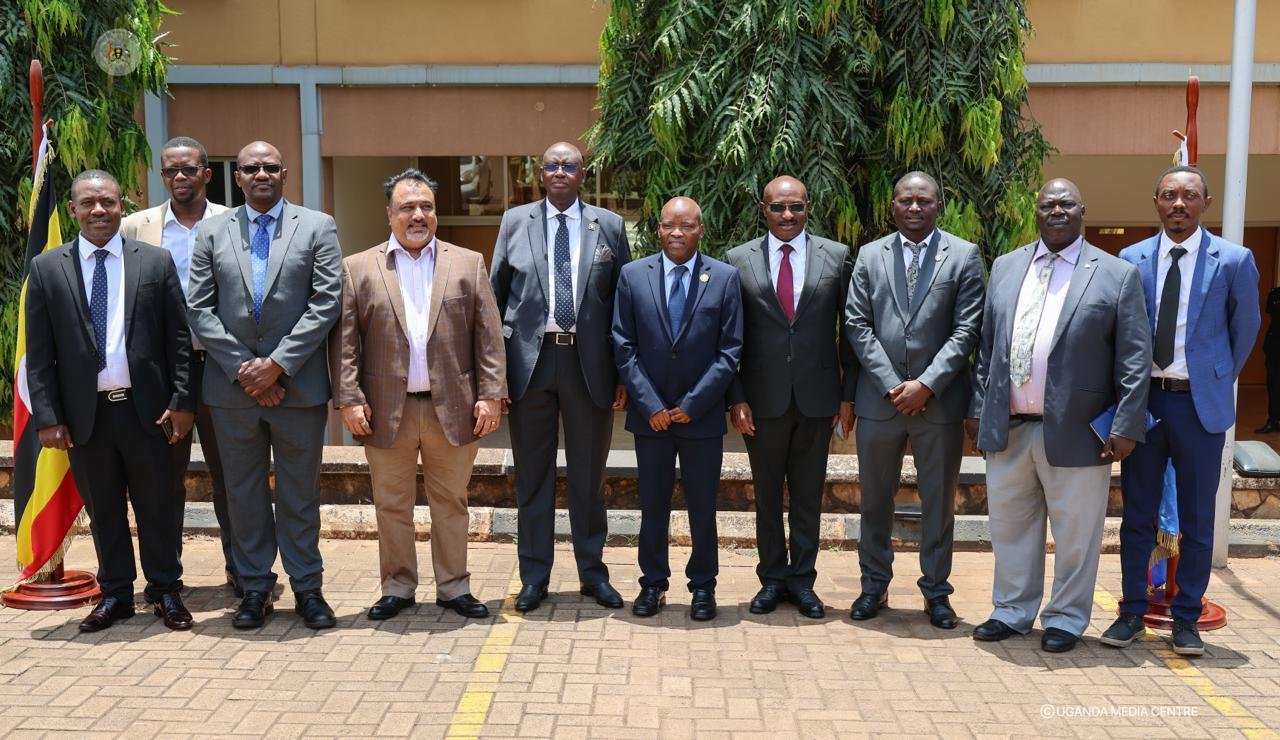
A three-day policy dialogue in Kampala closed on September 11 with Uganda committing to implement the CAADP Kampala Declaration it hosted and helped author.
A three-day policy dialogue in Kampala closed on September 11 with Uganda committing to implement the CAADP Kampala Declaration it hosted and helped author. The declaration's first commitment is spending 10 percent of public expenditure on agrifood systems. Uganda's current figure is closer to a quarter of that.
Feature and Analysis
Diplomatic wins have a shelf life. Uganda's expired sometime this year, when the Comprehensive Africa Agriculture Development Programme (CAADP) Kampala Declaration stopped being a document Uganda could take credit for hosting and became a document Uganda has to deliver on.
From September 10 to 11, Kampala hosted a high-level policy dialogue on domesticating the declaration and the accompanying CAADP Strategy and Action Plan 2026–2035, bringing together senior government officials, the African Union Commission and representatives of ministries, departments and agencies. It follows Uganda's hosting of the extraordinary AU Summit in January 2025, which adopted the Kampala CAADP Declaration on Building Resilient and Sustainable Agri-Food Systems in Africa, and Uganda's election as chair of the AU Specialised Technical Committee on Agriculture, Rural Development, Water and Environment.
What the declaration actually asks for
The Kampala framework replaced the Malabo Declaration, which governed African agricultural policy from 2014 and lapsed at the end of 2025. What distinguishes it from its predecessors is specificity: six core commitments, 35 intervention areas and 22 measurable targets, rather than a set of aspirations.
By 2035 the signatories have undertaken to raise agrifood output by 45 percent, triple intra-African trade in agrifood products and inputs, halve post-harvest losses, cut the number of people in extreme poverty by 50 percent, reduce stunting, wasting and obesity by 25 percent, and ensure 60 percent of the population can afford a healthy diet. Financing it rests on two numbers: US$100 billion mobilised by 2035, and at least 10 percent of national public expenditure directed to agrifood systems.
That last figure is not new. It was the headline commitment of Maputo in 2003 and Malabo in 2014. Its survival into a third declaration is, in itself, an admission that it has not been met.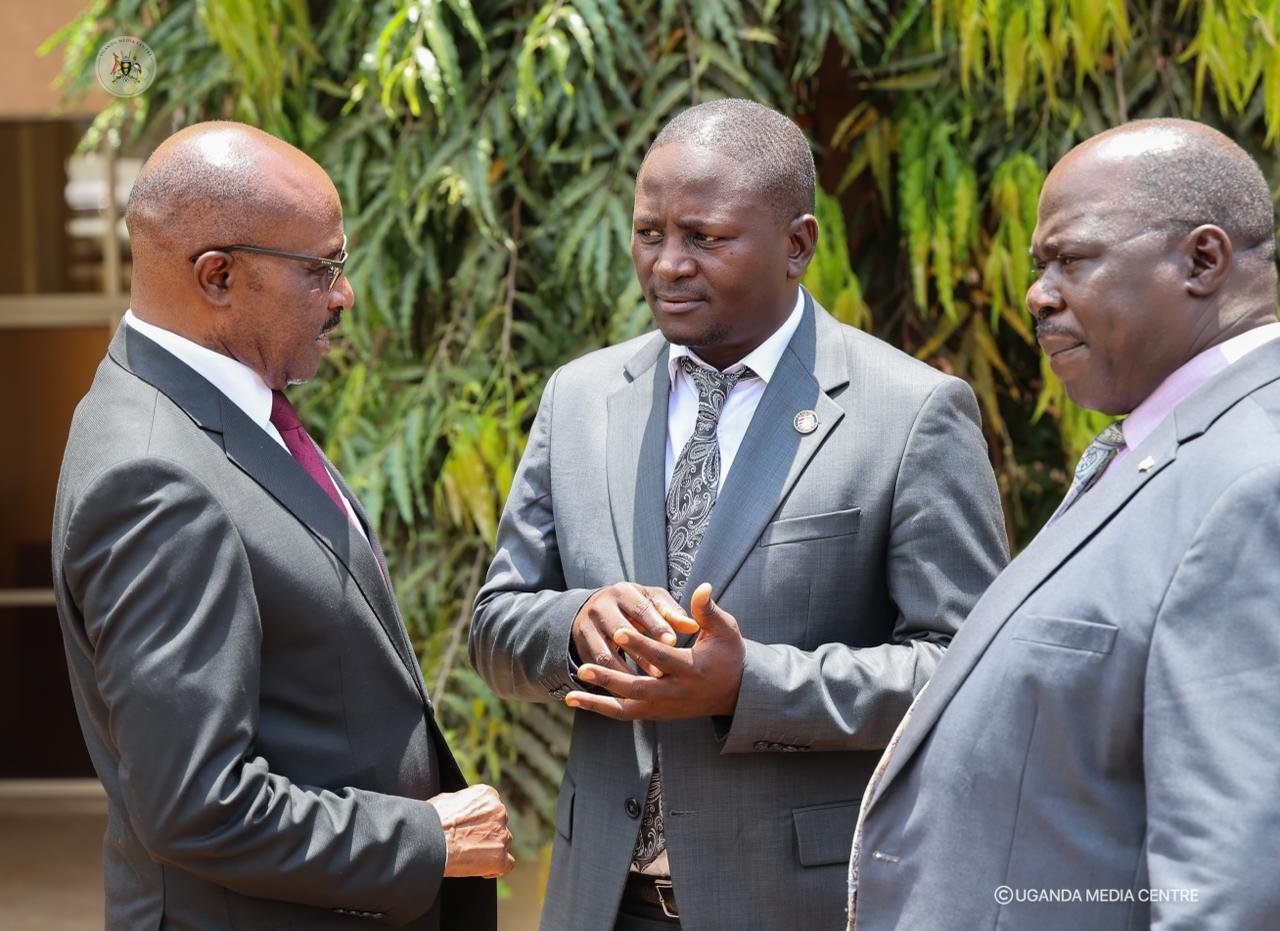
Uganda's own arithmetic
Parliament passed a Shs84.3 trillion national budget for FY2026/27. The Agro-Industrialisation Programme — the vehicle that carries agricultural research, inputs, irrigation, extension, agro-processing and market access — received Shs2.26 trillion, described by government as the largest allocation the programme has ever had. It is also about 2.6 percent of the national budget. Broader measures of agricultural public spending, including FAO's assessment covering 2018–2022, put Uganda at roughly 4 percent of total public expenditure.
Against a 10 percent commitment, that is a gap of between six and seven and a half percentage points of a Shs84.3 trillion budget. Closing it would require finding something in the order of Shs5 trillion a year — more than double the entire current agro-industrialisation vote. No official at the Kampala dialogue proposed a route to that number, and it would be unusual if one had; the declaration's own theory is that domestication happens through existing national plans rather than new money announced at conferences.
"Not a parallel framework"
That was the explicit position taken in Kampala. The State Minister for Animal Industry, Lt Col (Rtd) Bright Rwamirama, said Uganda's central task is converting agricultural potential into higher household incomes, employment, food and nutrition security, competitive agro-industries, increased exports and resilient livelihoods — and that implementation would be anchored in Uganda Vision 2040, the Fourth National Development Plan, the NRM manifesto 2026–2031 and the Agro-Industrialisation Programme Implementation Action Plan, rather than in a parallel policy architecture.
This is the correct instinct and the central risk at once. Anchoring CAADP in existing plans avoids the duplication that has plagued continental frameworks, where a ministry ends up reporting the same activity to three different secretariats. But it also means the declaration adds no independent financing obligation — it inherits whatever the national budget already does, relabelled. Domestication without a fiscal trigger is mostly a reporting exercise.
The Minister of Trade, Industry and Cooperatives, Sanjay Tanna, located Uganda's opportunity downstream of the farm. "Sustaining agricultural growth requires Uganda to move further from production towards agro-processing, value addition, branding, market positioning and export development," he said, pointing to "opportunities across milk, coffee, tea, honey, shea butter, and fruit value chains."
AU Commissioner for Agriculture, Rural Development, Blue Economy and Sustainable Environment Moses Vilakati called for collective action to move the Kampala Declaration from commitments to measurable results, and in a separate meeting with the Minister of State for Foreign Affairs in charge of Regional Cooperation, Haruna Kyeyune Kasolo, stressed stronger continental cooperation on farmer access to fertiliser, extension services, climate-smart agriculture, technology and markets. Kasolo underscored facilitating the movement of agricultural products, expanding market access and strengthening regional trade. Minister Counsellor Margaret Kafeero, representing Ambassador Rebecca Amuge Otengo of Uganda's mission in Addis Ababa, framed the exercise as connecting Uganda's productive sectors to continental and international markets.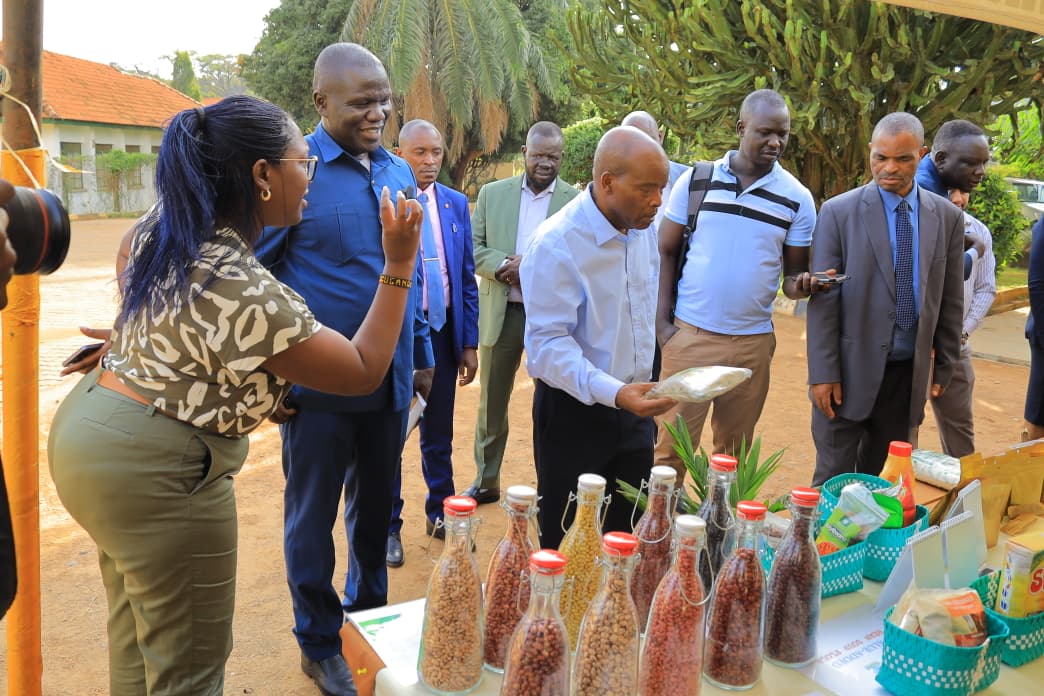
Where the targets meet Ugandan reality
Three of the declaration's targets can be tested against known Ugandan numbers, and each exposes a different constraint.
Halving post-harvest losses. The World Bank has estimated Uganda's post-harvest losses at 22 to 30 percent. Halving that is arguably the single highest-return commitment in the document, because it requires no additional land, water or fertiliser — only drying, storage, moisture testing and grading. It is also the target most dependent on the unglamorous public spending that budgets cut first.
Tripling intra-African agrifood trade. Uganda already sends the large majority of its agricultural exports into East Africa, so the base is high and the upside real. But the direction of travel in 2026 has been the wrong way: a Kenyan crackdown on foreign small-scale traders, a Kenyan excise levy on Ugandan sugar imports, non-tariff frictions on dairy, and persistent certification and phytosanitary delays. Tripling regional trade is a request that EAC members stop doing what several of them have spent this year doing.
Raising output by 45 percent. Uganda's production constraints are documented and stubborn: formal irrigation covers well under 2 percent of farmland, fertiliser application runs at roughly 1 to 2.4 kilogrammes per hectare against regional benchmarks many times higher, and 2026's drought has been described by Agriculture Minister Frank Tumwebaze as unprecedented, prompting government talks with the Ministry of Finance on a large national irrigation programme. The government's distribution of 173,913 bags of fertiliser from Entebbe on August 31 is a start on one of those constraints and a reminder of the scale of the others.
Why the specificity matters
The Malabo era's weakness was not its targets but its accountability machinery: biennial review scorecards showed most member states off track, and being off track carried no consequence. Kampala's 22 measurable targets and 35 intervention areas are a bet that harder metrics produce better behaviour.
For Uganda, there is a reputational dimension the dialogue did not spell out. Having hosted the summit, chaired the technical committee and lent the capital's name to the declaration, Uganda's own scorecard will be read as a verdict on the framework itself. A country cannot convene the continent around a 10 percent commitment and report 4 percent indefinitely without the number losing its meaning for everyone else.
The practical things to watch over the next eighteen months are narrow and checkable. Whether the Agro-Industrialisation Programme Implementation Action Plan is costed against the declaration's 22 targets, or merely mapped to them. Whether the FY2027/28 Budget Framework Paper moves the agriculture share at all. Whether post-harvest loss reduction acquires a budget line of its own rather than remaining a talking point. And whether Uganda uses its technical-committee chairmanship to press on the regional trade barriers that stand between the tripling target and reality.
The dialogue closed on September 11. The declaration runs to 2035. The first honest test arrives with the next budget.



