Written By | Staff Writer

A vegetable plot in Jinja is testing whether biological pest control can match the chemical kind on cost.
Agriculture
In Kabizi, a village in Jinja District, a single vegetable plot is being watched more closely than most. Rows of nakati, dodo, sukuma wiki, cabbage and tomatoes are growing under an unusual arrangement: farmers, researchers and a biological-inputs company have agreed to let the plot settle a question that has been building for years. Can Uganda grow vegetables without poisoning its soil or its consumers — and can farmers earn as much doing it as they do by spraying?
The second half of that question will decide the outcome. Pests and diseases account for more than 30 per cent of vegetable yield losses nationally. Farmers have tried to spray their way out, and returns are diminishing even as pesticide bills rise. Getting ahead of those losses more cheaply is the whole economic pitch behind agroecology. Whether it holds under real market conditions is what Kabizi has to prove.
It is proving it against a clock. The Ministry of Agriculture, Animal Industry and Fisheries has banned nine active ingredients outright — alpha-cypermethrin, atrazine, butachlor, carbofuran, chlorothalonil, dichlorvos, dimethoate, diuron and propanil — and restricted nine more. Import permits were halted on 21 May 2026, with full withdrawal from the market due by the end of this year, roughly fifteen weeks away.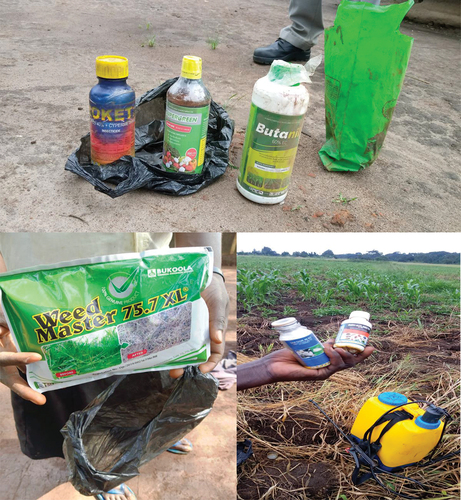
Why adoption has been low
The living-lab model is designed to close a gap Ugandan agricultural research has struggled with for two decades. "We noticed that we need to take technology out from research to the field," said Dr Joshua Okonya, a programme officer at ASARECA, the regional agricultural research association. "Adoption has been low for these technologies. Why? Maybe because we involve fewer farmers."
So the farmers run the plots themselves, tracking pest pressure and crop growth against a conventionally managed comparison plot, with partners checking in monthly. A demonstration plot managed by researchers proves only that researchers can do it.
The pressure the approach is up against, according to Kambaire Justine Kizza of PELUM Uganda's agroecology department, is impatience. "We moved from how agriculture came into existence to how we became impatient and want food to grow very fast," she said, arguing that this has driven heavier chemical use nationally. "Most farmers are using reckless methods — unsafe, highly hazardous pesticides, highly synthetic fertiliser that affect the soils." Her case is that degraded soil produces weaker crops, which are more vulnerable to pests, creating a loop in which farmers keep reaching for more chemicals while the underlying problem persists.
Ivan Arinda, a consultant at Koppert, the biological crop protection and pollination firm involved in the trial, locates the fix underground. Farmers increasingly crop the same plots season after season, depleting the soil. "Good soil health guarantees good production. The plant is stable; it grows vigorously, even faster than the pest can develop," he said. His approach is not to abandon synthetic chemicals but to reorder them: prevention first, biological control next, synthetic intervention only when necessary.
What that looks like past a demonstration plot is visible a short distance away at Ksam Farm, run by farmer-trainer Samuel Kabuye. Residue from black soldier fly larvae helps control insects attacking vegetables. Jack beans, planted as trap crops, draw pests away while fixing nitrogen and regulating soil moisture. Nutrient-rich fish-pond water irrigates and fertilises vegetables, bananas and coffee. The farm makes its own inputs, including a preparation Kabuye calls SK-99 for sustaining soil micro-organisms through drought. For him the economics are about stacking small substitutions. "Once the roots become destroyed, it will make the farmer look for a pesticide, yet the problem is the root," he said.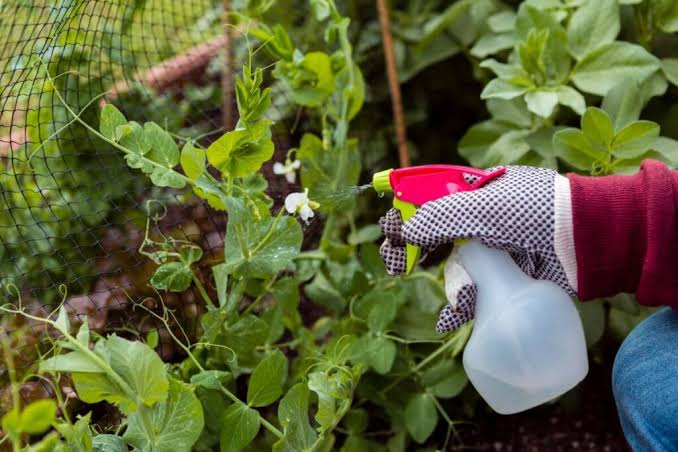
The evidence is thinner than the enthusiasm
The honest position is that the agronomic case is stronger than the trial data behind it. The nearest comparable result comes from Murang'a County in Kenya, where the World Vegetable Centre's Greener Greens project had farmers grow traditional leafy vegetables using intercropping, biological pest control and compost instead of chemical fertiliser. Participants reported higher yields, better marketability and fewer post-harvest losses than conventional growers — but the findings were self-reported, from a first-phase pilot.
In Uganda, ESAFF Uganda's 37 Community Agroecology Schools report the same pattern: farmers using neem, chilli and garlic extracts, fermented inputs made from cow dung, molasses and wood ash, and marigold, basil and tephrosia as companion plants say pest pressure has fallen and input costs have dropped sharply. "In this community, members are no longer worried about pest and disease attacks," said Justine Arinaitwe, a school facilitator in Kasese. Plausible — but not the kind of controlled comparison an extension service can turn into a national recommendation, which is precisely why the plot at Kabizi counts for more than its size suggests.
On exports, the money argument is already settled
Where clean production has been priced, the numbers are unambiguous. The European Union took 60 per cent of Uganda's fresh fruit and vegetable exports in 2023, worth about €58 million. Between 2015 and 2024, according to the EU's EUROPHYT/TRACES system, Ugandan consignments drew more than 787 interceptions for harmful organisms — 70 per cent of them on fruit and vegetable exports — plus 308 more for documentation failures. ESAFF Uganda puts the cost of residue violations at more than US$60 million in a single year. Roughly 51 to 59 per cent of the 41 highly hazardous pesticides registered in Uganda are already banned in the EU, which is the mechanism by which a spray decision in Mukono becomes a rejected container in Rotterdam.
The response is well funded. A four-year CABI project running to February 2029, financed by the European Union and implemented with MAAIF's National Plant Protection Organisation, HortiFresh, COLEAD and Sustainable Business for Uganda, is rebuilding the sanitary and phytosanitary system around five crops: capsicum, white garden eggs, Hass avocado, mango and okra. CABI estimates up to US$150 million of recoverable revenue if compliance improves.
On the domestic market, there is no price signal at all
The export channel, however, absorbs a small fraction of what Ugandan vegetable farmers grow. Most produce ends up in domestic markets that, as CABI's project documents note, yield low returns and discourage investment. And there the incentive to stop spraying is close to zero.
Uganda's National Organic Agriculture Policy estimated that organic exports of coffee, sesame, chia, fruit, vanilla and other high-value crops earned about US$50 million in 2018, roughly 17 per cent of agricultural export value. By 2023 that had risen to about US$159 million, and NOGAMU, the national organic umbrella body, projected a further 40 per cent rise in 2024. Yet NOGAMU estimates only about two per cent of domestic demand for organic produce is being met. That gap should favour exactly the kind of low-input farming being tested at Kabizi — if farmers can reach those buyers and prove what they are selling.
They cannot, because Uganda has no widely recognised national way to signal that food was grown without synthetic chemicals — nothing with the instant credibility consumers attach to a Uganda National Bureau of Standards mark. "Agroecology has not yet been popularised. Where is it?" asked Hadijah Nalule, a PELUM Uganda programme officer. What exists is fragmented: the Kilimo Hai mark, and the government-recognised Participatory Guarantee System, which is community-based rather than national. At Nakasero, vendors advertise an "organic" section that often means nothing more than indigenous crop varieties. In Nakawa, "organic" can mean herbal remedies. The problem, Nalule says, is a market that was never taught the distinction.
The missing differential
This is a textbook missing-market problem, and Uganda has seen it before. Grain buyers at village buying points pay the same price for clean maize as for aflatoxin-positive maize, which is why nobody invests in moisture meters or drying slabs — and why 80 per cent of the cereals bought by one Soroti processor tested aflatoxin-positive. Vegetables now face the identical structure: at a wet market, nakati is nakati. Without a differential, biological crop protection has to win on cost alone, against a chemical alternative whose external costs — poisoned applicators, contaminated water, rejected exports — nobody pays at the stall.
That is a much harder test than it needs to be, and it is being set for the least cushioned producers in the system: smallholders on an acre or two, with under two per cent of Uganda's farmland under any form of irrigation and a drought year behind them. There is a plausible institutional home for the missing label. The Food and Agriculture Regulatory Authority Bill 2026, which had its first reading on 25 August, would fold agricultural chemicals control and food safety into a single regulator with explicit residue-monitoring powers. Whether Parliament also gives it the mandate to certify and police a national clean-food mark is a drafting decision that will do more for agroecology than any number of demonstration plots.
Back in Kabizi, the plot reports in four to six months. If it shows comparable yields at lower cost, Uganda has a recommendation it can extend nationally. If it shows a yield penalty, the honest conclusion is that the end-2026 chemical withdrawal needs a bridge: trained extension workers, affordable biologicals stocked in village agro-input shops, and a label buyers believe. The deadline arrives in December; the answer arrives after it.



