Written By | Staff Writer

The 18th BRICS Summit closed in New Delhi this weekend with a familiar Ugandan paradox on display.
Feature
The 18th BRICS Summit closed in New Delhi this weekend with a familiar Ugandan paradox on display. Vice President Jessica Alupo, representing President Museveni at the Bharat Mandapam, delivered a statement on 13 September calling on the bloc to spearhead equitable global growth and to act as a counterweight to what the President called centuries of Western chauvinism and parasitism. It was a speech about who captures value in global trade. Uganda's own export ledger answers that question uncomfortably.
Two days earlier, at the BRICS Business Forum Leaders' Dialogue on 11 September, South African President Cyril Ramaphosa had put the problem in terms no African trade negotiator can dodge. "We cannot accept a future where Africa supplies the minerals while value addition and manufacturing take place elsewhere," he said, warning that the expanded bloc must not reproduce inside itself the very division of labour it was created to challenge. He was speaking about critical minerals. For Uganda, the sentence works just as well with the word "coffee" substituted in.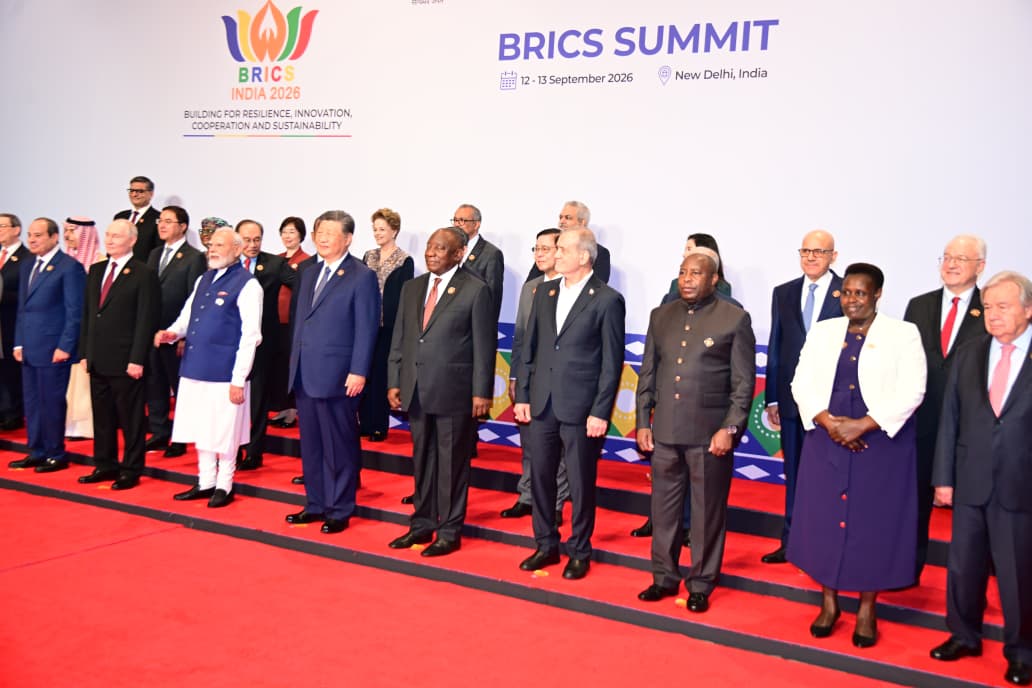
The numbers behind the speech
Uganda joined BRICS as a partner state on 1 January 2025, one of ten partner countries attached to an eleven-member bloc that includes Brazil, China, Egypt, Ethiopia, India, Indonesia, Iran, Russia, Saudi Arabia, South Africa and the United Arab Emirates. Together the members and partners account for close to half the world's population and around 40 percent of global GDP. On paper, that is the largest concentration of coffee-drinking, cotton-spinning and food-importing demand Uganda has ever had formal standing inside.
What Uganda currently sells into it is raw. India — this year's chair and Uganda's most substantial BRICS trading partner in agriculture — imported US$78.52 million worth of Ugandan coffee, tea, maté and spices in 2024, of which US$76.93 million was coffee, coffee husks and substitutes. India ranks among Uganda's top four coffee destinations, behind Italy, Sudan and Germany. Almost all of it moves as green bean.
Nationally, the ratio is well documented and has barely shifted through the record years: roughly 95 percent of Ugandan coffee leaves the country as unprocessed green coffee. Roasting, grinding, blending, packaging, branding and retail — the segments where the margin actually lives — happen at the destination. Uganda's record 8.6 million 60-kilogramme bags worth about US$2.3 billion is a volume achievement, not a value-chain one. Analysts at the Economic Policy Research Centre have put the additional annual earnings available from a serious domestic value-addition push at around US$200 million, a figure that is roughly the same order of magnitude as Uganda's entire monthly coffee receipt in a good month.
The same shape recurs across the portfolio. Cotton leaves as lint — about 93 percent raw lint export against 7 percent domestic processing, across 18 ginners, 26 ginneries and two textile mills. Cocoa, now Uganda's second agricultural export, moves overwhelmingly as dried bean. Vanilla moves as cured or green pods rather than extract. The country has become extraordinarily good at growing things and has not yet become good at finishing them.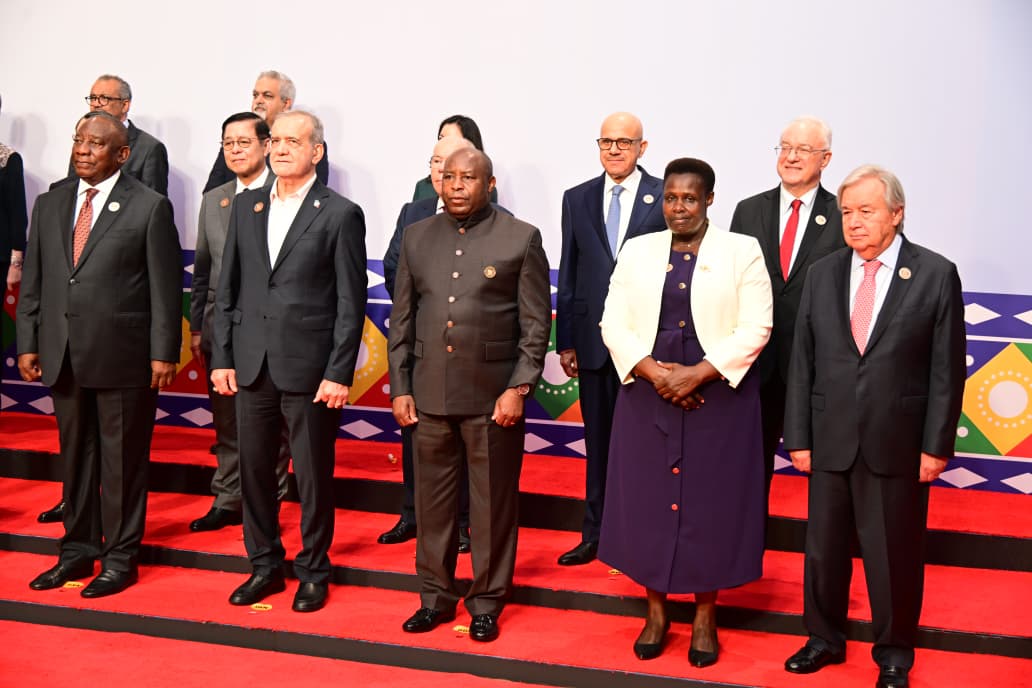
Why BRICS is a different kind of test
It is tempting to treat the New Delhi summit as one more photo opportunity in a year that has already produced a Uganda–Korea trade mission in Seoul, a halal-export dialogue in Kampala, a Nigeria–Uganda business forum, and a Qingdao agricultural investment conference. The distinction is that BRICS presents a genuinely different bargain from the European one Uganda is used to.
The European market disciplines Uganda through standards. The EU Deforestation Regulation forced the geo-mapping of more than a million coffee farms; the nine-chemical agrochemical ban announced by the Ministry of Agriculture in May was driven substantially by residue thresholds in European buyers' contracts. Those standards are costly, but they are also, in effect, a quality-upgrading subsidy: meeting them makes Ugandan coffee more valuable.
BRICS markets, on current form, discipline Uganda through volume. India, China and the Gulf buy in bulk, pay on price, and — critically — maintain their own processing industries that have every commercial reason to keep importing raw material rather than finished product. Tariff escalation, where import duties rise with each step of processing, is the standard instrument for preserving that arrangement, and it is not unique to Europe. A partnership that expands Ugandan volumes into BRICS without addressing tariff escalation on roasted coffee, cocoa butter or refined oils would entrench precisely the structure Ramaphosa warned about.
Prime Minister Narendra Modi's announcements under India's chairship illustrate both the opportunity and the gap. He unveiled a BRICS Integrated Early Warning System for infectious diseases, a Logistics Supply Chain Cooperation Framework and a Startup Innovation Fund. Every one of those is relevant to Ugandan agriculture — animal disease surveillance in a country still managing foot-and-mouth quarantines, logistics for perishables that currently lose 22 to 30 percent of output after harvest, and financing for the agri-tech firms Uganda has begun producing. None of them is a market-access instrument. The declaration's architecture is about cooperation, not about who gets to roast the bean.
Uganda's own policy is pointing the right way — slowly
Kampala is not unaware of this. The government has been signalling for two years that it intends to move towards zero export of unprocessed coffee, a position Minister of State for Agriculture Fred Bwino Kyakulaga has restated publicly and the President has pressed on farmers directly. The Tenfold Growth Strategy targets US$20 billion in agro-industrial exports as part of lifting the economy from roughly US$70 billion to US$500 billion by 2040. Agro-industrialisation sits first among the ATMS programme priorities, and the 2026/27 budget allocated Shs2.26 trillion to it — the largest sum the sector has received.
The execution record is more mixed. The Uganda Free Zones and Export Promotion Authority spent much of August in administrative limbo after a merger, with exporters citing a Shs180 billion lost deal and certification delays affecting coffee, cocoa, horticulture, fish and flowers. Uganda Development Bank has deployed Shs502.2 billion to 112,392 borrowers with about 65 percent of its loan book in agro-industrialisation, but the Bank of Uganda's central bank rate remains at 9.75 percent and commercial lending to processors is priced well above what a thin-margin roasting or milling business can carry. The Contract Farming Bill, which would have given processors enforceable supply and given farmers enforceable prices, was withdrawn in March.
There are working examples. Deshiburg Fruits International shipped Uganda's first 140 tonnes of canned pineapple to China in May. The first processed meat export to Ethiopia went out in July. Nonda Coffee Park and the Luweero coffee park represent genuine attempts to move roasting onshore. But these are demonstrations, not yet a structure.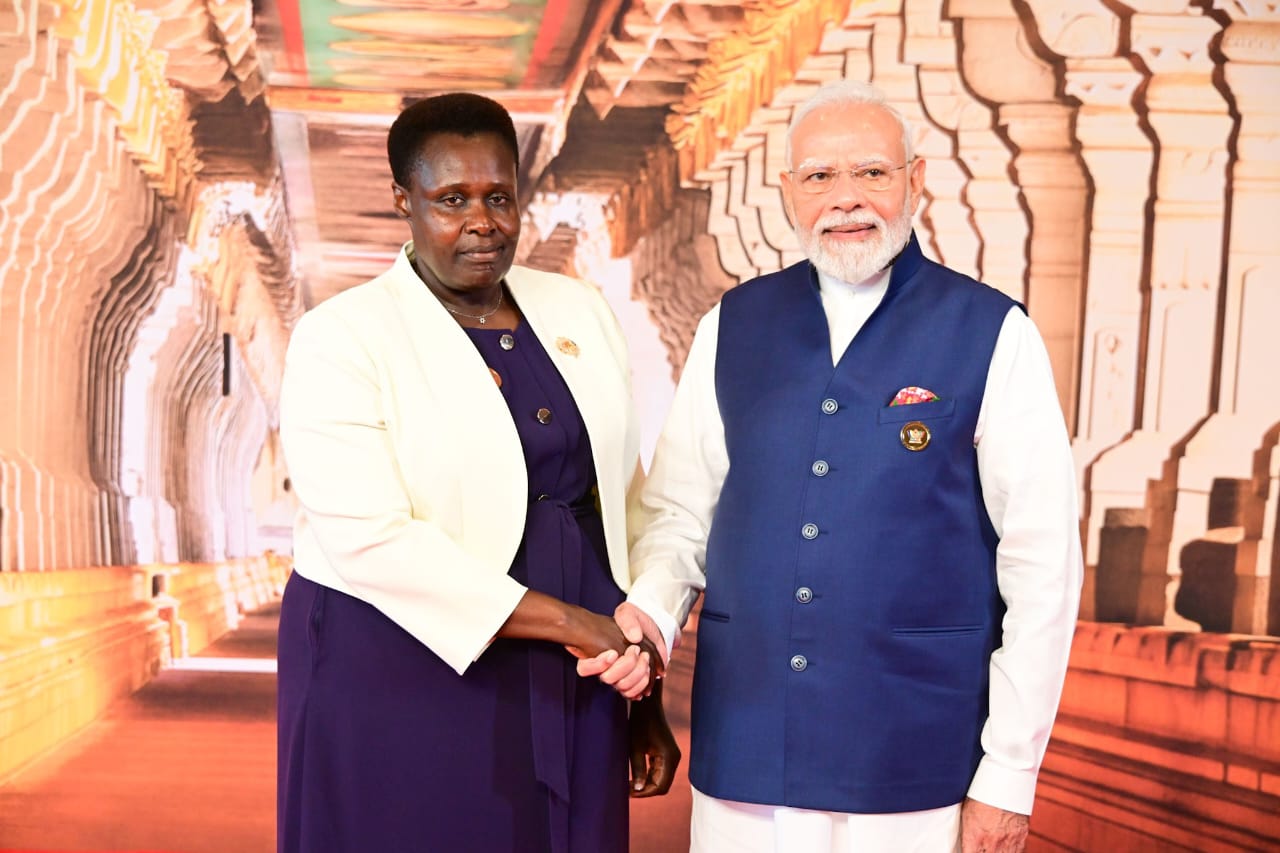
What a BRICS seat could realistically deliver
Three things are worth negotiating for, and none requires waiting for full membership.
The first is tariff treatment. If Uganda's partner status is to mean anything commercially, the ask is preferential or zero duty on processed Ugandan agricultural goods entering large BRICS markets — roasted and soluble coffee, cocoa butter and paste, refined vegetable oil, canned fruit, processed fish. The India–Southern African Customs Union preferential trade negotiations, whose terms of reference were signed in August, are the template to watch: they will lower tariffs on selected goods rather than establish comprehensive free trade, and the question South Africa is asking of them — whether closer ties support domestic processing or reinforce raw-material supply — is Uganda's question too.
The second is processing capital on terms Ugandan firms can service. India's chairship has created a Startup Innovation Fund and BRICS has the New Development Bank behind it. A soluble-coffee plant or an edible-oil refinery is a ten-to-fifteen-year asset; financed at Ugandan commercial rates it does not work, and financed at development-bank rates it does. That is the entire difference between the policy and the outcome.
The third is technology transfer in the segments where Ugandan agriculture is genuinely behind: cold chain, packaging, food-safety laboratories and aflatoxin control. The case for these is not export-glamour but basic loss reduction — 80 percent of cereals bought by one Soroti processor tested aflatoxin-positive this year, and Uganda has lost an estimated Shs32.8 billion in export rejections since 2023.
The President's New Delhi argument was that global affluence makes everybody a winner — that a wealthier Uganda buys more from everyone else. That is very likely true. But affluence is created where value is added, not where volume is grown, and for now Uganda is growing volume and shipping it to other people's factories. A seat at the table is worth exactly as much as what the country puts on it.



