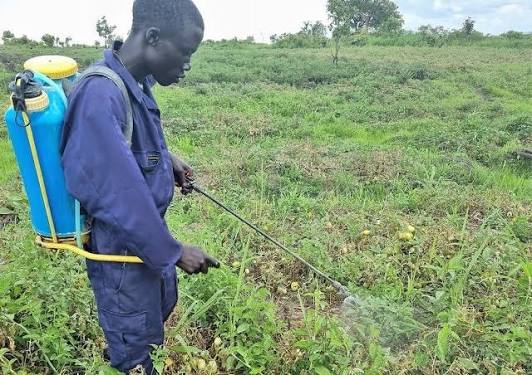
KAMPALA, Uganda
For decades, the arithmetic of Ugandan farming was brutally simple: spray more, harvest more. Traders in the open-air agro-input shops that line trading centres from Mbale to Mbarara built businesses on that logic, and smallholders desperate to protect maize, tomatoes and beans from pests and blight followed it without much question. Now, after years of mounting evidence and sustained pressure from public health researchers and civil society, the government has drawn a line through that logic — and the fallout is only beginning to play out in fields, warehouses and boardrooms across the country.
The Ministry of Agriculture, Animal Industry and Fisheries (MAAIF) has ordered the phase-out of nine agricultural chemicals and placed restrictions on nine others, following a scientific review triggered by mounting evidence of harm to human health, the environment and Uganda's export competitiveness. The decision, announced through the ministry's Agricultural Chemicals Review Committee and detailed at the second annual CropLife Symposium in Kampala, is one of the most sweeping regulatory interventions in Uganda's agro-input market in years.
The chemicals being phased out — alpha-cypermethrin, atrazine, butachlor, carbofuran, chlorothalonil, dichlorvos, dimethoate, diuron and propanil — read like a checklist of the substances food-safety campaigners have been warning about for the better part of a decade. According to the ministry's own technical findings, reported by the Daily Monitor, atrazine has been linked to reduced male fertility, coma and circulatory collapse; carbofuran irritates skin and eyes and is toxic to wildlife; dimethoate causes reproductive disorders and is toxic to pollinators such as bees; and diuron and propanil have been linked to kidney, spleen and liver damage. Alpha-cypermethrin and chlorothalonil, meanwhile, are flagged as water pollutants capable of destroying aquatic life.
A further nine active ingredients have not been banned outright but restricted to narrow, specific uses. Imidacloprid will now only be used for coffee pest control and seed treatment; carbendazim is limited to cashew nuts; indoxacarb to tomatoes, for controlling the invasive tuta absoluta and diamondback moth; profenofos to fall armyworm control in maize; and thiamethoxam to coffee's black twig borer and, again, fall armyworm. Fipronil has been pulled from farming altogether and will only be permitted for termite control in construction. One chemical, mancozeb — a fungicide central to managing fungal disease in potatoes, tomatoes and fruit — has been granted a five-year exemption because, regulators concede, no viable alternative yet exists.
Dr Paul Mwambu, the Commissioner for Crop Inspection and Certification at MAAIF, told the Monitor that the review was triggered when the CropLife industry body itself flagged concerns about 18 active ingredients, prompting the ministry's Agricultural Chemicals Control Technical Committee to run laboratory tests before the wider Review Committee made its final call. He was careful to frame the decision as evidence-driven rather than punitive: alternatives exist for the banned chemicals, he said, and the goal is to keep "only safe, effective and internationally acceptable agricultural chemical products" in circulation.
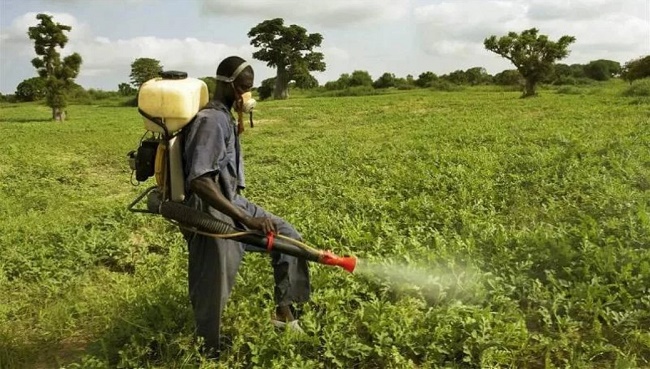
That framing matters, because the stakes for Uganda's farmers are not abstract. The country's agrochemical market has for years been a channel through which chemicals restricted or banned in Europe and elsewhere have found their way onto African shelves — a pattern documented by the Kabarole Research and Resource Centre (KRC-Uganda) and partners in the Food Safety Coalition of Uganda (FOSCU), whose residue testing on tomatoes, African eggplant and cabbage in Fort Portal fed directly into the national conversation that produced this policy. According to FOSCU, 55 of the 115 agrochemical products registered in Uganda are classified as hazardous, associated with cancers, reproductive toxicity and DNA mutation. The human cost of that exposure is measurable: research by the Uganda National Institute of Public Health found 1,599 deaths linked to organophosphate poisoning between 2017 and 2022 — an average of 267 deaths a year — alongside more than 6,300 hospital admissions annually for the same cause. Children under five, pregnant women and the elderly bear a disproportionate share of that burden.
For KRC-Uganda, which has spent years working with smallholders in the Rwenzori sub-region to shift toward organic alternatives and safer practices, the ban is vindication of a long, often frustrating campaign. "Agriculture must not come at the cost of human health" has been the organisation's guiding message, one that started in farmers' fields and eventually reached the desks of national policymakers. But the organisation is notably cautious about declaring victory. In an analysis published as the ban was finalised, KRC-Uganda warned that "Uganda's agro-input markets remain complex and, without careful oversight, there is a real risk that banned chemicals could continue to circulate, especially through informal channels." That is not an idle concern in a market where, by various industry estimates, counterfeit agrochemicals already make up roughly 40 percent of products sold to farmers — chemicals that arrive with no verifiable safety data at all, let alone compliance with a fresh government ban.
The rollout timeline gives that risk real teeth. Import bans on the phased-out chemicals took effect immediately after the ruling, but full withdrawal from shelves and farms is being staggered through mid-2026 to the end of the year, with farmers given roughly 180 days from the point of restriction to cease field application and transition to approved alternatives. That grace period reflects a recognition that abrupt bans without accessible substitutes could simply drive farmers toward whatever is cheapest and most available — potentially the very counterfeit or smuggled products regulators are trying to keep out.
Industry has pushed back, if gently. Importers and manufacturers of agrochemicals have publicly asked government to delay implementation of the EU-aligned restrictions, arguing the timeline is tight given the scale of product reformulation, relabelling and alternative-sourcing required across the value chain. MAAIF's response has been unambiguous: comply now, including revising product labels and halting imports of the affected substances, rather than wait for a more convenient moment. Stella Simiyu, chief executive of CropLife Africa Middle East, framed the debate less as a fight over the ban itself and more as a call for stronger regulatory systems generally — arguing that food security, trade competitiveness and sustainability goals are unreachable "unless regulatory systems are put in place to enable effective agri-input innovations for farmer uptake."
The trade dimension is not incidental. Uganda's produce exports — from green beans and chilli to fresh vegetables destined for European supermarkets — are increasingly vulnerable to residue testing at the border, and a single rejected consignment can wipe out a season's margin for an exporter. Aligning domestic chemical use with the standards of key export markets is as much an economic survival strategy as a public-health one, particularly as Uganda pushes to grow its horticulture and specialty export earnings.
What happens next will determine whether this becomes a genuine turning point or another well-intentioned policy that quietly erodes at the point of enforcement. Extension officers — already stretched thin across a sprawling agricultural population — will need to be equipped to explain not just what is banned, but what farmers should use instead, and how to identify counterfeit products that may attempt to fill the gap. District agricultural offices, often under-resourced, will be expected to monitor a market that has historically operated with limited oversight. And farmers themselves, many of whom built their pest-management practices around chemicals that will no longer be legally available, will need real support — not just a compliance deadline — to make the switch without losing yields they depend on for survival.
For a sector that employs roughly 70 percent of Ugandans and anchors household food security nationwide, that transition carries weight far beyond the chemistry of nine banned compounds. It is, at its core, a test of whether Uganda's regulatory institutions can match ambition with follow-through — and whether the years of advocacy that produced this ban translate into cleaner food, safer farmers, and a more credible seat at the table in international markets that are watching closely.
Published By | Features Editor