Agriculture
Uganda's weather scientists can, with reasonable confidence, tell the country that an El Niño pattern is forming and that the coming season carries elevated risk. What they still struggle to do, by the government's own admission, is tell a specific farmer in a specific sub-county whether to plant this week or wait.
That gap — between forecasts produced in Kampala and decisions made on a two-acre plot in Katakwi or Ntungamo — was laid bare this week by Dr Isaac Mugume, Assistant Commissioner for Weather Forecasting Services in the Department of Meteorological Services under the Ministry of Water and Environment. Speaking as the department prepares to release its next seasonal forecast, Mugume described reaching farmers with usable weather and climate information as one of the "biggest, daunting challenges" facing the country's meteorological system, hampered by limited funding, language barriers and weak last-mile digital access.
"One of the biggest challenges, daunting challenges, is having the weather and climate information reach the last mile. That is the person on the ground, being a farmer or somebody who is going to use this information to make decisions," Mugume said.
A national forecaster on a shoestring
The scale of the constraint is stark. Mugume said the Department of Meteorological Services operates on an allocation of less than Shillings 20 billion — a sum that must cover the maintenance of the country's meteorological equipment and observation infrastructure as well as the translation of forecasts into Uganda's many local languages. The department has previously managed to translate weather information into roughly 35 national languages with support from development partners, he said, but sustaining that effort has become difficult as funding has tightened.
"The allocation to the Department of Meteorological Services is quite small, something to less than 20 billion, and this is for a national service. So to maintain the equipment, the infrastructure, and also do translation is quite handful," Mugume said.
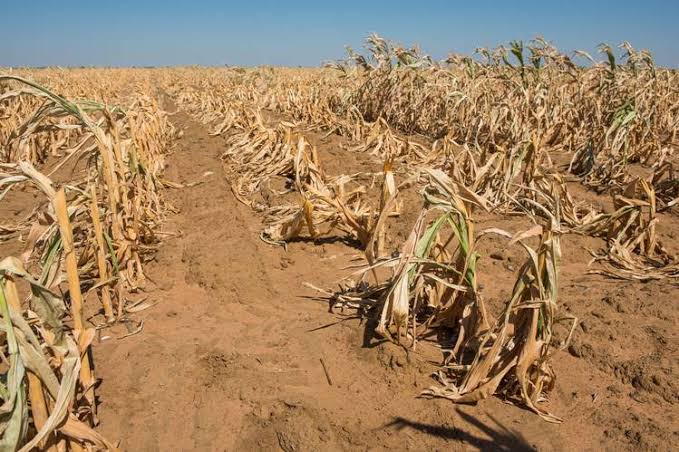
It is a strikingly small figure set against the stakes. Agriculture still employs roughly seven in ten Ugandans and generates around a quarter of the country's GDP. This year alone, farmers in central and western Uganda have watched coffee flower buds first rot under prolonged rains and then wilt under a sudden, sharp drought — a whiplash that better local forecasting and earlier, more specific warnings might have helped some growers anticipate and plan around, even if it could not have prevented the underlying weather extremes.
The problem isn't just producing a forecast — it's making it specific enough to use
For Dr Joab Ezra Agaba, a lecturer at Makerere University's College of Computing and Information Sciences, the failure is less about whether forecasts exist and more about whether they are granular enough to guide an actual planting decision. Agaba is part of the WASFA research project, which supports women smallholder farmers in Katakwi and Ntungamo districts, and he said broad regional forecasts routinely leave farmers guessing about conditions in their own communities.
"If they tell us, for example, that in a given region, namely the central region, you're going to receive rain, we do not know which particular sub-county is going to receive rain," Agaba said.
That ambiguity carries a real cost. Farmers who plant too early, betting on rain that arrives late or not at all, risk losing seed and labour to a false start. Those who wait too long risk missing a shortened rainy window entirely. Either way, Agaba said, the imprecision of regional-scale forecasting increases the risk of losses precisely when farmers can least afford them.
Part of the fix, he argued, lies not with meteorologists alone but with the extension system that is supposed to translate national forecasts into local farming advice. "Extension workers are not meteorologists," Agaba said, noting that Uganda's district administrations do not currently have a substantive position for a meteorologist to help interpret forecasts before they reach farmers through agricultural extension channels. He also pressed the government to lean harder into a channel most farmers already have in their pockets: mobile phones. "Most of these farmers have phones. Can you text them?" he asked, calling for wider use of SMS and voice messages delivered in local languages.
Owning a phone is not the same as controlling one
That solution, however, runs into a social barrier that Prof Florence Muhanguzi, an associate professor at Makerere University's Institute of Gender and Development Studies, said is too often overlooked. While more than 60 percent of women in the farming communities she studies own mobile phones, Muhanguzi said, ownership does not translate into independent access to the information those phones could deliver.
"Over 60% of the women own phones, but control of those phones is very limited. The phones are controlled by their husbands," Muhanguzi said.
That dynamic, she said, restricts women's ability to independently obtain guidance on when to plant, which farming practices to adopt, and how to respond as conditions shift — even as women carry out much of the day-to-day labour on smallholder farms across the country. Muhanguzi added that even when forecasts do reach farming households, they often arrive too late to be useful, or are met with skepticism because they have previously failed to match conditions on the ground.
"We know that government is doing quite a lot in providing information on weather, but that information is often late. It's not trusted because usually it doesn't provide the right information," she said.
Muhanguzi argued that closing the gap requires attacking both halves of the problem simultaneously: expanding the technology that delivers forecasts, and addressing the social and gendered barriers that determine who within a household actually gets to act on them. The WASFA project's own approach reflects that dual focus — researchers are piloting voice calls and SMS messages in local languages specifically designed to reach women farmers, including those with limited literacy, rather than assuming a text alert alone will close the gap.
A seasonal forecast, and a season that may test the system
The timing adds urgency. Mugume said a new seasonal forecast was due for release the following week, and that current indicators point toward the development of an El Niño pattern this season — echoing warnings issued by regional and continental bodies earlier this year about a strong El Niño event building for late 2026 into 2027, with the potential to disrupt rainfall patterns, damage crops and push up food prices across East Africa. He said government agencies, including the Office of the Prime Minister, were aware of the potential risks and were monitoring the situation.
For a meteorological system already stretched thin, an active El Niño season is precisely the moment when the last-mile problem stops being a bureaucratic footnote and starts translating directly into crop losses. Uganda has, over the past decade, invested in an array of climate-information tools aimed at smallholders — from index-based agricultural insurance schemes to fintech platforms offering digital credit tied to farming calendars — but researchers like Agaba and Muhanguzi argue that none of these tools can function as intended if the underlying forecast never reaches the farmer, or reaches her husband's phone instead of her own.
Mugume's message to farmers, in the meantime, was simple: keep watching for updates, because the picture is about to get more specific. Whether that update actually reaches a woman weeding her plot in Katakwi, in a language and format she can act on, remains the harder question the country has yet to fully answer.
Published By | Features Editor