Written By | Staff Writer
Five new frameworks launched at the National Animal Genetic Resources Centre aim to modernise breeding for PDM farmers, but officials admit the real test starts now
Agriculture
Uganda's livestock sector has a genetics problem, and on August 14 the government put its plan to fix it on paper — five documents at a time. At the headquarters of the National Animal Genetic Resources Centre and Data Bank (NAGRC&DB) in Entebbe, the Minister of State for Animal Industry, Bright Kanyontore Rwamirama, launched a package of institutional frameworks intended to reshape how the country breeds, multiplies and distributes livestock genetics to millions of smallholder farmers.
The five documents — a Client Charter for FY2025/26–2029/30, Service Delivery Standards for the same period, the Uganda National Animal Breeding Strategy and Action Plan (NABSAP), a Strategic and Investment Plan for 2025/26–2029/30, and a Communication and Knowledge Management Strategy for 2026/27–2030/31 — together form what officials describe as the first coordinated national breeding architecture Uganda has produced under the current development plan cycle. Rwamirama was blunt about where the real work begins. "The value of these documents will not be measured by the launch today," he told the gathering, urging NAGRC&DB staff, its board and partner institutions to ensure the frameworks "produce measurable results" rather than gather dust.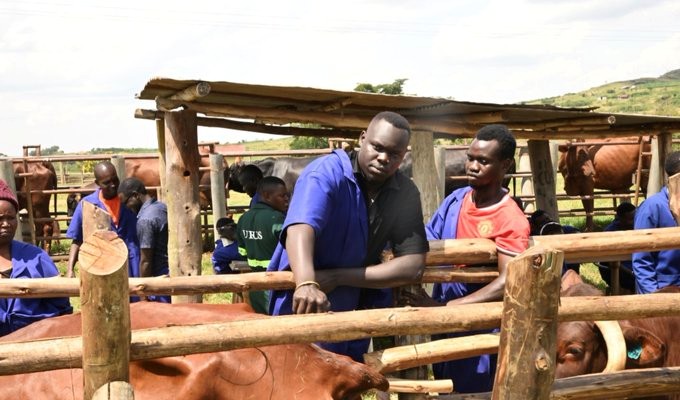
The stakes are larger than a single agency's paperwork. Livestock underpins the livelihoods of roughly 4.5 million Ugandans and contributes an estimated 9 percent of national GDP, according to sector estimates, anchored by a national herd that has grown fast: Uganda's cattle population rose from 11.4 million in 2008 to 14.5 million by the 2021 National Livestock Census, a 27.2 percent increase in little over a decade. But that growth has been overwhelmingly a story of numbers, not genetics. An estimated 94 percent of Uganda's cattle are indigenous breeds — chiefly the Ankole longhorn, which alone accounts for roughly 1.8 million animals, or 12.4 percent of the national herd, alongside the East African shorthorn Zebu and their crosses. These breeds are prized for their hardiness and cultural significance but typically produce far less milk and meat per animal than improved or crossbred stock, a productivity gap that NABSAP explicitly names as one of the sector's core constraints, alongside inadequate breeding infrastructure, limited access to quality breeding materials, uncontrolled and often unplanned cross-breeding, climate-related shocks, and weak animal identification and traceability systems.
NABSAP is designed as the overarching national strategy for the "sustainable use, development and conservation" of Uganda's animal genetic resources, organised around four priority areas: cataloguing and monitoring the country's existing genetic stock; expanding the sustainable use and development of that stock; conserving indigenous breeds that carry traits — disease resistance, heat tolerance, drought resilience — increasingly valuable as the climate shifts; and strengthening the policies, institutions and technical capacity needed to deliver all of the above. The strategy's authors argue that without deliberate conservation efforts, Uganda risks losing indigenous genetic diversity to uncontrolled cross-breeding before it has been properly catalogued or exploited for future breeding programmes — a quiet but consequential loss given how much adaptation research increasingly leans on hardy local breeds as climate volatility intensifies.
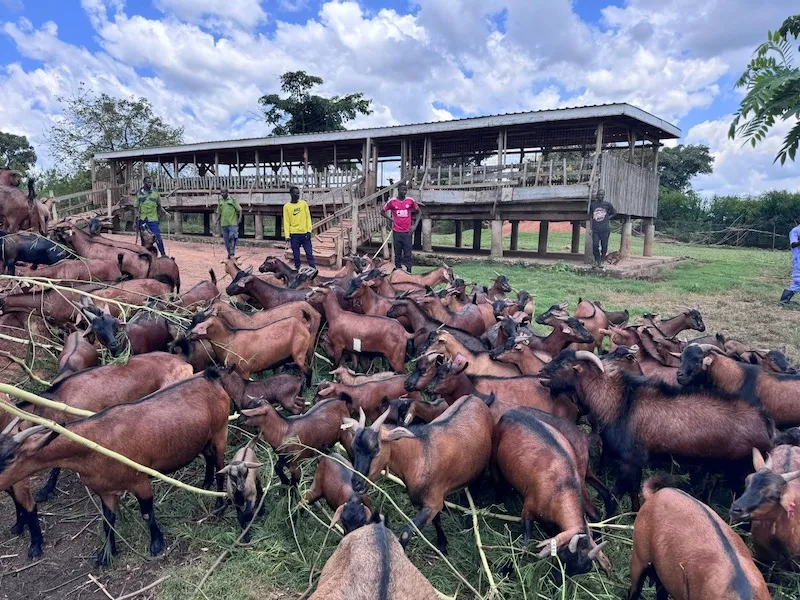
Sitting beneath NABSAP, the NAGRC&DB Strategic and Investment Plan translates the national strategy into the agency's own medium-term priorities, and it is here that the connection to ordinary farmers becomes most direct. The plan commits to accelerated breeding and multiplication of farmer-preferred dairy and beef cattle, goats, pigs, poultry and fish, aimed at improving both the availability and affordability of quality breeding stock. Notably, it pledges expanded support to farmers enrolled in the Parish Development Model, Uganda's flagship poverty-alleviation financing programme, through subsidised access to high-performance, farmer-preferred breeds — with particular emphasis on dairy cattle, piggery and poultry enterprises that officials hope will help move subsistence households into what the plan calls "the money economy." NAGRC&DB's network of 15 regional farms and ranches, its National Poultry Development Centre, and its National Bull Stud and Semen Production Centre in Entebbe — which already exports semen to Burundi, South Sudan and the Democratic Republic of Congo — are positioned as the delivery hubs for this push, working alongside local governments, farmer organisations and PDM structures.
The remaining two documents address something Uganda's public agricultural agencies have historically struggled with: accountability to the farmers they serve. The Client Charter sets out NAGRC&DB's obligations to farmers, breeders and suppliers, including a commitment to acknowledge complaints within 48 hours and resolve those requiring investigation within 14 days. The accompanying Service Delivery Standards go further, setting measurable benchmarks such as attending to clients within five minutes of arrival at a service point and responding to written correspondence within five working days. A Communication and Knowledge Management Strategy, running through 2030/31, is meant to ensure that the technical knowledge NAGRC&DB generates — on breeding technologies, disease management, feed formulation — actually reaches the farmers who need it, rather than staying locked inside government reports.
The launch drew a chorus of institutional voices making the case for why genetics matter to Uganda's broader economic ambitions. Speaking on behalf of NAGRC&DB's board, Eng. Robert Ssenozi, who represents farmers from the Central Region, framed the moment pointedly: "The launch is not just about unveiling documents. It is about launching possibilities." Dr Israel Mugezi, a senior planner for agriculture at the National Planning Authority, went further, linking improved livestock genetics directly to Uganda's ambitions for expanding value-added exports — citing milk powder specifically — and to the agro-industrialisation targets embedded in the Fourth National Development Plan. Uganda's dairy sector has indeed been on an export tear this year, with the country producing an estimated 5.4 billion litres of milk annually and striking a 200,000-tonne powdered milk supply deal with Nigeria, a trajectory that officials argue depends on better genetics to sustain as competition for regional dairy markets intensifies.
Whether this latest framework succeeds where earlier livestock strategies have fallen short will depend on execution far more than design. Uganda's agricultural bureaucracy has a well-documented pattern of launching ambitious multi-year strategies — the coffee roadmap, the National Irrigation Policy, successive PDM guidelines — that arrive with strong technical documents but uneven implementation on the ground, often hampered by funding delays, weak district-level coordination, or breeding stock that never reaches the farmers it was designed for. NAGRC&DB's own five-year service standards will be publicly testable in a way policy documents rarely are: farmers will know within days, not years, whether a complaint gets acknowledged in 48 hours or whether promised subsidised breeding stock actually arrives. For an agency whose founding mandate under the 2001 Animal Breeding Act was to commercialise and modernise Uganda's livestock genetics, that immediacy may be exactly the point — and exactly the risk.



