Written By | Staff Writer
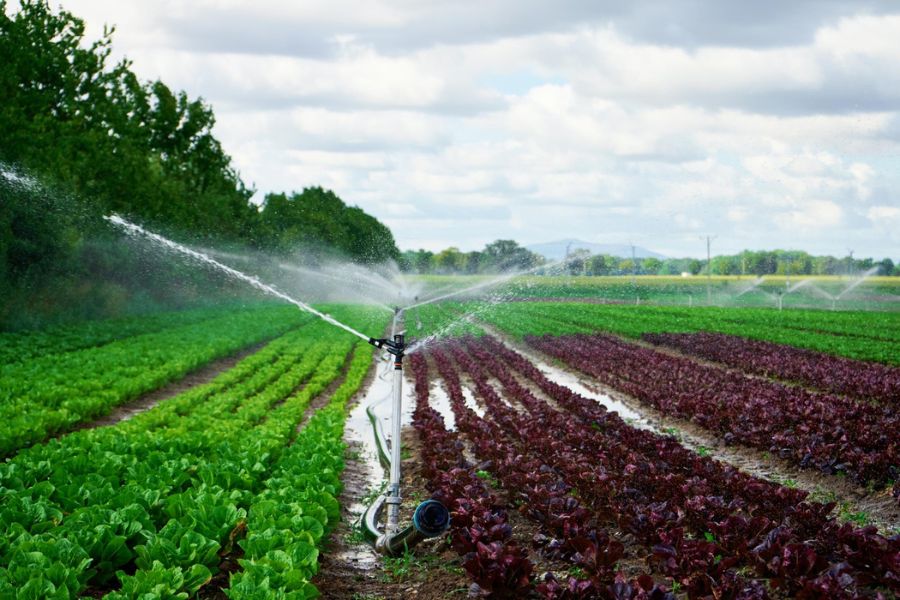
A new inter-ministerial committee on irrigation is the government's latest attempt to fix a decades-old bottleneck — but the gap between ambition and hectares on the ground remains vast
Agriculture
When Agriculture Minister Frank Tumwebaze sat down this week with the leadership of the Ministry of Water and Environment, the number that framed the entire conversation was a small one: less than 2 percent. That is the share of Uganda's agricultural land currently under irrigation, according to Tumwebaze, despite the technology's proven power to lift production, productivity and resilience to a climate that is becoming steadily less predictable.
The meeting, held in Kampala and confirmed by the minister on August 15, produced a concrete outcome: a new inter-ministerial working committee on water for production and irrigation planning, bringing together the agriculture and water ministries to coordinate investment and implementation. The committee will meet monthly to track progress, flag bottlenecks and push forward a irrigation agenda that officials admit has moved too slowly for too long.
"We jointly noted the low uptake levels of irrigated farming in the country (less than 2%) and the impact it has on the country's production and productivity," Tumwebaze said, according to a ministry readout of the meeting. He said tighter coordination between the two ministries was necessary to ensure that investments in water infrastructure "translate into increased agricultural production and productivity," and that expanding irrigation was critical to letting farmers produce through the year rather than gambling on a single rainy season.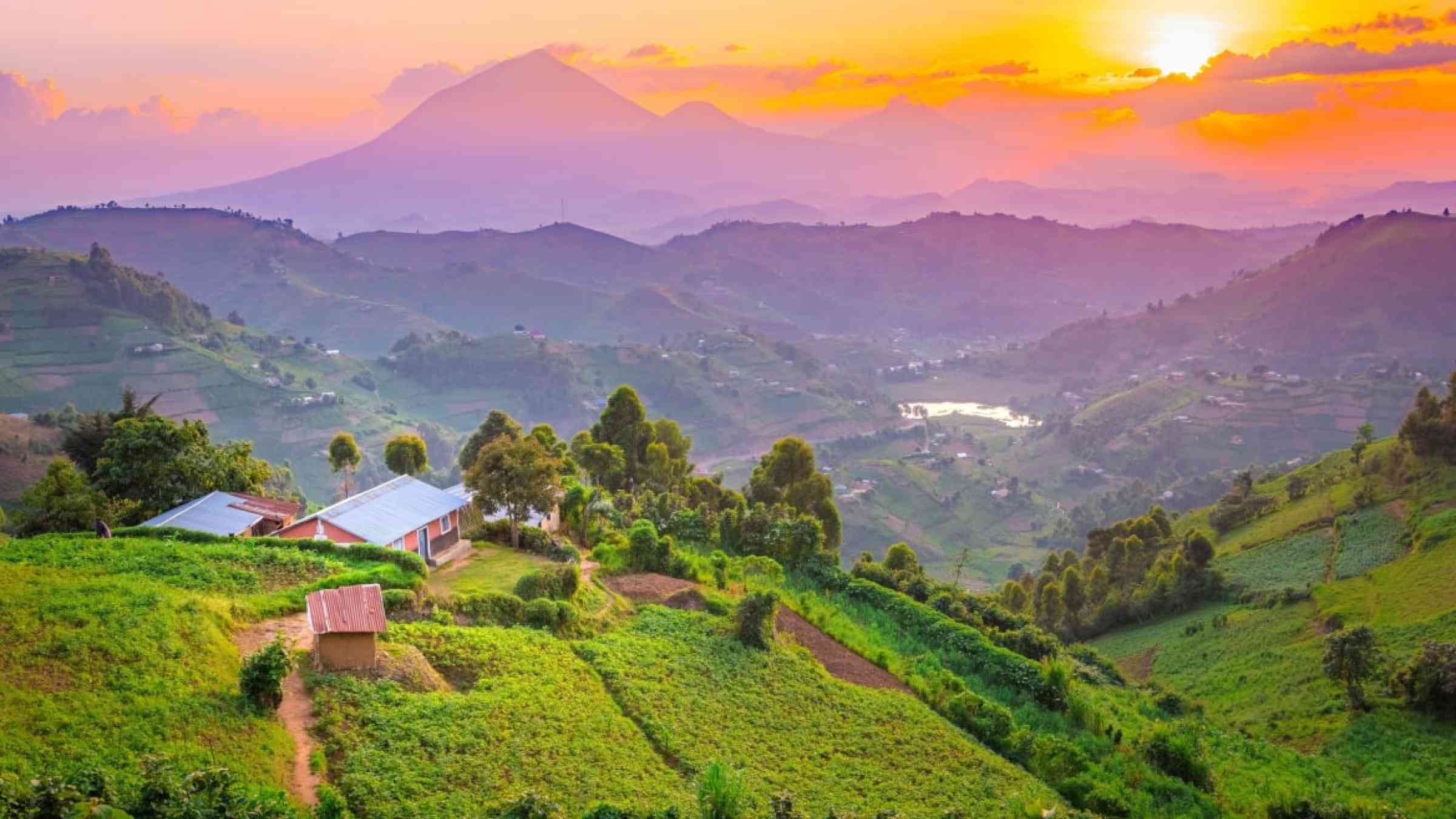
It is a familiar diagnosis dressed in a new administrative arrangement. Uganda's National Irrigation Policy set a target of bringing 1.5 million hectares under irrigation by 2040, a goal meant to transform a farming sector that still overwhelmingly depends on rainfall. But according to the Ministry of Water and Environment's own figures, the area under formal irrigation has effectively stagnated at around 23,000 hectares since the 2020/21 financial year — a rounding error against the 2040 target, and evidence, critics say, that policy ambition has consistently outpaced delivery. Uganda's ratio of cultivated land actually under irrigation to land with irrigation potential sits at roughly 0.5 percent, among the lowest such ratios in East Africa.
The stakes of that gap are no longer abstract. Uganda has spent much of 2026 lurching between drought and flood-risk warnings. Karamoja's hunger crisis, which the government has linked to at least 19 deaths and prompted a Shs135.2 billion Cabinet food procurement package, was driven substantially by failed rains and a farming system with almost no buffer against dry spells. Southwestern Uganda recorded a severe May–July dry spell that farmers say wiped out much of their harvest and pushed food prices higher. Meteorologists have simultaneously warned of an above-normal rainfall outlook between August and December, driven by a weak-to-moderate El Niño and a positive Indian Ocean Dipole, raising the prospect of flooding in some of the same districts that were parched months earlier. For a farming sector whipsawing between too little water and too much of it, irrigation is less a productivity upgrade than a basic insurance policy — and one that most Ugandan farmers still do not have.
Government has not been entirely idle on the file. The Ministry of Agriculture's Micro-Scale Irrigation Program, run in line with the National Irrigation Policy, has distributed subsidised irrigation kits to smallholders in districts from Kayunga to Ntungamo. The Farm Income Enhancement and Forest Conservation Programme, now in its third phase (FIEFOC-III), has built larger public irrigation schemes, including the long-running rehabilitation of the Mubuku Irrigation Scheme in Kasese, which local cotton and rice farmers credit with stabilising yields through recent dry spells. In July, the African Development Bank approved a $140 million loan — part of an estimated $207 million programme also backed by the OPEC Fund for International Development — to expand climate-resilient irrigation, agro-processing, livestock services and cold-chain infrastructure in the Bunyoro subregion. Uganda has also re-entered the World Bank's active lending portfolio, with a pledge of more than $2 billion in concessional financing over the next three financial years covering, among other things, agriculture, water and irrigation infrastructure.
Yet the persistence of the inter-ministerial committee model itself — this is not the first such coordination body the government has stood up around irrigation — points to a structural problem that money alone has not solved. Water-for-production infrastructure sits under the Ministry of Water and Environment, while the agricultural extension services, subsidy schemes and farmer mobilisation needed to actually put that water to use sit under the Ministry of Agriculture. Analysts at the Economic Policy Research Centre have previously argued that this institutional split, combined with weak coordination at the district level, has left many completed irrigation schemes underused because the complementary investments — extension advice, market linkages, farmer training — never arrived on schedule. Tumwebaze's committee is, in effect, an attempt to close that seam.
For smallholders, the practical consequences of the 2 percent figure are immediate. Rain-fed agriculture leaves farmers exposed to exactly the kind of shocks Uganda has seen repeatedly this year: a late start to planting rains, a dry spell mid-season, or an unexpected downpour that floods low-lying fields before harvest. Irrigation would allow farmers in drought-prone regions such as Karamoja, Teso and parts of the cattle corridor to plant a second or third season regardless of rainfall timing, smoothing household incomes and reducing the recurring need for emergency food distributions. It would also underpin the government's broader agro-industrialisation ambitions — feeding processing plants such as the Soroti Fruit Factory or the planned Nonda Coffee Park with a steadier, more predictable supply of raw material, rather than one that swings with the weather.
The Parish Development Model, the government's flagship anti-poverty financing vehicle, has already tried to nudge farmers toward irrigation-adjacent investments, but PDM's own troubled loan-recovery record and reports of SACCO mismanagement have complicated its credibility as a delivery channel. Whether the new inter-ministerial committee succeeds where previous efforts have not will likely hinge on whether it can translate monthly meetings into a faster pipeline of small- and medium-scale schemes reaching ordinary farmers, rather than concentrating investment in a handful of flagship projects.
For now, the number that Tumwebaze put on the table — less than 2 percent — remains the honest scorecard against a 1.5-million-hectare ambition. Closing that gap will determine whether Uganda's agriculture sector, which grew 6.7 percent last financial year on the back of favourable seasons and government wealth-creation programmes, can sustain that growth through the droughts and floods that climate scientists say are becoming Uganda's new normal.



