AGRICULTURE
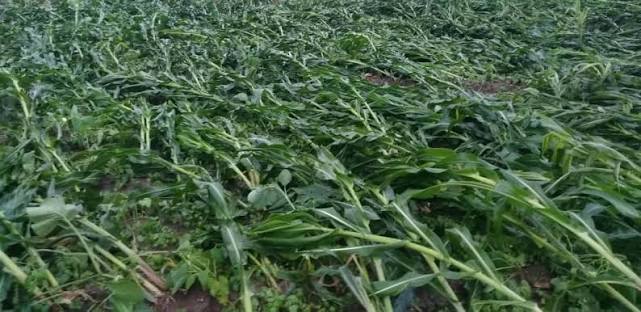
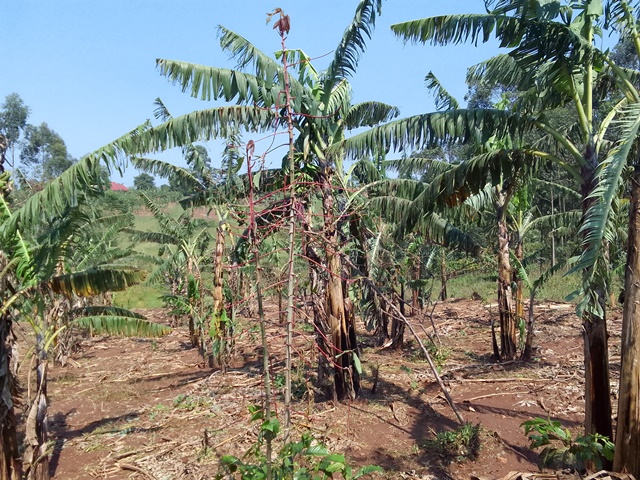
For eight hours through the night of August 10 into the early hours of August 11, a violent windstorm tore through Ndorero and Kanyinya wards in Rukungiri Municipality's Southern Division, flattening banana plantations, snapping sugarcane stalks and shredding cassava and sweet potato gardens that more than 300 families depend on for food and income. By morning, farmers were walking their ruined fields totting up losses that, for some, ran into acres of destroyed crops — and, for at least one woman, marked the second time in two years that a storm had wiped out her livelihood.
The damage in this pocket of western Uganda is, on its own, a local tragedy. But it is also a data point in a pattern that climate researchers, government officials and ordinary citizens increasingly agree is intensifying: extreme, localised weather events are becoming more frequent and more destructive across Uganda's farming heartlands, arriving faster than the country's institutions — insurance markets, relief systems, early-warning networks — can adapt to meet them.
A disaster with a name and a face
The human toll of the storm is easiest to see in the testimonies of the farmers themselves. Moses Twinomujuni, a 46-year-old father of four, said his entire two-acre banana plantation was destroyed. "I am stuck because the windstorm has left me with nothing to feed my four children, who will be home for the school holiday soon," he said, appealing to government for quick-maturing maize seedlings to help his family recover before hunger sets in. Fortunate Ainemugisha, 32 and a mother of three, lost her banana plantation and an acre of cassava. "In the coming days I will be surviving on prayers and God's mercy," she said. Aggrey Mugisha said the roughly two acres of bananas he lost had "dashed my hopes of providing for my family and paying school fees for my four children in boarding school."
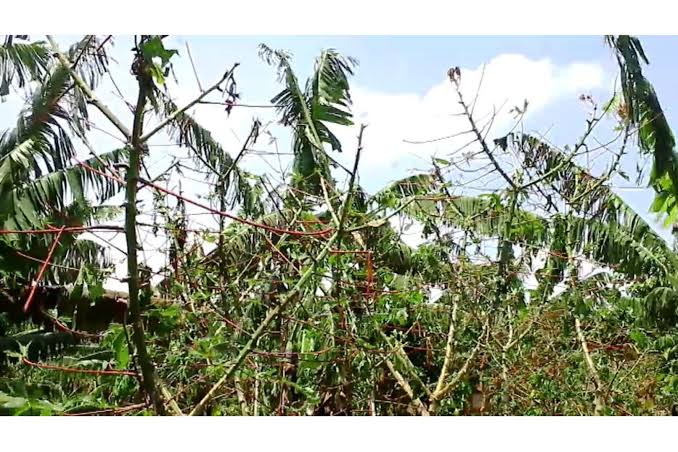
For Caroline Musiime, 36, the storm reopened an old wound. A hailstorm destroyed her banana plantation last year; this week's windstorm did the same again. "I don't know why this is happening to me," she said. "I believe this is God's plan and I trust He will provide for my family because I have no other option now." Fellow resident Patrick Mugisha, who also lost crops to last year's hailstorm, said his community never received relief support after that earlier disaster — a fact that is now colouring how affected families view promises of government help this time round.
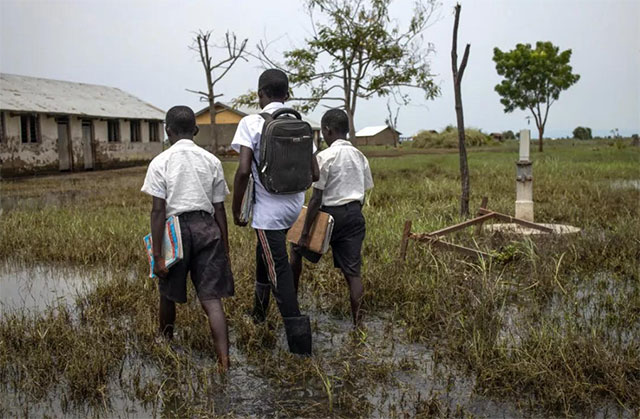
Local leaders say they are moving to respond. Southern Division LC3 Chairperson Joel Gumisiriza said his office has compiled a list of affected farmers and is urging residents to keep cultivating where they can while government works out relief measures, warning that "some farmers are likely to face hunger after losing their gardens to floods and the storm," and cautioning that more rain is forecast for parts of the sub-county. Rukungiri Municipality Mayor Boaz Matita Kamsiime said he would visit affected families early next week and asked residents to "remain calm as we look for solutions." Neither official, however, has yet specified where relief funding or seedlings would come from — a gap that mirrors the experience of the 2025 hailstorm victims who say they were left to recover on their own.
A pattern, not an anomaly
Rukungiri's back-to-back disasters fit a broader and well-documented national trend. Uganda's National Climate Change Policy has flagged a rising frequency of extreme weather events, including both floods and droughts, over the past decade, and independent polling backs this up: seven in ten Ugandans told the pan-African research network Afrobarometer that crop failure has become more severe in their area over the past ten years, and majorities say they have already changed which crops they grow or what they eat in response. Uganda's National Environment Management Authority estimated storm and flood damage to crops at roughly $47 million in a single year as far back as 2008 — about 3 percent of the value of that year's entire cash and food crop output — a figure that gives some sense of scale even before accounting for the more erratic weather patterns of recent years.
The timing of this week's storm is also significant. It arrives just as Uganda's Ministry of Water and Environment has been warning of an unusually wet second half of 2026, with above-normal rainfall expected from August through December driven by a weak-to-moderate El Niño and a positive Indian Ocean Dipole — the same climatic conditions blamed for the drought that preceded it in Karamoja earlier this year. Meteorologists have specifically flagged western and eastern highland districts, including areas prone to landslides around Mount Elgon and Bulambuli, as being at elevated risk this season, while sorghum and millet yields nationally are projected to fall by as much as 30 percent in drought-to-flood transition zones. Rukungiri's storm, in other words, may be an early instalment of a difficult season still to come.
Agriculture remains the backbone of Uganda's economy and the livelihood of the majority of its people: the sector contributes roughly a quarter of national GDP and employs more than seven in ten Ugandans, with about 80 percent of households engaged in some form of farming. That concentration of economic life in agriculture is precisely what makes weather shocks like the Rukungiri windstorm so consequential — a single overnight storm can simultaneously threaten food security, disrupt children's school fees, and dent a local economy that has few other income sources to fall back on.
The insurance gap
What makes cases like Rukungiri's especially frustrating to agricultural policy specialists is that Uganda does have a national crop insurance mechanism — it simply has not reached anywhere near the scale needed to matter to most smallholders. The Uganda Agriculture Insurance Scheme, a public-private partnership launched in 2016 between government and private insurers and implemented in part through Agro Consortium Uganda, offers subsidised weather-index and livestock policies designed to pay out automatically when satellite-monitored rainfall or drought conditions fall outside normal ranges. The scheme has grown from roughly 20,000 insured farmers at its 2016 launch to more than a million today, the large majority of them smallholders. That is real progress — but it is progress against a vast unmet need: only around 1 percent of Ugandan adults hold any form of formal insurance, even though roughly two-thirds of households rely on agriculture for their livelihood.
There is a further, more technical gap that Rukungiri's case exposes starkly: most index-insurance products on the market are built around rainfall deficits or excesses — drought and flood — because those are the perils that satellite data can price most reliably. Wind and hail damage, the kind that destroyed Twinomujuni's, Ainemugisha's, Mugisha's and Musiime's gardens twice in two years, are harder to model with the same tools and are far less commonly covered, leaving farmers in storm-prone highland and hillside areas like Rukungiri with fewer options even where insurance infrastructure nominally exists.
What happens next
For the farmers of Ndorero and Kanyinya, the immediate priority is basic: seedlings, food relief, and some assurance that this time, unlike after the 2025 hailstorm, help will actually arrive. Twinomujuni's request for quick-maturing maize varieties reflects a common coping strategy among Ugandan smallholders — pivoting to short-cycle crops after a disaster to rebuild food security within a single season rather than waiting a full year for bananas or cassava to mature again. Whether local and national government can mobilise seed and relief distribution quickly enough to make that pivot possible will determine whether this disaster becomes a temporary setback or, as it has for Musiime, part of a recurring cycle of loss.
More broadly, Rukungiri's second storm in two years adds to a mounting case for expanding both the reach and the peril coverage of Uganda's agricultural insurance architecture, strengthening hyper-local early warning systems that can give farmers even a few hours' notice to protect what they can, and building faster, better-resourced relief pipelines at the district level. Without those investments, Uganda's smallholders — who put more of their own capital, labour and hope into each season than almost anyone else in the economy — will continue to absorb the growing cost of a changing climate largely on their own.
Published By | Features Editor