Agriculture
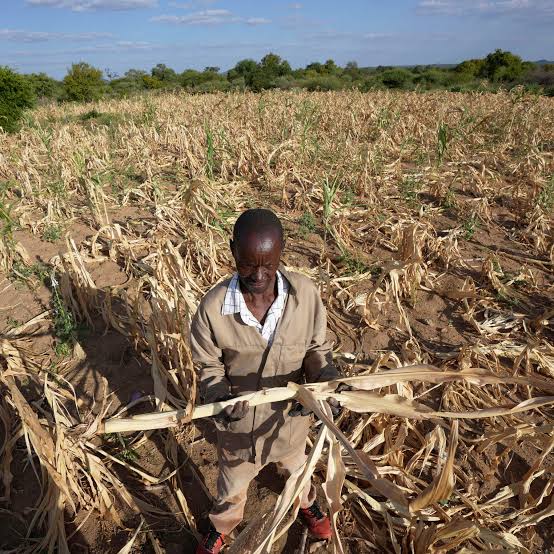
For farmers across Uganda's Acholi sub-region, July was supposed to be a season of recovery. The first cropping season, which normally runs from March to July, had already failed — scorched by months of erratic, insufficient rain that withered maize, sorghum and groundnuts before they could mature. The second season, beginning in July and running through the November-December harvest, was the chance to make up the difference before hunger set in fully.
Instead, on July 22, meteorologists delivered the opposite of what farmers needed to hear: don't plant yet. George William Omony, Principal Meteorologist at Uganda's Department of Meteorology under the Ministry of Water and Environment, told Uganda Radio Network that the scattered showers falling across parts of Acholi are too light, too isolated and too inconsistent to support germination. Farmers who plant now, he warned, risk losing their seed altogether because the soil has not accumulated enough moisture to sustain young crops.
"Even if there is some little rainfall, it is not enough. It is isolated, does not cover a wide area, and when it rains for one day, it is often followed by several dry days," Omony said. His advice, consistent with the Ministry of Water and Environment's July 2026 Monthly Weather Update, is for farmers to use the waiting period to prepare their gardens — clearing land, fallowing soil, sorting seed — and hold off sowing until steady, soil-replenishing rain actually arrives. That is a difficult message to deliver to a region where, according to district leaders, hunger is no longer a looming risk but a present reality.
A death toll that keeps climbing
Speaking to journalists in Gulu City this week, Lamwo District Chairperson Sisto Oyet Ocen said at least eight people in his district have died from hunger-related illnesses in recent months, while 126 people — including children — have been admitted to health facilities suffering from malnutrition. In neighbouring Agago District, local leaders report a further 15 suspected hunger-related deaths over the past two months. Together, the toll across just these two districts has passed 20 lives, a grim marker of how quickly a failed rainy season can turn into a humanitarian emergency in communities that depend almost entirely on rain-fed agriculture for both food and income.
The timing compounds the damage. Farmers who lost their first-season crops had been counting on the second season, which traditionally begins in July and August, to rebuild household food stocks before the long dry spell that typically follows the November-December harvest. A second consecutive failure — or even a further delay in planting that shortens the growing window before harvest — raises the risk that some households will enter 2027 with essentially no harvest at all from either season.
The El Niño behind the dry spell
Omony traced the prolonged dry conditions to a rapidly developing El Niño event, driven by unusually warm sea surface temperatures in the equatorial Pacific Ocean. He said sea surface temperature anomalies had reached 1.47 degrees Celsius by July 12 — well above the 0.8-degree-Celsius threshold used to classify an El Niño event — and that the ocean is warming by roughly 0.2 degrees Celsius every week, with the warming expected to peak between October and December.
"This warming has already completely suppressed the June, July and August rainfall season," Omony said, noting that while isolated rainfall may still fall in patches, it is unlikely to be widespread or sustained enough to replenish the soil moisture needed for a successful planting.
The Ministry's July bulletin projects generally below-average rainfall over much of the country, alongside warmer-than-normal temperatures that could accelerate soil moisture loss, dry out pastures and heighten food security risks more broadly — not just for crop farmers but for the cattle-keeping communities of the wider cattle corridor. The bulletin advises farmers to monitor crops for moisture stress, adjust planting schedules where necessary, and adopt soil moisture conservation practices such as mulching in the interim.
There is a narrow silver lining. The latest weekly forecast from the IGAD Climate Prediction and Applications Centre (ICPAC) suggests northern Uganda could see above-normal rainfall for the week of July 21–28, even as central and eastern Uganda remain drier than usual. But meteorologists caution against reading too much into a single week's forecast: rainfall can remain highly localised, and a burst of rain followed by another dry spell would do little to help germinating crops survive. For farmers, the operative question is not whether it rains once, but whether the rains become consistent enough to actually replenish the soil.

A pattern bigger than one region
The Acholi advisory does not stand alone. It follows weeks of parallel — and in places more severe — drought reporting from the Karamoja sub-region, where a Cabinet-approved emergency relief programme is now under way after a hunger crisis pushed the confirmed death toll into the double digits and the government moved to distribute food to hundreds of thousands of households. The ICPAC's regional outlook for the Greater Horn of Africa points to increasing climate variability across the region generally, with rainfall distribution expected to vary considerably even between neighbouring districts — a pattern that is now visibly splitting Uganda's north into pockets of relative relief and pockets of deepening crisis.
For Acholi specifically, the sub-region normally relies on two reasonably predictable cropping seasons a year: the first sown between March and April and harvested in June or July, and the second sown in July and August for a November-to-December harvest. Both anchor points of that calendar have now been disrupted in the same year, a compounding shock that agricultural economists say is becoming more common as El Niño and La Niña cycles interact with longer-term warming trends across East Africa.
What is at stake for farmers, markets and the economy
The immediate stakes are households: families in Lamwo, Agago and neighbouring districts who lost their first-season harvest and now face a delayed, shortened, or possibly failed second season, with malnutrition already documented in children brought to health facilities. But the ripple effects extend further. Acholi's smallholders feed local and regional markets in maize, beans, rice, groundnuts, sorghum and sesame; a second consecutive production shortfall in the sub-region would likely tighten local grain supplies and add further upward pressure to prices that have already been drifting higher in Kampala's wholesale markets this year, compounding food-price inflation for urban consumers as well as rural producers.
It also puts pressure on a government relief and agricultural-extension system that is simultaneously managing an active emergency response in Karamoja. District leaders in Acholi are, in effect, asking for the same kind of attention — food relief now, and support for farmers to plant fast-maturing, drought-tolerant seed varieties once the rains do stabilise — that Karamoja has received, at a moment when the national budget for emergency response is already stretched.
Agronomists in the region, including advisers such as Richard Sejjoba who work directly with farmers in Gulu City, have long urged Acholi households to plant early-maturing, pest-resistant hybrid seed and to monitor official weather updates from the Uganda National Meteorological Authority rather than planting on instinct after the first rains. That advice is now more urgent than ever: with the growing window for the second season already compressed by weeks of delay, farmers who do resume planting once the rains firm up will likely need the fastest-maturing varieties available if they are to bring in any harvest before the dry season returns.
For now, the message from meteorologists is patience — a difficult ask in districts where patience is running out along with the food.
Published By | Features Editor