Written By | Staff Writer
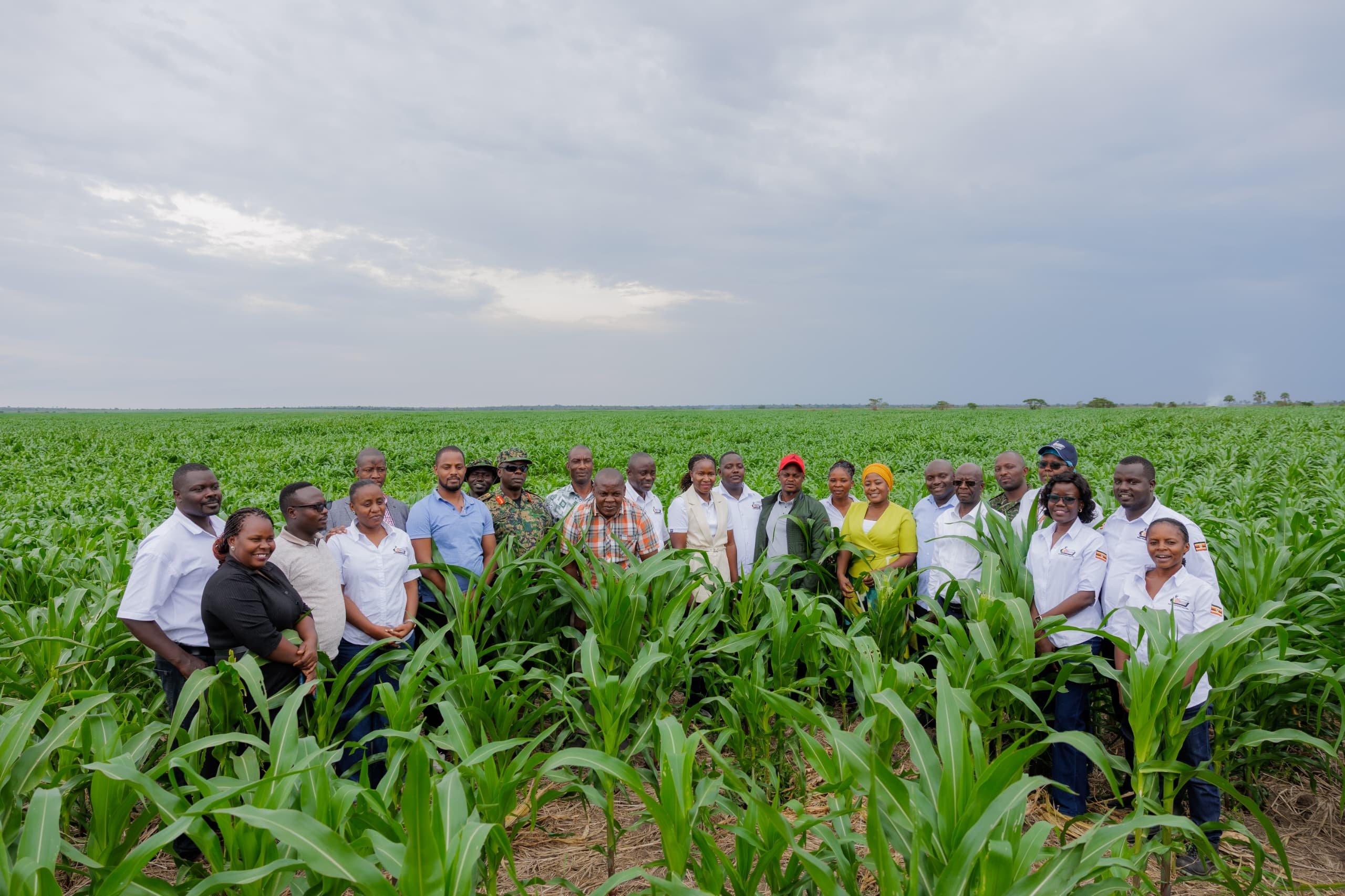
MPs who toured the NEC Agro Farm in Kyankwanzi last week found drought, missing machinery, crop-raiding animals and 640 acres that spend four months of the year under water.
Agribusiness and Industry
On 19 September, five members of Parliament's Committee on Defence and Internal Affairs spent two hours walking the blocks of the National Enterprise Corporation's Agro Farm in Kyankwanzi. It was one stop on a countrywide tour of Ministry of Defence and Veterans Affairs establishments, and on paper the least dramatic. There were no barracks to inspect and no procurement file to open — only maize, more than 3,000 acres of it, running from Lake Katonga to River Mayanja.
What the committee heard, however, was a compact account of almost everything that limits large-scale crop production in Uganda, delivered by managers of a farm with the one advantage almost no other farm has: a guaranteed buyer that is also its owner.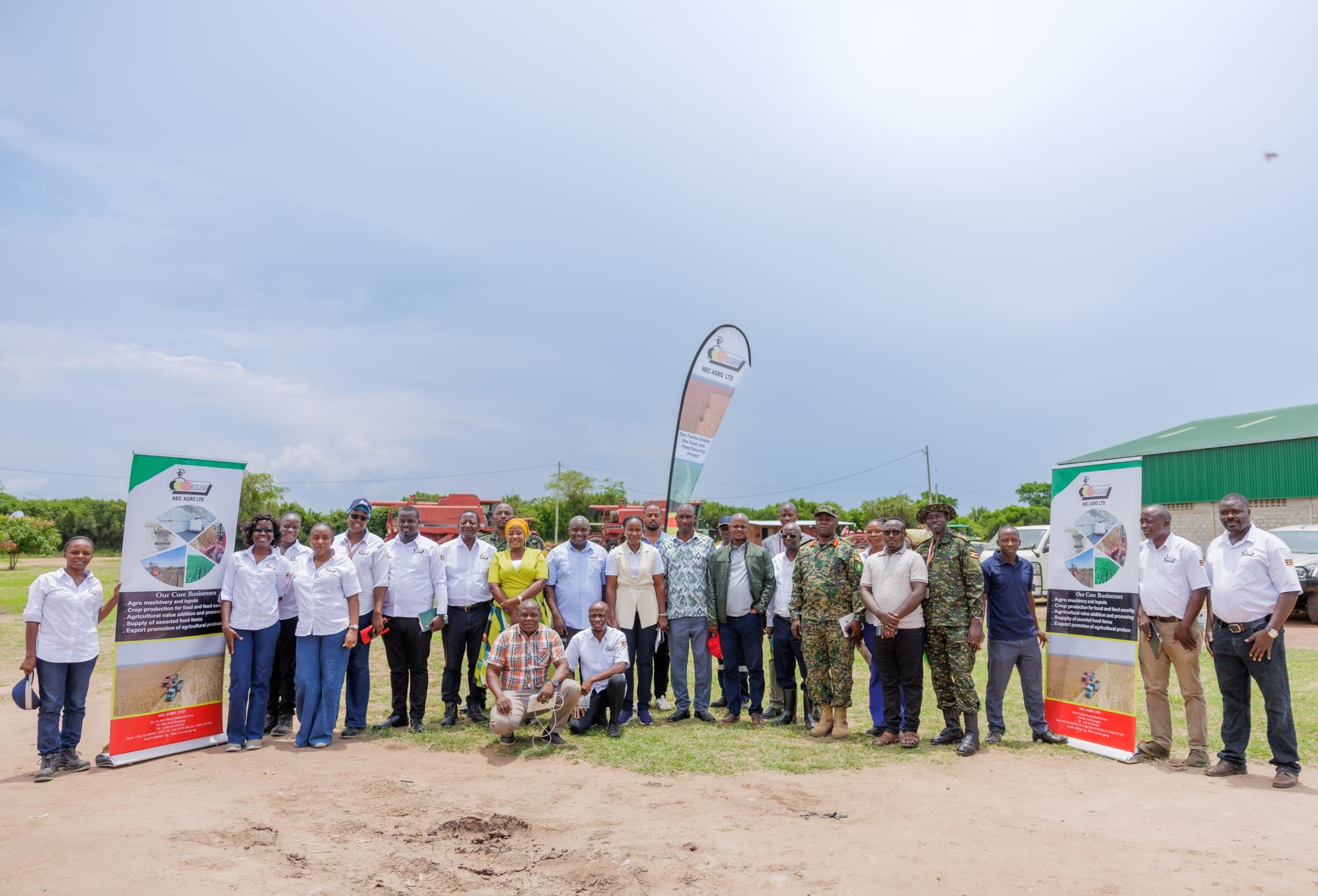
What the farm is
NEC is the commercial arm of the Uganda People's Defence Forces. The Kyankwanzi farm was established a little over two years ago as one of its production subsidiaries, alongside the Katuugo farm, with a single mandate: grow maize for the army.
Agronomist Didas Agaba told the MPs the farm is the sole provider of maize meal to the UPDF, and also supplies other beneficiaries on presidential guidance. It runs more than 18 blocks, each over 100 acres. An acre takes 10 to 12 kilogrammes of seed, and the crop needs about three and a half months to mature and dry before harvest. "This is a government farm owned by NEC Enterprises," Agaba said. "We plant over 3,000 acres of maize and entirely it is to feed the UPDF. We plant only maize."
Harvesting is done by combine, which Agaba said keeps the crop free of adulterants and aflatoxins. That detail is easy to skip past and worth pausing on: it is the single clearest advantage the farm holds over the supply chain it replaced.
The quality argument
Uganda's open-market grain has an aflatoxin problem that is now well documented and largely unaddressed. In August, the MP for Bukedea County, David Beecham Okwere, told Parliament that 80 percent of cereals bought by PELA Commodities at the Soroti Industrial Park tested positive for aflatoxin, and that an aflatoxin-removal machine installed there has sat idle since 2018. The Eastern Africa Grain Council has put potential regional losses in the hundreds of millions of dollars, and Uganda has lost tens of billions of shillings to export rejections since 2023.
The root cause is not exotic. It is maize dried on bare ground, stored damp, shelled by hand and bulked at village buying points where no one is paid a premium for clean grain. A combine that harvests at the right moisture and delivers straight into controlled storage removes most of that risk in one step.
For a military feeding tens of thousands of soldiers on posho, that is a defensible reason to farm rather than buy. Aflatoxin is a liver carcinogen and an operational readiness issue at scale. The uncomfortable corollary is that the state has built a clean-grain channel for its own institution while the quality floor for everyone else remains where it was.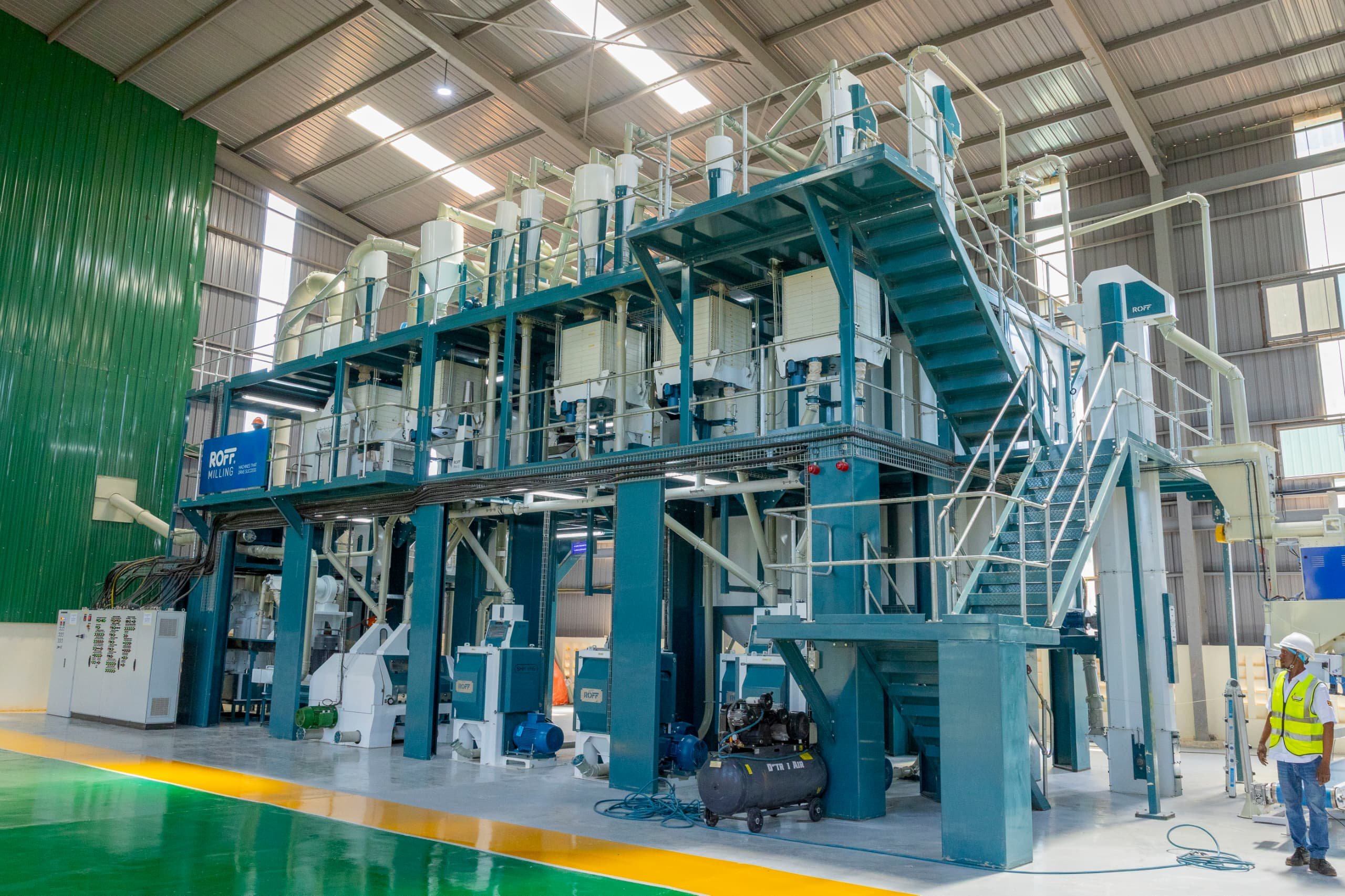
The constraints the managers named
The farm's general manager, Eng. Simon Baalwa Terwane, was candid with the committee. "The challenges we face are long droughts, lack of standard machines for planting and harvesting, floods from River Mayanja and animals that destroy the maize crops," he said, adding that the farm needs government intervention.
The flooding figure is the most concrete disclosure of the visit. Terwane said River Mayanja regularly submerges about 640 acres of the farm for almost four months. That is roughly a fifth of the planted area out of production for a third of the year — a permanent, structural loss that no amount of agronomy will fix and that ordinary drainage works might.
Then there is the drought that has defined the 2026 agricultural year across central Uganda. The Kyankwanzi farm sits in the same rainfall regime as the Luwero and Nakaseke coffee gardens now reporting losses, and it shares their exposure: no irrigation, and a crop with a hard three-and-a-half-month clock that cannot wait for late rain.
Crop-raiding animals complete the picture. On a 3,000-acre block bordered by a lake and a river, losses to wildlife are a recurring cost that smallholders elsewhere — from Buliisa's elephant corridors to the Karamoja rangelands — have documented for years with little compensation to show for it.
What the MPs said, and what it would cost
Maj Gen Joseph Musoke Semwanga, Commander of Reserve Forces and one of the UPDF's ten representatives in Parliament, led the delegation. His prescription was ambitious. NEC should become a centre of excellence, he said, and should benchmark against the Netherlands, the world's most productive agricultural exporter by value per hectare.
"NEC should never depend on nature for irrigation," Semwanga said. "I know there are a lot of government subsidies on solar power, why don't we take advantage of them? We should also regionalise production by providing exports to other countries and become a centre of food production and security for our country and other countries in the region."
The instinct is right and the financing is the problem. Uganda's flagship irrigation instrument for farmers, the micro-scale irrigation matching grant, is capped at 2.5 acres. At Kyankwanzi that would cover less than a tenth of one percent of the planted area. Irrigating 3,000 acres — or even the 2,360 acres that are not under seasonal flood — is a capital project in the tens of billions of shillings, not a subsidy claim. The committee's pledge to consider the farm's needs "through its oversight and budgeting functions" is therefore the operative sentence of the whole visit: this will be a defence budget line, or it will not happen.
That raises a question worth asking openly. Defence spending in Uganda is among the least publicly itemised in the budget, and agricultural capital expenditure routed through a defence subsidiary inherits that opacity. If NEC is to be a national centre of excellence in food production, the case for reporting its yields, costs and losses as any other public agricultural investment is reported becomes hard to resist.
From feeding the army to feeding the country
Semwanga's second suggestion — that NEC move beyond military supply into regional food production and exports — describes a shift that is already partly under way. NEC has been used to move relief food to hunger-hit communities in Karamoja, and the government's three-phase Karamoja food stabilisation strategy announced on 9 September places the UPDF and the Prisons Service in roles that private contractors previously held.
Taken together, these are the outlines of a state food-procurement system running parallel to the commercial grain trade. There is a real argument for it: contractor fraud in relief procurement has been a chronic problem, and a state producer with its own harvesters and stores is harder to defraud than a tender.
There is an equally real argument against. Every tonne of relief maize grown on a government farm is a tonne not bought from Ugandan farmers who are, at this moment, watching Kenya's 25-million-bag maize deficit lift prices and wondering whether structured buying will ever reach them. The Grain Council of Uganda has spent the year pressing for structured bidding through certified warehouses — a mechanism that would pull smallholder grain up to export standard by paying for quality. An outgrower scheme around Kyankwanzi, using NEC's driers and combines to clean grain bought from neighbouring farmers, would deliver the army's quality floor and a village price premium at the same time. Nothing in the farm's current model, which plants only maize on its own land for its own customer, does that.
The test
Two years in, the Kyankwanzi farm has not yet solved for its own single customer. It floods, it dries out, it lacks planters and harvesters, and animals take a share of what survives. Judged against Semwanga's benchmark — the Netherlands, on a fraction of the land, exporting to the world — it is a long way from a centre of excellence.
Judged more fairly, it is a two-year-old farm doing something Uganda's private sector has largely declined to do: commercial-scale, mechanised, quality-controlled grain production. Whether it becomes a model or another entry in the country's long list of well-commissioned and under-run state facilities will depend less on the committee's encouragement than on whether the next defence budget carries an irrigation and drainage line item — and on whether anyone outside the farm gate is ever allowed to see the yield figures.



