Written By | Staff Writer
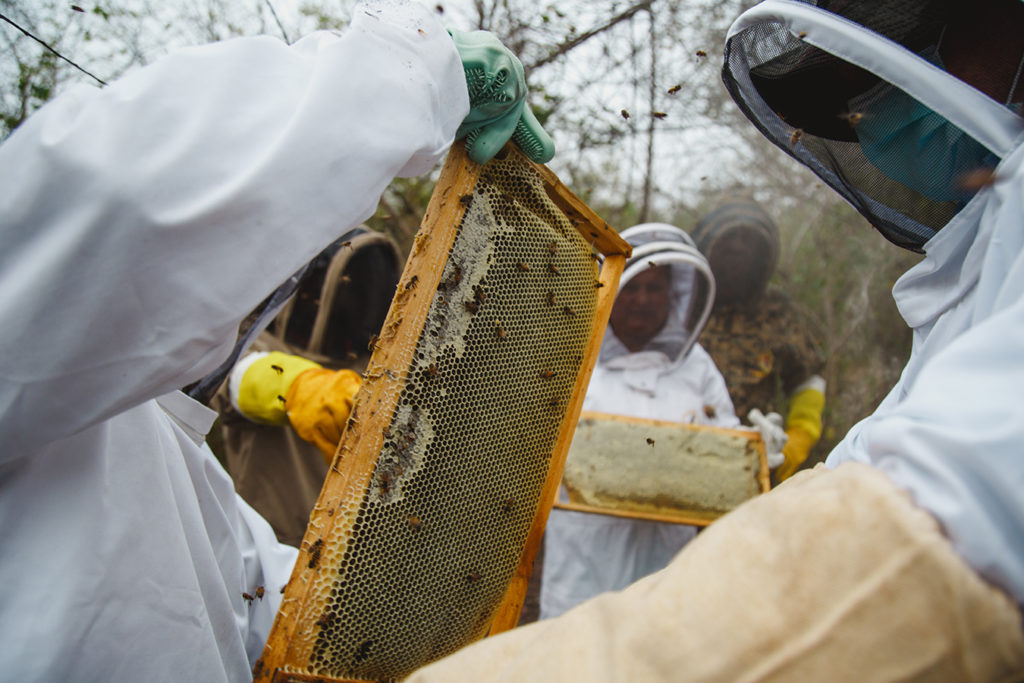
Uganda's beekeeping remains largely low-input and close to wild, with most producers relying on traditional and transitional hives rather than intensive, chemical-dependent apiaries.
Agriculture
In just over a week, Hotel Africana in Kampala will fill with beekeepers, scientists and honey traders from across the continent for the fourth Africa-Apimondia Symposium, running August 25 to 28. It is only the fourth time in the 102-year history of Apimondia, the World Federation of Beekeepers, that Africa has hosted one of its regional gatherings — and Uganda, chosen to host it, is treating the event as far more than a conference. It is the centrepiece of a campaign to turn one of the country's quietest agricultural success stories into a recognised global brand.
The numbers behind that ambition are striking for a sector that rarely makes headlines. Uganda now has an estimated 1.2 million beekeepers producing roughly 210,000 metric tonnes of honey a year, of which about 80,000 tonnes are exported, generating in the region of Shs889 billion, according to figures cited by the Ministry of Agriculture, Animal Industry and Fisheries. That places apiculture — beekeeping — among the more significant, if under-appreciated, contributors to rural household incomes, alongside better-known cash crops like coffee and tea.
"We shall use the Africa-Apimondia Symposium to amplify the bee products of Uganda so that they can access the international market," said Dr Dickson Biryomumaisho, executive director of the Uganda National Apiculture Development Organisation (TUNADO), the umbrella body coordinating beekeepers nationwide. "When people buy Ugandan bee products, they are not just buying a product — they are buying the science and technology used to keep bees healthy."
Selling the story behind the jar
That framing — honey as narrative, not just commodity — sits at the heart of Uganda's strategy for the symposium. Officials and industry leaders argue that Uganda's genuine competitive advantage is not volume, where it cannot match major global honey exporters, but the relative health of its bee populations at a moment when colony collapse disorder and other diseases have devastated hives across Europe and North America.
Uganda's beekeeping remains largely low-input and close to wild, with most producers relying on traditional and transitional hives rather than intensive, chemical-dependent apiaries. Biryomumaisho argues that this "naturalness" is itself a marketable asset, comparable to how New Zealand transformed Manuka honey from a regional product into a global premium brand once research documented its distinctive medicinal properties. "If we study the medicinal values, profile our honey and examine its chemical composition, we can create high-quality products for pharmaceutical and cosmetic industries," he said, pointing to apitherapy — the medicinal use of honey, propolis and other bee products — as one of the symposium's core discussion tracks, alongside pollination services, safe agrochemical use around hives, and stingless bee-keeping as an emerging livelihood option.
There is also a case to be made that beekeeping is quietly propping up Uganda's marquee export crop. Biryomumaisho credits intensified beekeeping in Robusta coffee-growing areas of Greater Masaka with a measurable boost to coffee yields over the past five years, through improved pollination — a claim symposium organisers plan to showcase with research demonstrations. Given that Uganda has in the past year overtaken Ethiopia as Africa's leading coffee exporter, any credible evidence that beekeeping is contributing to that growth would give apiculture a stronger claim on policy attention and investment.
The compliance clock is also ticking
Even as Uganda prepares to showcase its honey to the world, the sector is racing against a regulatory deadline that could complicate the sales pitch. Dr Anna Rose Ademun Okurut, the ministry's commissioner for animal production and health, has been warning beekeepers and exporters for months that rising international demand comes bundled with tightening quality scrutiny, particularly from the European Union, one of Uganda's key honey markets. "The challenges are that, as we export more, the requirements for quality also increase," she said in earlier remarks on the sector. "If tests detect unwanted chemicals, buyers may block our products. Farmers need guidance on what chemicals can and cannot be used near bee colonies to maintain market access."
The EU has moved to tighten its rules on antimicrobial residues in food products, including honey, and Ugandan officials and industry bodies have been pushing an awareness campaign to ensure beekeepers understand which agrochemicals — used on nearby crops, not necessarily by beekeepers themselves — can contaminate hives and trigger rejected shipments. It is a vulnerability shared with Uganda's better-resourced export sectors: honey, like coffee and fish before it, risks losing hard-won market access not because of any single bad actor, but because of contamination risks scattered across thousands of small, loosely regulated producers and the farms around them. Government's response has leaned on extension infrastructure — Ademun has pointed to the recruitment of entomologists in local governments nationwide, retooled to strengthen beekeeping extension services, and the alignment of beekeepers with the Parish Development Model (PDM), the government's flagship rural income programme, as well as support for pollinator value chains under the Uganda Climate Smart Agriculture Transformation Project, which spans all 69 districts.
A test of whether niche sectors can scale
For all the optimism swirling around the symposium, Uganda's honey sector illustrates a recurring theme in the country's agricultural economy: promising raw potential regularly outpaces the institutional, scientific and market-access infrastructure needed to fully capture its value. Biryomumaisho himself has been candid that increased research funding is the missing ingredient if Uganda wants to move beyond selling raw honey and into higher-value pharmaceutical and cosmetic applications — the kind of value addition that has made Manuka honey a premium global product rather than a commodity good.
The symposium offers a concentrated opportunity to close some of that gap: international scientists and industry experts converging in Kampala for four days, bringing with them not just prospective buyers but also research partnerships, investment interest and technical expertise that a comparatively small national beekeeping body could not easily access on its own. Government officials have signalled they are prepared to back the moment with technical support to maximise stakeholder participation, framing apiculture's contribution to rural livelihoods, biodiversity conservation, and youth and women's employment as reasons the sector deserves sustained rather than one-off attention.
Whether the symposium translates into durable gains — new export contracts, research partnerships, a genuine premium-honey brand — or turns out to be a well-attended showcase with limited lasting impact will likely depend on what happens after the delegates leave Hotel Africana. But for a sector that supports over a million Ugandan households and rarely gets to make its own case on an international stage, four days in the spotlight is, for now, a rare and valuable opening.



