Written By | Staff Writer
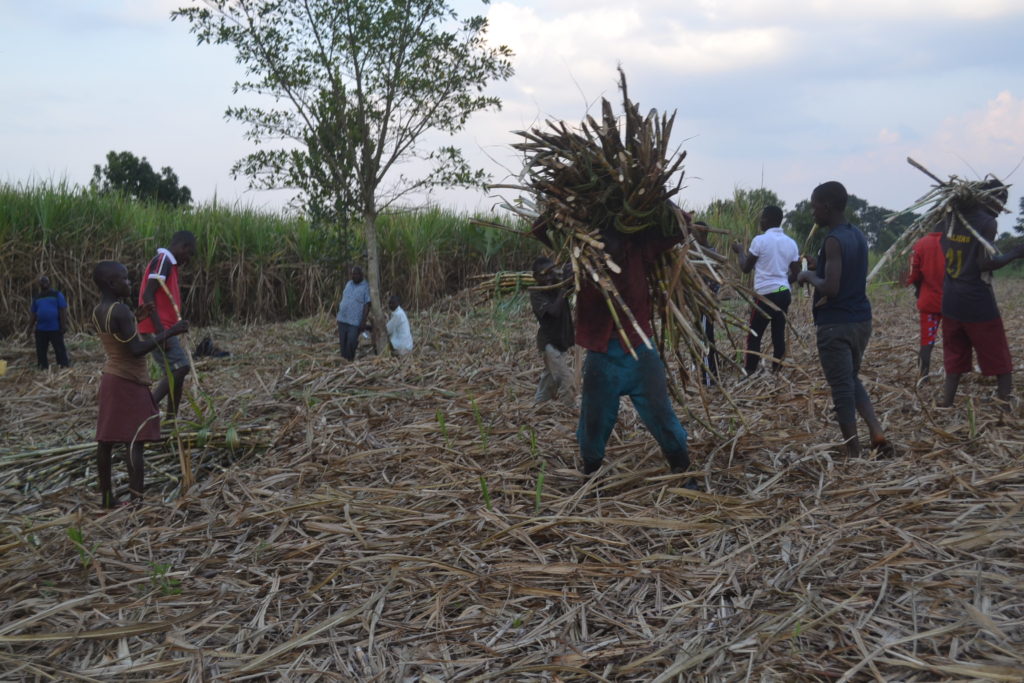
Busoga, long celebrated as Uganda's sugar belt, hosts seven major sugar factories, including the country's largest, Kakira Sugar Works
Agriculture
On Monday, as legislators in Kampala prepared for a fresh push against malnutrition, a starker picture was already visible three hours east, in the sugarcane-choked villages of Busoga. Cane stalks rise metres high right up to the walls of family homes in Iganga, Kamuli and Mayuge districts, but inside many of those homes, children are going hungry. It is one of Uganda's cruellest agricultural paradoxes: a region famous for lush soils and two reliable rainy seasons, sitting atop 35 percent of the country's sugar-milling capacity, is now also a hotspot for stunting, anaemia and chronic child hunger.
The Uganda Parliamentary Alliance on Food and Nutrition Security (UPA-FNS) met civil society groups on August 10 to sound the alarm over what it called rising malnutrition in Karamoja and, notably, in Busoga — a region that, unlike drought-hit Karamoja, has never lacked rainfall or fertile land. Alliance chairperson Peter Okeyo told the meeting that "we have seen an increase in cases of malnutrition, especially in Karamoja and Busoga, and there is a need for all stakeholders to come together and find lasting solutions." Members of Parliament were due to reconvene on Tuesday to focus specifically on nutrition among school-going children, with Okeyo urging households in Busoga to "return to eating more traditional vegetables."
More than 473,000 Ugandans are now reportedly affected by malnutrition and stunting nationally, including 122,100 children aged between six and 59 months, according to figures presented to the Alliance. But it is the Busoga numbers, drawn from a UPA-FNS field assessment conducted during Nutrition Week in June, that have most alarmed nutrition specialists — precisely because the region's problem is not a shortage of arable land, but a shortage of land devoted to food.
A Sea of Cane, a Shortage of Vegetables
Busoga, long celebrated as Uganda's sugar belt, hosts seven major sugar factories, including the country's largest, Kakira Sugar Works. Driving through Iganga, Kamuli and Mayuge, the UPA-FNS assessment team found sugarcane extending to the very edges of homesteads, gradually replacing the diverse gardens of maize, beans, cassava and vegetables that once fed those same families.
The mechanism is straightforward and, increasingly, well documented: sugar companies and agribusiness investors lease land from smallholders who hold it under customary tenure, offering between Shs800,000 and Shs1.5 million per acre over a five-year term. The cash is attractive in the short term, but it leaves households with too little land to grow their own food, forcing them to depend on markets for produce they once grew themselves. "We see sugarcane grown right up to people's homes, yet the same families are complaining of hunger," said Jacqueline Namusalisi, Technical Coordinator for Nutrition-Sensitive Agriculture at the Sasakawa Africa Association, in comments to the assessment team. She notes that Busoga's fertile soils and double rainy season could support year-round food production if households simply set aside modest plots for vegetables, beans and other nutrient-dense crops.
Ms Betty Rose Aguti, a Policy and Advocacy Specialist at Caritas Uganda, put the economics bluntly: lease incomes of roughly Shs1.2 million to Shs1.5 million spread over five years are simply insufficient to sustain a family once the land itself is gone from food production. She also links the cane boom to deforestation, noting that reduced firewood availability is pushing households toward quick-cooking but less nutritious meals — a secondary, less visible driver of the crisis.
The Numbers Behind the Crisis
The scale of the problem is laid out in stark statistics from the UPA-FNS assessment and the Ministry of Health. In Kamuli district, stunting stands at 29 percent, underweight at 11 percent and wasting at 4 percent — while, in a sign of the "double burden" of malnutrition increasingly seen across Africa, obesity among women aged 15-49 has reached 24 percent. Across Busoga more broadly, Dr Grace Lonyo Ocheng, Principal Nutritionist at the Ministry of Health, says 23.8 percent of children under five are stunted, 57.5 percent are anaemic, 10.2 percent are underweight, and only 17 percent receive a minimum acceptable diet. Nationally, Uganda's stunting rate sits at roughly 24 to 26 percent, with more than 2.4 million children affected — meaning Busoga's indicators are now running well ahead of the national average in several categories, a reversal for a region long assumed to be food-secure by virtue of its agricultural output.
Dietary diversity is a particular weak point: only one in three children in the assessed communities receives the minimum acceptable variety of foods needed for healthy growth, with most households relying almost exclusively on starches such as cassava, maize and sweet potato. Overall food security figures for the assessed areas show 47 percent of households food secure, 39 percent food stressed, and 14 percent in outright crisis.
Hungry Classrooms
Nowhere is the crisis more visible than in Busoga's primary schools. Up to 70 percent of pupils reportedly attend classes on empty stomachs, and school feeding coverage is threadbare: at Nakalama Primary School in Iganga, only 6 percent of 1,831 pupils receive a meal at school; at Bulubandi Primary School, coverage is about 8 percent of 2,500 learners. "Children go to school early and return late without eating. You cannot expect good performance from a hungry child," said Alex Irukan Ekoro, the Bunya East MP. State Minister for Primary Education Phyllis Chemutai, speaking during the 5th Parliamentary Week on Food and Nutrition Security held at Nakalama Primary School in Iganga, urged parents to prioritise child nutrition and called for school gardens and crop diversification away from overreliance on sugarcane.
Iganga District Chairperson Shabiru Isabirye said recent school inspections had revealed "disturbing levels of child hunger," with some learners falling sick for lack of food, while also flagging the closure of several NGOs as a factor reducing access to nutrition programmes in the district. Teenage pregnancy compounds the problem: the UPA-FNS assessment links early motherhood to worse nutrition outcomes, since adolescent mothers frequently lack both the knowledge and the resources to feed their children adequately. "Teen mothers are children raising children," said Silvace Onyaiti, Iganga's Assistant Chief Administrative Officer, adding that the situation is often worsened by abandonment by young fathers.
Knowledge, Not Just Land
Experts caution against reducing the crisis to a simple land-use story. Poor food preparation, inadequate storage and low awareness of balanced diets are compounding the damage, says Ms Namusalisi, pointing to overcooked vegetables that lose nutritional value and poorly dried, aflatoxin-prone maize. Caroline Kiwala, Assistant Resident District Commissioner for Iganga, said behavioural choices are also part of the problem: "We still see parents selling eggs and buying pancakes or soda for children. This is not only poverty; it is also a lack of nutrition education." She is calling for nutrition education to be mainstreamed through schools, churches, health centres and community gatherings — a call echoed by Catherine Naluggya of World Vision Uganda, who warns that if current trends continue, Busoga will see rising stunting, more school dropouts and worse learning outcomes.
What Comes Next
For now, the response is legislative rather than regulatory. UPA-FNS is pushing Parliament to pass a Food and Nutrition Bill that would strengthen coordination, accountability and food-safety systems nationally. Kigulu South MP Andrew Kiiza Kaluya says Parliament is also examining laws to protect smallholder farmers from losing all their land to sugarcane investors: "We must strike a balance between commercial agriculture and household food security." Damali Ssali of the Global Alliance for Improved Nutrition said Tuesday's parliamentary session is intended to equip MPs with nutrition data and open a review of the policy and legislative gaps exposed by the Busoga findings.
The stakes extend well beyond Busoga's district boundaries. Sugarcane earns Uganda foreign exchange and sustains thousands of out-grower incomes and factory jobs — Kakira Sugar Works alone is one of the country's largest private employers. But the Busoga findings sit awkwardly alongside Uganda's wider agro-industrialisation push, which has in recent months celebrated new cane-processing capacity, export deals and factory expansions across the sugar belt. If a region that produces so much cannot reliably feed its own children, nutrition advocates argue, then commercial success in one crop cannot be allowed to substitute for food security in the rest of the basket. As Susan Jolly Abeja, treasurer of the Alliance, put it: "Government cannot do it alone. Parents also have a responsibility to ensure children eat nutritious food." Whether Tuesday's parliamentary session translates that shared responsibility into binding protections for Busoga's food-growing land may determine whether the region's next harvest season looks any different for the families living in the shadow of the cane.



