Written By | Staff Writer
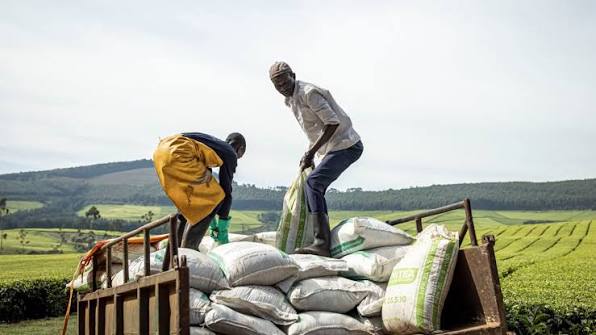
Eight months after the Iran war began, the cost of urea and phosphates is still a live threat to the 2027 planting seasons, and analysts say Uganda's exposure is bigger than its small import bill suggests.
Agriculture
KAMPALA
A Ugandan farmer deciding how many bags of fertiliser to buy for the coming season is, whether she knows it or not, making a decision about the Strait of Hormuz. The narrow waterway between Iran and Oman, closed or disrupted since the US–Israeli war with Iran began on 8 February 2026, carries a large share of the world's seaborne fertiliser and the raw materials used to make it. This week, with a new analysis of the crisis published by The Independent and an international economist warning of shortages for planting seasons stretching into 2027, the question of what the disruption means for Ugandan farms has returned to the front line.
What is new this week
The fresh element is the outlook. At an 8 October seminar, Joseph Glauber, an emeritus research fellow at the International Food Policy Research Institute (IFPRI), told his audience that fertiliser markets have so far been cushioned by stocks already held by commercial exporters. Those stocks, he said, are being drawn down this year but started from moderate levels, so he did not expect a repeat of the 2022 food price crisis. His real concern, as reported by The Independent on 15 October, is late 2026 into 2027: if the strait remains closed, farmers could face shortages precisely when they need to plant. For phosphates, he said, “it's even more extreme” than for nitrogen, partly because sulfur — a key input in phosphate processing — has been hard to obtain from the Gulf.
The same report offers the most recent Ugandan price points available: according to Farmgain Africa's July 2026 Market Outlook, a 50-kilogram bag of urea was selling for about Shs220,000 wholesale, DAP for between Shs180,000 and Shs200,000, and NPK 17-17-17 for about Shs140,000. The report cautions that prices vary by location, seller and period, and that analysts still need updated import and market data to establish how much of the crisis has been passed on to farmers.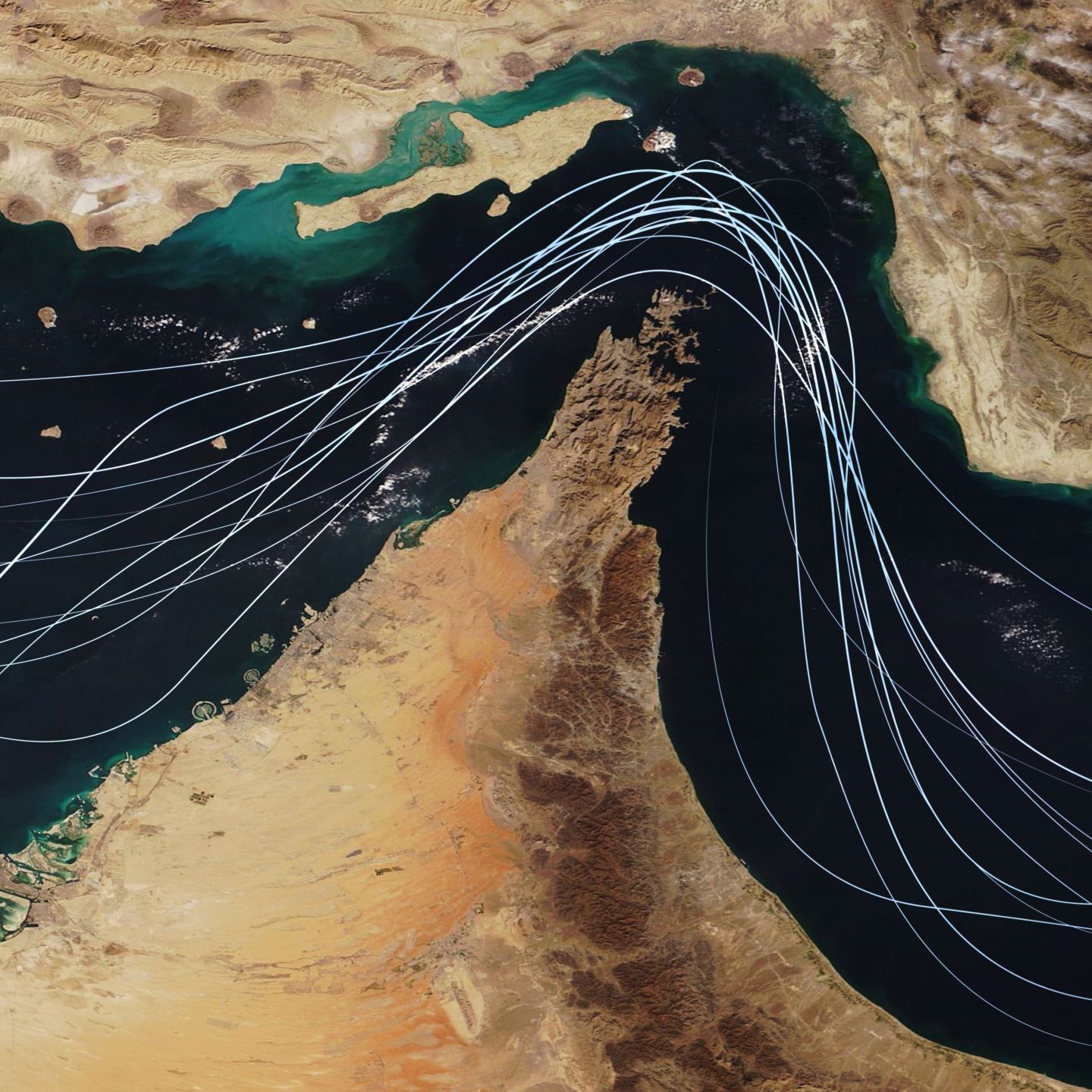
A volatile year on world markets
International prices have swung dramatically. Citing a World Trade Organization data blog dated 10 July, The Independent reports that urea climbed from roughly US$400 a tonne to more than US$850 in April, before easing to US$453 in June. DAP rose from about US$580 to US$770 a tonne over the same period. The partial retreat in urea gave some relief, but the pattern — a price that doubled and then fell back — is exactly the kind of uncertainty that makes importers hesitate and farmers cut back on purchases.
The Economic Policy Research Centre (EPRC) in Kampala flagged the risk early. In an analysis by researcher Eric Mudoko, published on 12 June and first carried by The Independent on 4 June, the centre noted that the Hormuz route carries nearly 30 percent of the world's seaborne fertiliser and raw materials, including urea and sulfur. Uganda imported about US$54.75 million worth of fertiliser in 2024, according to WITS data cited by EPRC, and nearly 40 percent of that came from the Middle East and Gulf region. In other words, a country that uses relatively little fertiliser is nonetheless heavily dependent on one troubled corner of the globe for what it does use.
The fuel multiplier
Fertiliser is only half the story. Mudoko's analysis shows Brent crude rising more than 40 percent, from about US$72 to over US$106 a barrel. Between February and May, he noted, petrol in Uganda rose from Shs5,130 to Shs6,000 a litre and diesel from Shs4,739 to Shs5,900. Diesel runs tractors, irrigation pumps, maize mills, agro-processors and the trucks that move produce to town. Uganda spent about US$1.634 billion on fuel imports from the UAE, Saudi Arabia, Oman and Kuwait in 2023, EPRC says.
The fuel effects have only deepened since. Diesel has climbed past Shs7,100 a litre, and the shilling has weakened sharply — it breached Shs4,100 to the dollar this week, according to Monitor reporting on 11 October — which raises the shilling cost of every imported bag of fertiliser regardless of the dollar price. For a farmer, the squeeze arrives from three directions at once: the commodity price, the exchange rate and the cost of transporting the product from the port.
Why Uganda's exposure is bigger than its numbers
At first glance, US$54.75 million is a modest sum. But Uganda's fertiliser story is not about volume; it is about timing and affordability. Application rates here are low — earlier reporting put them at roughly 2–3 kg per hectare against a continental average near 22 — and the government's own free-fertiliser programme — a rollout of 173,913 bags, first targeting tea and then coffee and cocoa, announced in late August — is small relative to the scale of the country's farmland. When prices spike, the first response of a smallholder is not to find the money but to apply less, or nothing. Glauber made the same point in general terms: farmers may cut application rates or switch to alternative inputs, with consequences for yields.
There is also a seasonal logic. Uganda's second rains of the year run from September through December, and the meteorological forecast has pointed to wetter, El Niño-influenced conditions. Farmers who skimp on fertiliser now will not see the effect until harvest in early 2027 — by which time the damage, in the form of thinner yields and higher food prices, will be hard to reverse. That timeline fits Glauber's warning that the real risk lies in the next planting cycles rather than the current one.
What EPRC wants done
EPRC's recommendations are concrete. On fertiliser, it urges the government to strengthen domestic production by reviving the Sukulu Phosphate Fertiliser Factory in the Osukuru Industrial Complex and the former Tororo Industrial Chemicals and Fertilisers (TICAF) plant, both in Tororo. On fuel, it argues that strategic reserves — currently equal to about 22 days of national capacity — should be expanded to 90–120 days, that refined-fuel imports should be diversified beyond the Middle East, and that domestic oil and refinery development should be fast-tracked. More broadly, it calls for agro-processing, export market diversification, and access to affordable finance, standards certification and logistics.
Tororo's phosphate resource has long been pitched as a solution to import dependence, and past announcements of imminent production mean sceptics will want a firm timeline. The crisis gives the argument fresh urgency: a domestic phosphate source would not remove Uganda's need for imported nitrogen, but it would reduce exposure on the nutrient where Glauber sees the greatest global stress.
The trade dimension
EPRC also documents knock-on effects on the export side. Export earnings fell 5.5 percent between January and February 2026, from US$1.454 billion to US$1.374 billion, with gold, beans, fish and oil re-exports among the main losses, according to the Ministry of Finance. Exports to the United Arab Emirates dropped from about US$703.5 million to US$644.9 million over the same period, per Bank of Uganda data. A Gulf disruption, in short, hits Ugandan farmers as buyers of inputs and as sellers of produce.
Implications for farmers and the wider economy
For farmers, the practical consequences are straightforward. Those who can should buy early and in groups, since collective purchasing through cooperatives can shave costs, and should prioritise fertiliser for crops with the highest return — coffee, tea and cash crops — rather than spreading thin across everything. Organic alternatives are not a full substitute, but compost, manure and legume rotations can protect soils at a lower cash outlay, a point that is also driving interest in the agroecology debate unfolding in Soroti this week.
For policymakers, the lesson is that input security is food security. The government has a clear interest in making sure that its free-fertiliser programme reaches farmers on time and at the quoted volumes, in monitoring prices through the planting window, and in clarifying the timeline for Tororo. For the wider economy, the risk is a second-round inflation shock: weaker harvests next year would push up food prices at a time when the Bank of Uganda is already fighting inflation with a policy rate that Monitor reported as raised to 12 percent earlier this year.
None of this is inevitable. Glauber's central scenario is a drawdown of stocks, not a collapse, and urea prices did retreat sharply between April and June. But the strait remains the hinge. If it reopens, the pressure eases; if it does not, the next test comes when Ugandan farmers decide, bag by bag, how much they can afford to put into the ground.



