Written By | Staff Writer
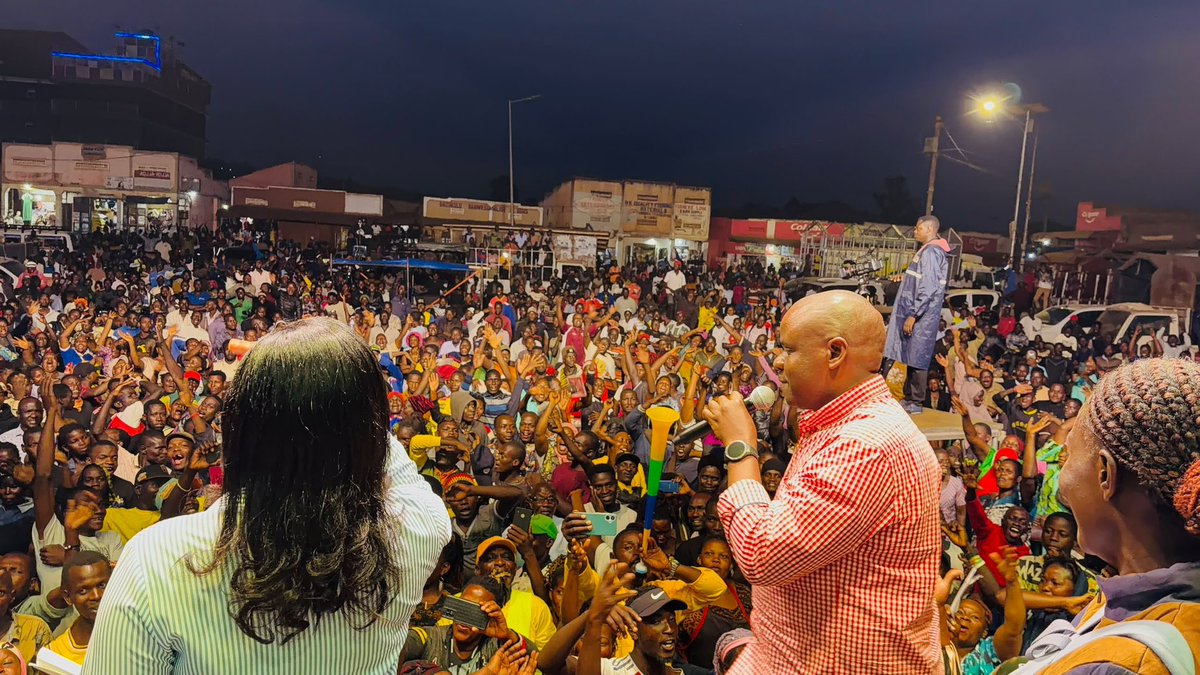
Balaam and Nameere in Masaka
Agriculture
On paper, it was a small act of presidential generosity: a batch of coffee seedlings, promised to residents of Masaka City to help them plant a cash crop the government has bet the country's rural future on. In practice, it has become a public dispute over Shs150 million, a cabinet minister's reputation, and the question of who, exactly, is accountable when a state-backed farm input scheme goes wrong.
On Wednesday, State Minister for Local Government Justine Nameere issued a statement denying that she owes coffee farmers Shs150 million, after one of the farmers involved, Cissy Nanyange, publicly claimed the minister owed her that sum. Instead, Nameere pointed the finger at Rogers Bulegeya, the NRM chairperson for Masaka City, accusing him of misrepresenting his capacity to supply coffee seedlings under a State House-backed programme and then failing to deliver what he had promised.
How a Presidential Favour Became a Payment Standoff
According to Nameere's account, she had petitioned President Yoweri Museveni last year to provide coffee seedlings to Masaka City residents, framed as part of the government's broader push to expand coffee production and household incomes. The President approved the request. Bulegeya, she said, then asked to accompany her to the meeting with Museveni, where he told the President he had millions of seedlings on hand and was awarded the supply contract on the spot.
The trouble began when Bulegeya failed to deliver the volumes he had promised. Nameere alleges it later emerged he did not actually possess the seedlings he claimed to have, and that he proposed what she described as an “air supply” arrangement — splitting proceeds from the contract even though the seedlings were never fully supplied. She says she rejected the proposal outright and gave Bulegeya 48 hours to begin real deliveries or be reported to the President.
Bulegeya subsequently sourced seedlings from 14 local farmers, Nameere said, but still fell short of the required quantities. She informed the President of the shortfall and was authorised to oversee completion of the distribution to intended beneficiaries herself. Crucially, she says she instructed the State House Comptroller that any payment to Bulegeya should be processed only in the presence of all 14 supplying farmers, so each could be paid directly rather than through an intermediary.
That is the arrangement now stuck in limbo. Nameere maintains the Shs150 million in question is the total owed to all 14 farmers by Bulegeya — not a personal debt of hers — and that payment remains pending until Bulegeya appears together with the farmers to settle accounts individually. She said State Minister for Youth and Children Affairs Balaam Barugahara helped convene a meeting at which the other farmers reportedly confirmed they had supplied seedlings through Bulegeya, and that the State House Comptroller confirmed the contract had indeed been awarded to him.
“I do not engage in corruption,” Nameere said in her statement, adding that she has never personally supplied goods or services to government precisely to avoid conflicts of interest. She also alleged, without providing evidence, that the campaign against her intensified after she opposed efforts to secure the release of a suspect implicated in the theft of Parish Development Model funds — a claim that, whether or not it holds up, points to a wider and uncomfortable pattern.
A Flagship Programme Already Under Strain
The seedlings dispute lands at a delicate moment for Uganda's rural development architecture. The Parish Development Model, the government's flagship vehicle for pulling subsistence households into the money economy through soft loans and inputs for enterprises such as coffee, piggery, fish and dairy farming, is grappling with a corruption problem serious enough that police have logged 389 cases linked to theft, fraud and extortion under the programme, according to reporting this year. In June, an Anti-Corruption Court in Kampala convicted a parish chief in Bunyangabu district on 15 counts of soliciting bribes from PDM beneficiaries. In May, two leaders of a PDM savings cooperative in Kapchorwa were arrested over the alleged misappropriation of funds meant for beneficiaries.
The government's own response has hardened in step. In a directive dated July 13, the Permanent Secretary in the Ministry of Local Government, James Kinobe Kumumanya, ordered accounting officers to institute disciplinary proceedings against implicated officers and remove them from service where warranted — one of the strongest accountability pushes yet aimed at the frontline officials who run PDM on the ground. It is against that backdrop that a dispute over a State House coffee-seedling gift, run in parallel to the formal PDM structure but sharing its logic of political patronage feeding agricultural inputs to constituents, takes on added significance. Whether the money was ever actually short-changed to farmers, or whether this is a governance dispute between two politically connected figures playing out over the heads of the smallholders who did the planting, the episode illustrates how easily accountability can blur when farm inputs are distributed through informal, favour-based channels rather than transparent procurement.
Why Coffee Seedlings Carry Outsized Political Weight
Coffee is not just another crop in Uganda's political economy; it is the centrepiece of the country's agro-industrialisation ambitions. Uganda closed its last coffee year with 8.2 million 60-kilogram bags, the highest output in two decades, worth roughly $2.2 billion in export earnings and underpinning the livelihoods of an estimated 1.8 million households. The government's Coffee Roadmap, first launched in 2017, targets a near-tripling of production to 20 million bags by 2030, a goal that depends heavily on distributing improved seedlings to smallholders quickly and at scale. Seedling giveaways — whether channelled through NAADS, NARO, PDM parishes or, as in this case, ad hoc State House arrangements brokered by local politicians — have become one of the most visible and most politically prized instruments of that strategy.
That visibility cuts both ways. When seedling distribution works, it is held up as evidence the roadmap is reaching real farmers. When it breaks down into disputes over money and who promised what to whom, it becomes fodder for exactly the kind of public distrust the PDM crackdown is trying to contain. For farmers such as Nanyange and the 13 others reportedly still awaiting payment, the distinction between a genuine funding delay and a broken political promise is not academic — it is the difference between recovering the cost of seedlings, labour and land they have already committed, and absorbing a loss on a crop the government told them to plant.
What Happens Next
For now, the money sits with the State House Comptroller pending Bulegeya's appearance alongside the 14 farmers, a condition Nameere set explicitly to prevent further intermediary disputes. Whether that meeting produces a clean resolution, or another round of competing claims, will say a good deal about whether Uganda's coffee-driven rural development push can insulate its input-distribution channels from the same patronage and accountability gaps now dogging the PDM more broadly. With production targets as ambitious as 20 million bags by 2030, and hundreds of thousands more households expected to be drawn into coffee farming over the next four years, disputes like Masaka's are unlikely to be the last test of whether the systems moving seedlings from State House pledges to farmers' fields can be trusted to work cleanly.



