Written By | Staff Writer
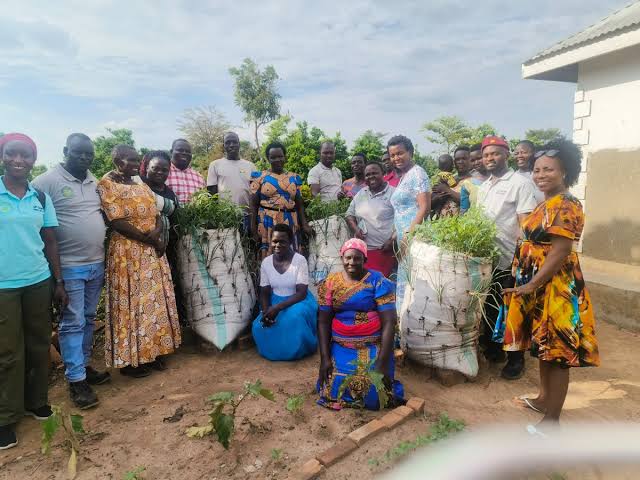
As ESAFF Uganda opens its second National Agroecology Festival on the eve of World Food Day, small-scale farmers want a seat at the table on pesticides, seeds and the long-delayed national strategy.
Agriculture
SOROTI, 15 October 2026 — The grounds of Soroti Museum filled with farmers, researchers and policy officials today for the opening of the second National Agroecology Festival, a two-day gathering organised by the Eastern and Southern Africa Small-scale Farmers' Forum (ESAFF) Uganda. Running 15–16 October under the theme “Advancing Agroecology for Climate Action, Nutrition and Sustainable Livelihoods,” the festival coincides with World Food Day on 16 October, which this year carries the theme “Innovate today. Nourish tomorrow.” Entry to the exhibition grounds is free.
The festival is more than a trade show. Its programme includes a National Policy Dialogue that will take up Uganda's National Agroecology Strategy, food safety, highly hazardous chemicals and farmer-managed seed systems, and delegates are due to consider adopting a Soroti Declaration on Agroecology 2026. For a movement that has spent years arguing that smallholders should shape the rules rather than simply receive them, the event is an attempt to turn practice into policy.
What agroecology means in practice
Agroecology is often described loosely, so it helps to be concrete. In Uganda, ESAFF's farmer schools teach growers to replace synthetic inputs with locally available alternatives: botanical pesticides made from neem, chilli and garlic; fermented organic inputs; compost and soil-health management; and intercropping and companion planting using plants such as marigold, basil and tephrosia. The aim is to cut costs, protect soils and biodiversity, and reduce farmers' exposure to chemicals. According to Naume Kalinaki, ESAFF Uganda's programmes officer for Enterprise and Livelihood Development, the approach can lower production costs and improve the profitability of farm enterprises.
That cost argument has fresh resonance this month. With global fertiliser supply under pressure from the disruption in the Strait of Hormuz — a risk analysts say could bite into planting seasons through 2027 — inputs that farmers can make or source locally look less like an ideological choice and more like insurance. Agroecology is not a magic substitute for mineral fertiliser on depleted soils, as its own proponents acknowledge, but it widens the toolkit for farmers who cannot afford a Shs200,000 bag of DAP.
A farmer-led movement with scale
ESAFF Uganda has operated since 2008 and says it represents 12,588 small-scale farmer community organisations across 54 districts — more than 765,560 farmers, 67 percent of them women. Its programmes include 37 Community Agroecology Schools, agroecology clubs in schools, National Organic Week, and what it describes as Africa's first Agroecology School for Journalists and Communicators, according to material the network published through La Via Campesina and reposted by Resilience in July. A programme called ECOTOPIA operates in Mayuge and Kumi with support from DKA Austria and Horizont3000.
Nancy Mugimba, ESAFF Uganda's national coordinator, says the festival aims to give farmers a bigger role in decisions on agricultural policies and investments. By bringing farmers together with researchers, buyers and policymakers, she argues, it can also improve market access. The agenda reflects that logic: alongside the policy dialogue there are farmer-led exhibitions, cookery demonstrations, food-tasting sessions, research and innovation showcases, cultural performances and awards.
The pesticide fight at the heart of the debate
The festival's sharpest edge is its attention to chemicals. In the July ESAFF statement, the network cited figures that roughly 51–59 percent of the 41 highly hazardous pesticides registered in Uganda are banned in the European Union, drawing on US EPA data and a 2026 Observer report. It said Uganda had lost more than US$60 million in a single year to pesticide-residue violations on exports, and pointed to a Swedwatch report titled “Poison for Profit” on Europe's pesticide double standards. These figures come from advocacy material and should be read as the network's own claims, but they echo concerns raised repeatedly by food-safety campaigners.
Benard Bwambale, coordinator of the Food Safety Coalition of Uganda, put the position bluntly in the same statement: “Molecules banned elsewhere must also be banned across Africa.” ESAFF's demands include an end to exports of banned pesticides from the EU to Africa, an accelerated phase-out of hazardous pesticides in Uganda in line with its Bamako Convention obligations, harmonised rules across the East African Community, and public investment in agroecological alternatives.
Uganda's own regulators are moving on the same terrain. Earlier this month's coverage of an agrochemical-safety training in Mukono, run through the Ministry of Gender, Labour and Social Development's occupational-safety programme, showed officials grappling with poisoning risks and foreign-language labels that farmers cannot read. The Soroti dialogue gives farmers a forum to press for faster action on those same problems.
Seeds: the quieter policy battle
The dialogue's seed agenda may prove just as consequential. Delegates will discuss community seed banks and their relationship to national gene banks, farmers' rights, benefit-sharing from the bioeconomy, and the role of academic institutions. Behind these terms lies a basic question: who controls planting material? Most Ugandan farmers rely on saved and exchanged seed, yet public policy and subsidy programmes tend to favour certified seed supplied through formal channels. Farmer-managed seed systems — locally adapted, cheap and resilient — fit awkwardly into that model, and ESAFF wants them recognised rather than sidelined.
The debate has a practical edge too. Counterfeit and poor-quality inputs remain a complaint across the country, and a strong community seed system can offer a trusted alternative in places where the formal market fails. Conversely, formal-sector scientists argue that certified seed delivers yield gains that informal systems cannot match, and that quality control is essential. The Soroti discussions are likely to expose that tension rather than resolve it.
What to watch
Three tests will show whether the festival matters beyond the weekend. First, whether the Soroti Declaration is adopted and who signs it: a declaration endorsed by officials carries more weight than one issued by farmers alone. Second, whether government commits to a timetable for finalising and funding the National Agroecology Strategy — ESAFF and its partners have called on the state to fast-track it. Third, whether the debate on hazardous pesticides converts into regulatory action rather than another round of statements.
There are reasons for caution. Agroecology's yield and profitability claims need independent, large-scale evidence in Ugandan conditions, and a strategy without a budget is only a document. Export-oriented sectors worried about residue rejections may in fact be natural allies of reform, since cleaner production protects market access, but that alliance has yet to be built. For now, Soroti offers a rare moment in which farmers, researchers and policymakers are in the same place with the same agenda. Whether it produces a change in how Uganda grows its food will depend on what is done when the stalls are packed away.



