Written By | Staff Writer
What makes UCSATP structurally different from the input-handout programmes Uganda has run before is the combination of a matching grant and an e-voucher
Daily Agriculture
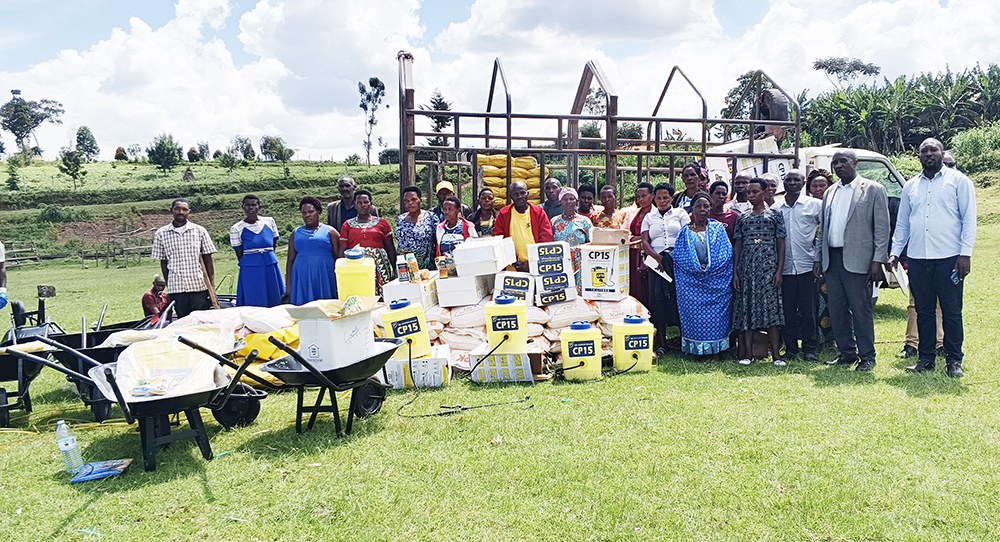
Buried in a district stakeholder meeting in Rubanda on Wednesday is one of the more revealing numbers in Ugandan agriculture this month. The district has verified 164 farmer groups for the Uganda Climate Smart Agriculture Transformation Project (UCSATP). It has validated 166. Twenty-nine have "directly benefited". And 64 have had their e-wallets activated to actually receive agricultural inputs.
In other words, roughly four in ten verified groups in Rubanda have reached the point where the project's central delivery mechanism — a digital wallet that lets a farmer draw subsidised seed, fertiliser and agrochemicals from a registered dealer — is switched on. The rest are somewhere in the pipeline between being counted and being served.
That gap is not a scandal. It is the arithmetic of a delivery model that Uganda is betting heavily on, and it deserves scrutiny precisely because the stakes are large.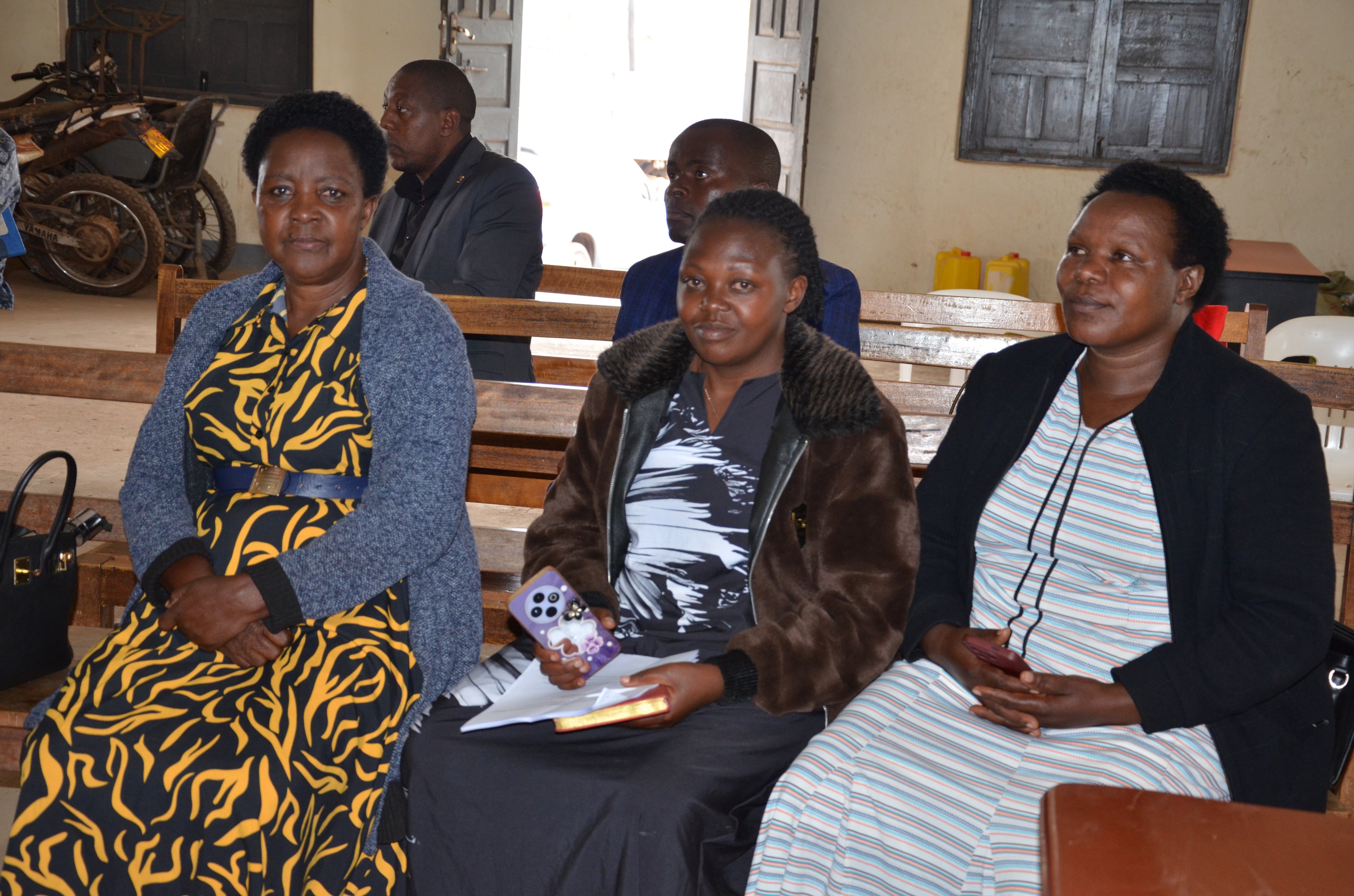
What UCSATP is, and why it is different
UCSATP is a $350 million programme run by the Ministry of Agriculture, Animal Industry and Fisheries with World Bank financing. It covers 69 districts, including seven refugee-hosting areas, and targets more than 3.5 million smallholder farmers. It supports 13 value chains spanning crops, livestock, fisheries and apiculture.
Its design responds to a well-documented diagnosis. The Uganda Bureau of Statistics puts about 68 percent of households in subsistence farming. Post-harvest losses run between 22 and 40 percent depending on the estimate. Fertiliser application sits at 1 to 2.4 kilogrammes per hectare — a fraction of the 50kg/ha African governments pledged at Abuja in 2006 — and irrigation covers under 2 percent of cultivated land.
What makes UCSATP structurally different from the input-handout programmes Uganda has run before is the combination of a matching grant and an e-voucher. Farmers who raise a share of the cost — in practice a 20 percent co-funding requirement organised through groups — unlock subsidised inputs through a digital platform linked to registered agro-dealers. The design intent is twofold: to make farmers stakeholders rather than recipients, and to make leakage harder by moving the transaction onto a traceable rail.
Pushina Kunda Ng'andwe, who leads the UCSATP team at the World Bank, has described the project as designed "to enhance production and productivity, build climate resilience in selected value chains, and support smallholder farmers in accessing markets to improve their incomes." Alongside inputs, the project funds feeder road rehabilitation, market collection centres, storage, drying platforms and processing units.
What Rubanda actually shows
Rubanda, in the Kigezi highlands, is running the project across 10 lower local governments, with support directed at crop production, dairy, fish farming and apiary. The district's UCSATP focal person, Denis Mubangizi, told the stakeholder meeting convened by the District Production Department that progress had come through distributing agricultural and apiary inputs "to farmers who had raised the required co-funding."
That clause is the pivot of the whole model. Co-funding is what converts a verified group into an activated e-wallet. It is also what a household cannot raise in a year when its harvest has failed.
The timing is unforgiving. Uganda has just come through what the Minister of Agriculture, Frank Tumwebaze, called an "unprecedented" drought, with the Uganda National Meteorological Authority flagging water stress across Karamoja, northern Uganda, Masaka and the south-west. A nationwide survey published by The Independent and URN on 12 September carried account after account of farmers who had spent their working capital on a season that returned nothing — in one case Shs1.5 million on 15 rented acres of sorghum, millet, beans and maize.
A co-funding requirement is a progressive filter in a good year and a regressive one in a bad year. It selects for households with liquidity, which after a failed season means the ones that needed the subsidy least. The risk is that a programme designed to build climate resilience distributes its benefits in inverse proportion to climate damage.
Rubanda also reports a queue on the other side. Mubangizi appealed to MAAIF to increase the district's allocation of farmer groups, saying Rubanda had already surpassed its current quota — demand outrunning the ceiling the ministry set.
The plumbing beneath the platform
An e-voucher is only as good as the last mile that delivers it, and that last mile in Uganda is thin. The national ratio of extension workers to farmers is roughly 1:1,800 against a recommended 1:500, with an estimated shortfall of nearly 5,000 extension staff. During a World Bank field visit to Kumi in 2025, a district official reported that the agriculture department was operating at 28 percent of its required staffing and that "extension workers lack transportation, which makes it difficult to reach farmers in remote areas."
Rubanda's officials named the same problem from the other end. District Production Officer Dismus Baterana said the department had established practical training centres to give farmers access to accurate agricultural information and would hold quarterly awareness barazas. Assistant Resident District Commissioner Hillary Bindeeba called for closer monitoring of extension workers in lower local governments to improve service delivery.
District Chairperson Stephen Ampeire Kasyaba went further on the awareness gap, arguing for radio and community mobilisation: "Political leaders should use public gatherings, including weddings and burials, to sensitise communities on climate-smart practices." It is an unusual prescription, and a revealing one — a district leader reaching for funerals as a communication channel is describing the absence of a functioning extension service, not a preference for one.
The infrastructure side in Rubanda is more concrete: laboratory equipment for the Production Department, water-testing kits for fish farmers to monitor pond quality, heifer sperm banks in selected sub-counties, and the renovation of stores previously built under the Agriculture Cluster Development Project for use as post-harvest facilities. That last item is quietly significant — reusing ACDP assets rather than building new ones is the kind of continuity Ugandan projects have often failed at.
The district has also received 2,000 bags of fertiliser through MAAIF for tea farmers, with another 800 bags expected for coffee farmers and 800 for other crops — its share of the 173,913 bags flagged off at Entebbe on 31 August.
The enterprise risk
The 2025 field visits also surfaced a warning that Rubanda's fish and apiary ambitions should take seriously. At the Kyere Okungoro Omikid Fish Farming Project in Serere, revenues had fallen from Shs3.6 million in 2021 to Shs2.1 million, with project leaders asking for both financial support and technical training. Group enterprises funded into existence do not automatically survive; they need agronomy, market linkage and working capital after the launch photographs.
Rubanda's push toward coffee — Mubangizi urged farmers to take up coffee production, one of the enterprises supported under the programme — carries its own timing risk. Coffee is a three-to-five-year payback crop, and Kigezi farmers are being asked to plant it in the same window in which Masaka and Luwero growers are counting drought losses on established trees. A study by the Royal Botanic Gardens Kew published on 27 August warned that robusta's reputation for climate resilience is misplaced: it is heat-tolerant but drought-intolerant. Enterprise selection under a climate-smart programme needs to be site-specific, not crop-fashionable.
Why the co-funding question is national
Uganda has spent September talking about agricultural finance at high altitude. The CAADP Kampala Declaration domestication dialogue on 10–11 September restated the commitment to spend at least 10 percent of public expenditure on agriculture; the FY2026/27 budget allocates roughly Shs2.26 trillion to agro-industrialisation out of Shs84.3 trillion, about 2.6 percent. IFAD and Equity Group launched a $200 million climate adaptation finance facility for the region on 8 September. The Uganda Bankers' Association has set out a Shs490 trillion patient-capital ambition for 2040.
UCSATP is where those numbers meet a farmer. It is the largest single instrument through which a Ugandan smallholder can currently access subsidised inputs on a traceable rail, and it has roughly two years of implementation runway left of its original timetable. Whether it lands will be judged not by districts verified or groups validated, but by the ratio Rubanda has just published: how many of the farmers on the list actually got an activated wallet, and which farmers they were.
Three adjustments would improve the odds. First, allow a drought-year flexibility on co-funding — in-kind labour, deferred contribution, or group-guaranteed credit — so the requirement does not screen out exactly the households a resilience project exists to serve. Second, publish activation rates by district, as Rubanda has effectively done, so the bottleneck is visible nationally rather than discovered in stakeholder meetings. Third, resource the extension layer that has to explain the platform; an e-voucher no one can walk a farmer through is a database entry, not an input.
The project's own World Bank economist, Dr John Ilukor, put the urgency plainly on a field visit: "It is critical that farmers, local governments, and stakeholders prepare adequately to fully benefit from the interventions being rolled out." Rubanda's 64 activated wallets are the beginning of an answer. The other 100 verified groups are the question.



