Written By | Staff Writer
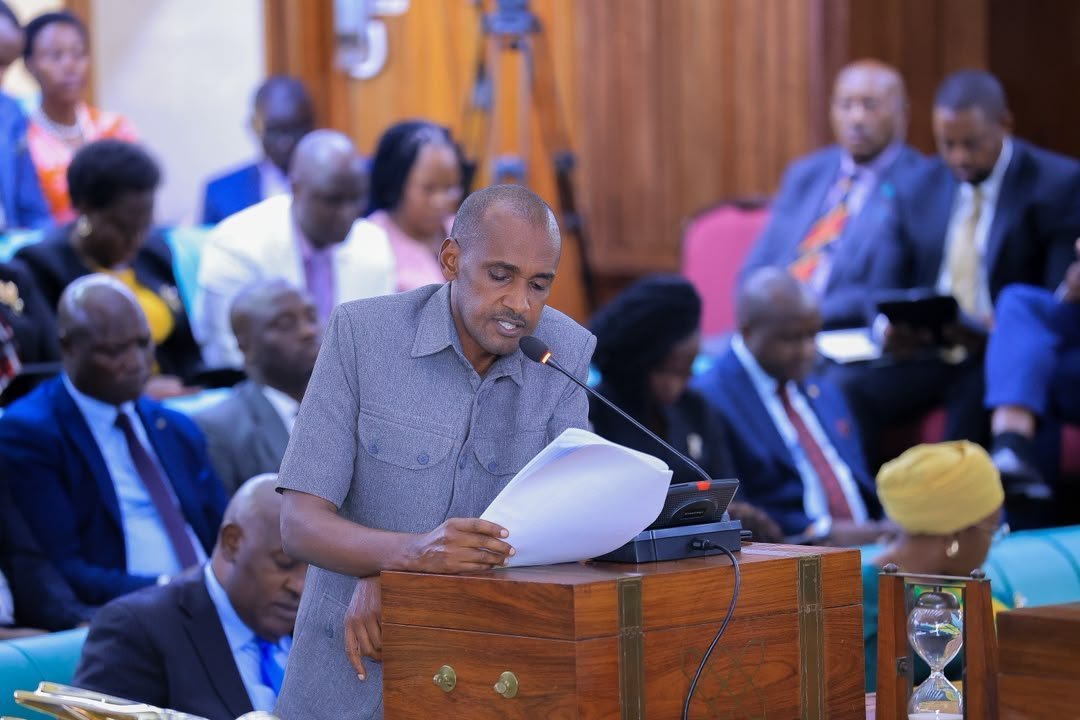
A ministerial statement to Parliament on 21 October shows a sector growing faster than its decade average, and a government still far short of the machines, vaccines and water it promises farmers.
Agriculture
Uganda's agriculture sector grew by 6.4 percent in the 2025/26 financial year, well above its ten-year average of 4.2 percent, and now accounts for 26.2 percent of gross domestic product. Those were the headline numbers Agriculture Minister Frank Tumwebaze placed before Parliament on Wednesday 21 October, in a sector performance statement that MPs are due to debate on Tuesday 27 October. The figures are the strongest argument yet for a sector that politicians routinely call the backbone of the economy. The rest of the statement is more sober: it is also an inventory of what has not yet been delivered.
What the numbers say
According to the statement, as reported by Nile Post and The Cooperator News, agriculture's share of GDP has risen from a ten-year average of 23 percent to 26.2 percent by the end of FY2025/26. The sector employs, directly or indirectly, about 7.1 million of the country's 10.8 million households, and contributes an average of 40 percent of export earnings. Cocoa is the standout: earnings climbed from US$93 million in 2022/23 to US$620 million, according to the ministry's figures. The reports do not specify which year the higher figure refers to, which is worth clarifying in Tuesday's debate.
For a farmer in Kibale or Kabale, a national growth rate is an abstraction, but the mix behind it matters. A sector that earns four in every ten export dollars is exposed to commodity swings, and the ministry's own earlier statements this year have acknowledged softer farm-gate coffee prices. Growth of 6.4 percent therefore reflects volume and the rise of newer crops such as cocoa as much as it reflects income in farmers' pockets. The statement as reported does not break growth down by sub-sector, so the contribution of food crops, livestock, fisheries and cash crops cannot yet be separated.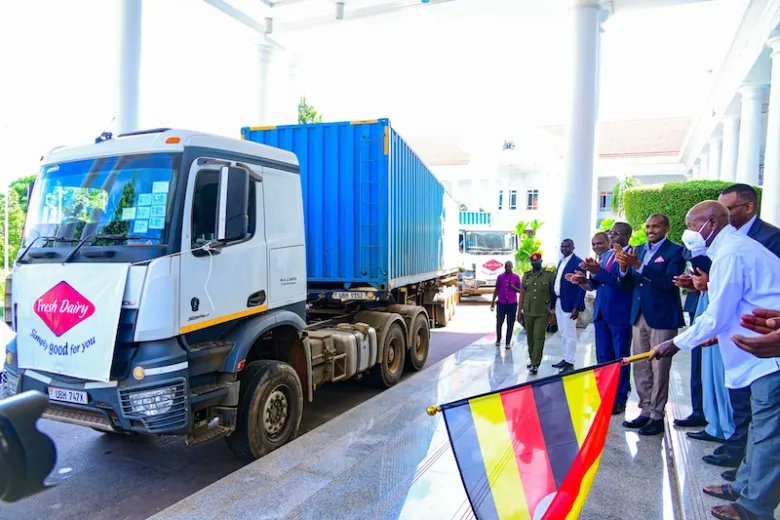
The tractor gap
The most concrete promise in the statement is mechanisation. The government plans to provide 10,000 tractors over the next five years and to set up 21 mechanisation centres, with acquisition cost-shared among government, commercial farmers and producer groups. Set that against delivery to date: since 2018 the state has deployed 1,080 assorted tractors with implements and 1,350 single-axle walk-behind tractors, and trained 2,036 operators and technicians at the Namalere Mechanisation Centre.
The arithmetic is stark. Reaching 10,000 tractors would mean multiplying the existing fleet roughly nine-fold in five years, against a delivery pace of roughly 135 tractors a year if the 1,080 delivered since 2018 is spread over eight years. Nile Post reports that construction has begun at only four of the 21 planned mechanisation centres, and that the cost-sharing arrangement on which the whole plan depends is still awaiting Cabinet approval. In other words, the financing model for the 10,000-tractor target has not yet been formally approved.
The ministry's own earlier estimates give the scale of the opportunity. When it handed over 150 walk-behind tractors to farmer groups in September, officials said only about four percent of the roughly 38 percent of Uganda's 6.9 million hectares of mechanisable land is currently worked by machine. Hand hoes still do most of the digging. The minister told Parliament that farming reliant on human labour and nature has been the sector's main constraint, and that mechanisation would let farmers cultivate more land, support value addition and create jobs.
There is a design question underneath the numbers. Tractors allocated to groups and institutions, as the statement says, are "directly allocated to farmers, farmer groups, associations and institutions". Past tractor programmes in Uganda have struggled with maintenance, operator availability and equitable access. A cost-share model that depends on commercial farmers and producer groups co-paying may push machines towards those who can afford them, leaving the smallholder who farms two acres reliant on hire services that centres have yet to provide.
Irrigation: progress, with caveats
On water, the statement reports ten large-scale irrigation schemes completed, adding 7,203 hectares to the formally irrigated area. They include Doho II in Butaleja, Ngenge in Kween and Mubuku II in Kasese. Kabuyanda in Isingiro, Namaitsu in Bududa and Chembobai in Bukwo remain under construction. A National Irrigation Development Project plan covering the whole country has been submitted to the Finance Ministry for funding; the reports give no cost for it.
The numbers need context. Uganda's National Irrigation Policy aims for 1.5 million hectares under irrigation by 2040, and 7,203 hectares is less than half of one percent of that target. This week's farm news shows why the gap matters: in Bukomansimbi, a Shs2.78 billion government project has extended irrigation to just three schemes with 120,000 litres of combined storage serving about 36 acres, and a district engineer told Nile Post that expanding irrigated area requires expanding storage first. Large schemes and village-scale systems are both needed, and the statement speaks mainly of the former. With the Ministry of Water and Environment forecasting El Niño conditions through December, irrigation capacity matters most in the dry spells that follow.
Vaccines, corruption and a user-pays shift
The statement is notably candid on livestock. Farmers must now pay for foot-and-mouth disease vaccines, and only 80,000 have enrolled so far, according to Nile Post. Tumwebaze attributed the weak uptake partly to farmers who still expect free vaccines, and partly to "indiscipline and or corruption" among lower-level veterinary staff. That echoes the ministry's recent warnings that veterinary officers selling state-supplied vaccines face arrest, and it fits the wider pivot to a user-pays model. The risk is a coverage gap: if cattle keepers in quarantined districts opt out because of price or mistrust, disease persists and so do movement restrictions, which depress milk and beef markets for everyone.
Credit, inputs and what Cabinet has approved
On finance, Tumwebaze said up to Shs4.4 trillion has been injected into parish SACCOs through the Parish Development Model over five years, crediting it with expanding financial inclusion among smallholders. Medium and large farmers outside the PDM will be served under the Agriculture Value Chain Development Strategy. Cabinet has also approved an exception to the PDM rule that farmers buy their own inputs, allowing 24,437,367 coffee seedlings to go to northern Uganda. For northern farmers, that is a significant planting opportunity; for the rest of the coffee belt, where seedling quality and survival in drought have been persistent concerns, it raises the question of whether the same exception will be extended.
Two further items point to the policy pipeline. An IFAD-backed loan for oil palm development in the Busoga sub-region will come to Parliament when ready, and the minister asked MPs to prioritise a Bill establishing a Food and Agricultural Regulatory Authority. The latter would consolidate oversight of inputs, standards and quality, an area where counterfeit seed and chemicals remain a farmer complaint.
What to watch on 27 October
Three questions will test the statement when MPs debate it. First, what is the financing plan and timeline for 10,000 tractors, and will Cabinet approve the cost-sharing model before the next budget cycle? Second, what is the cost of the national irrigation plan, and how will it be paid for when ministries are being asked to live within tighter envelopes? Third, can the ministry restore trust in the vaccination programme, so that the 80,000 enrolled becomes a figure large enough to protect the national herd?
The 6.4 percent figure is real progress, and it deserves recognition. But growth that rests on a handful of export crops, hand tools and rain-fed fields is exposed to exactly the kind of weather shock the forecasters are warning about. The report card shows a sector moving in the right direction; the farmers waiting for tractors, water and vaccines will judge the government on how quickly the next page turns.



