Agriculture
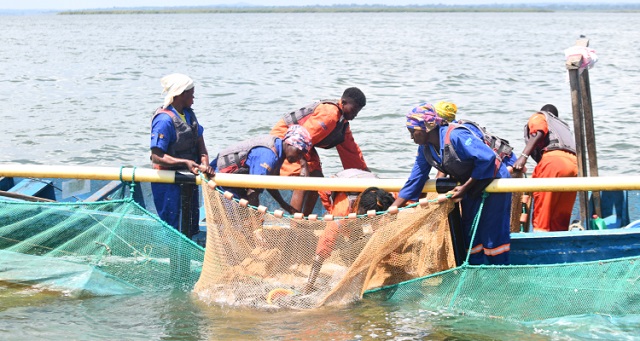
Kabaganja Island used to have a rhythm. Canoes went out at dusk, nets went down, and by morning the shoreline was a marketplace of glistening, finger-length fish being scooped into basins, spread on drying racks and haggled over before the sun grew too hot. Today, on this speck of land in Buvuma District on Lake Victoria, the canoes sit idle and the nets hang unused, gnawed at by rats. The silence is the sound of a livelihood switched off.
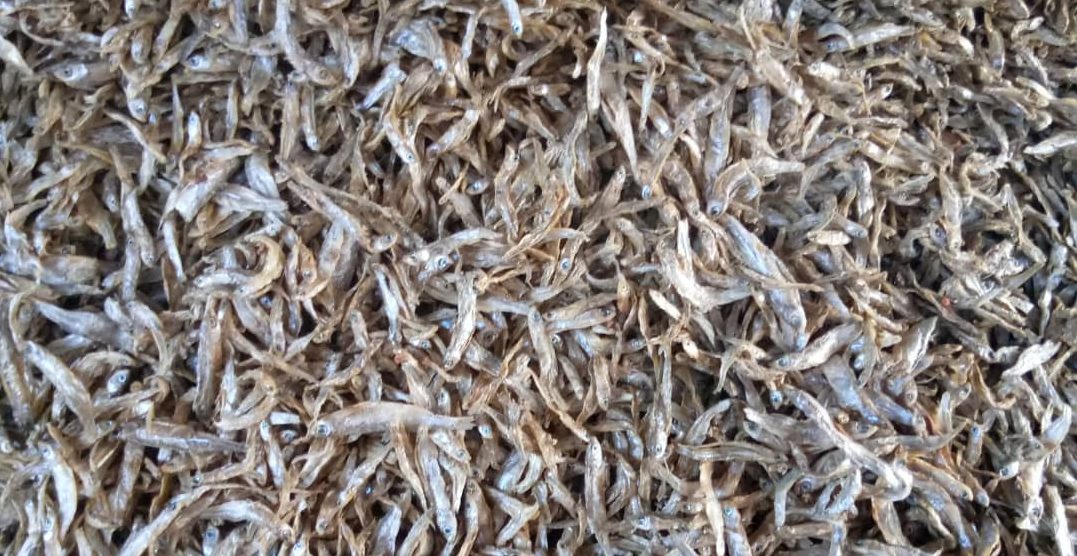
The fish at the centre of this disruption is mukene, Uganda's silverfish, a tiny sardine-like species that has for decades been one of the cheapest and most widely eaten sources of animal protein in the country. It is also, according to fishing communities around Lake Victoria, at the centre of an enforcement campaign that has left thousands of people, most of them women, without income, without collateral for the loans they took out in better times, and in some cases without enough food to feed children on antiretroviral treatment who need a full stomach with their medication.
A GOOD RULE, A CONFUSING ROLLOUT
The trouble did not start suddenly. In February 2024, the state minister for fisheries, Hellen Adoa, banned a method known locally as "hurry-up" fishing, a technique widely blamed for scooping up immature Nile perch along with silverfish and accelerating the decline of Lake Victoria's most commercially valuable species. Fishers were told to switch to scoop-net methods instead, and enforcement agencies were instructed to prosecute anyone caught still using the banned gear.
The underlying goal, protecting juvenile fish stocks so the lake's fisheries survive another generation, is not in dispute even among the communities most affected. What has caused lasting damage is what came next: a widening, inconsistently applied clampdown whose authorship communities say they still cannot identify. Residents of Kabaganja Island told reporters visiting in April 2026 that they did not know which official or military unit had ordered the broader suspension of their fishing activity, only that boats had been grounded and, in some cases, confiscated.
By August 2026, that confusion had spread across the lake. In Kalangala, local leaders have communicated what fishers describe as a blanket ban on silverfish fishing altogether. In Buikwe, enforcement has instead focused narrowly on the banned "light fishing" technique, leaving communities uncertain about what exactly remains legal. Across landing sites in Mukono, Wakiso, Buikwe, Buvuma and Kalangala districts, the pattern is the same: unclear directives, patchy communication, and fishers left to guess whether putting a net in the water will get them arrested.
"Because this mukene has helped the country at large," Jessica Oyenbo, a resident of Kabaganja Island, said in April, her voice described by visiting reporters as steady but strained. "Even grassroots women in the villages depend on it. They trade in silverfish, earn income, pay school fees, and feed their families." Oyenbo is a grandmother caring for children on life-saving HIV treatment. "Some of my grandchildren are on ARVs," she said. "There is no food for them. Our children are at home — they are supposed to go back to school, but they have not even reported."

A SECTOR BUILT ON WOMEN'S LABOUR
Uganda's fisheries sector supports more than 5 million people, according to the Economic Policy Research Centre, and nowhere is that dependence more visible than in the silverfish trade. Women make up more than 60 percent of the labour force in the country's small pelagic fisheries, concentrated overwhelmingly in the post-harvest side of the business: drying, processing, packaging and trading mukene at local markets and, increasingly, into feed and food-fortification supply chains. For low-income households across the Lake Victoria basin, silverfish is not a delicacy; it is one of the most affordable proteins available, and its disappearance from the shelf has consequences that reach well beyond the fishing communities that catch it.
Those consequences arrived quickly once boats were grounded. Teopista Komakech, another Kabaganja resident, described a debt spiral now familiar across the affected landing sites. "We have not been working," she said. "Some of us took loans. They are demanding their money, and we have defaulted. Others have run away. Others have been killed." She added that no formal communication had ever reached the community explaining the ban's origin: "We don't even know who ordered the ban. Ugandan fishermen are crying — and most of those engaged in this business are women."
The Kavenyanja community on the Bussi Islands in Wakiso District, made up largely of women, was raided by the Uganda People's Defence Forces, which confiscated boats used for fishing. In March 2026, the UPDF's 155th Battalion impounded a boat carrying more than ten tonnes of immature fish during a dawn raid at the Lujaabwa landing site in Kalangala District, evidence, officials argue, that the underlying conservation concern is real even as its enforcement inflicts collateral damage on legitimate small-scale operators.
Public health data adds another layer of urgency to the economic argument. Fishing communities on Lake Victoria's islands have HIV prevalence rates ranging from 22 to 37 percent, several times the national average of 7.3 percent, with young women aged 13 to 24 disproportionately affected. Development researchers have long linked income volatility in fishing communities to transactional sex and heightened HIV risk, meaning an abrupt loss of legitimate earning options is not merely an inconvenience but a public health hazard.

"ENFORCEMENT WITHOUT ENGAGEMENT"
The criticism has now moved from anecdote to formal advocacy. In an August 19 commentary, Kagimu Shafic, head of programmes at FIAN Uganda, a food rights organisation, argued that the manner of enforcement is undermining the very sustainability goals it claims to serve. "What is unfolding is not just enforcement, it is disruption of an entire value chain that thousands depend on for survival," he wrote, noting that Uganda's own National Gender Policy of 2007 and constitutional guarantees under Articles 21, 32 and 33 commit the state to protecting the right to food and promoting gender equality — commitments he argues are being undercut by the current approach.
Shafic and other civil society voices, including the Southern and Eastern Africa Trade Information and Negotiations Institute (SEATINI), have also linked the sector's troubles to a related crisis: contaminated and poorly regulated fish products have already cost Uganda dearly in export markets. Bank of Uganda data shows fish export revenues fell 21.9 percent in 2024, from Shs514.5 billion to Shs395.7 billion, while export volumes dropped 27.8 percent, a decline attributed to a mix of overfishing, illegal trade practices and quality-compliance failures in destination markets. The irony, critics argue, is that heavy-handed domestic enforcement against small-scale silverfish traders does little to address the industrial-scale drivers of that export collapse while inflicting maximum pain on the sector's poorest participants.
Uganda's Fisheries Protection Unit and the broader push toward stronger lake governance, including a Fisheries Management Bill moving through Parliament that would formalise civilian-military cooperation on lake enforcement, reflect a government genuinely worried about a collapsing resource base. Nile perch and tilapia stocks have been under sustained pressure for years from overfishing, and mukene itself is not infinite; unregulated harvesting of juvenile silverfish can undercut the food chain that sustains larger commercial species.
WHAT A BETTER PATH LOOKS LIKE
The question civil society groups are now putting to policymakers is not whether to regulate, but how. Clear, single-source directives communicated in local languages at landing sites, rather than sudden, unattributed military action, would let fishers know unambiguously what is and is not permitted. Grace periods and asset-protection measures, rather than boat confiscations that instantly wipe out a family's working capital, would allow compliance without economic ruin. And formal consultation with women's fishing and trading associations, which currently have no visible seat at the table when these directives are issued, could turn a policy that feels punitive into one that communities have a stake in enforcing themselves.
For now, the economic engine of dozens of lakeside communities remains stalled. Boats sit beached at Nangoma and Kiyindi landing sites, once teeming with buyers and sellers. Families that relied on daily mukene income for school fees, medication and food are drawing down savings that were never large to begin with. And a policy conceived to protect Lake Victoria's fish stocks for the long term is, in the short term, testing how much hardship the lake's poorest residents can absorb before the sustainability goals it was designed to protect become unreachable simply because the people meant to carry them out no longer trust the process.
Published By | Features Editor