Agriculture
A clarification that confirms the shift
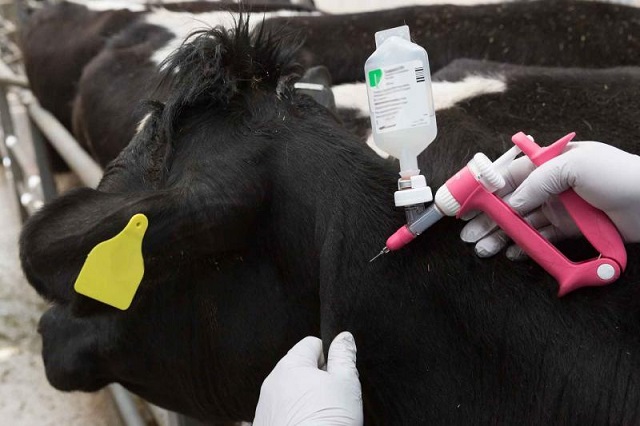
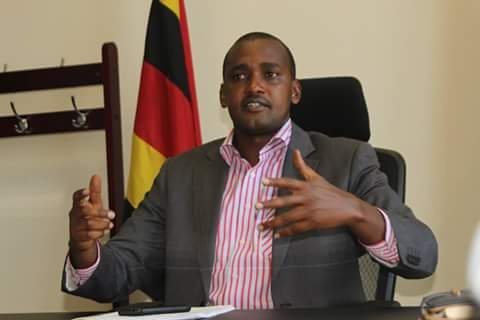
On Tuesday, 8 September, Agriculture Minister Frank Tumwebaze issued what was framed as a clarification. Farmers, he said, are not being charged for Foot-and-Mouth Disease vaccination services. They are only contributing the approved cost of the vaccine dose that goes into their animals.
“Farmers do not pay for FMD vaccination services or the broader costs of running the national FMD control programme,” Tumwebaze said. “They contribute only the approved cost of the vaccine dose administered to their animals.”
The clarification was necessary because the underlying policy is a genuine departure. Under the FMD Cost-Recovery Scheme, a farmer now pays Shs8,000 for every cow or pig and Shs4,000 for every goat or sheep, each vaccination cycle. Because the national schedule is mandatory and runs every six months, the recurring annual obligation works out at Shs16,000 per head of cattle and Shs8,000 per small ruminant — a line item that did not exist in most Ugandan household budgets three years ago.
For a modest cattle keeper in Kiruhura or Nakasongola with 20 head, that is Shs320,000 a year before a single litre of milk is sold. For a household in Teso with 30 goats, it is Shs240,000. For the commercial ranches of the Ankole-Masaka corridor, which holds an estimated 60 per cent of the national herd, it runs into millions of shillings annually.
What the money is supposed to do
Tumwebaze explained that the contributions are deposited into a revolving account whose sole purpose is to replenish vaccine stocks and keep doses available for the mandatory six-month cycle. Government, he said, continues to finance everything around the vial: vaccine procurement, cold-chain infrastructure, storage, transport, distribution, disease surveillance, laboratory diagnosis, farmer registration and digital certification.
That division of labour is not arbitrary. Uganda's FMD programme has historically failed less on veterinary skill than on vaccine availability. Districts have repeatedly been placed under quarantine, waited weeks for doses, and then vaccinated too late and too partially to build herd immunity. A ring-fenced revolving fund is a direct answer to that failure mode: money that cannot be swallowed by the general budget and that regenerates with each cycle.
The scale explains the ambition. Tumwebaze put the number of susceptible animals at 44.5 million — cattle, goats, sheep and pigs. Vaccinating a population of that size twice a year is one of the largest recurrent animal-health operations any East African state attempts, and it is not plausibly financeable from the Ministry of Agriculture's vote alone.
The quarantine arithmetic behind the policy
The case for asking farmers to pay is written in the last twelve months of district-level economics. Ntungamo lifted an FMD quarantine in August after roughly eight months, with nine farms still under restriction. Kazo reopened livestock markets only after nearly two months of closure. Kamwenge extended a cattle-market shutdown until vaccination was complete.
Each of those closures is a market that stops clearing. When Mbarara — marketed for decades as the City of Milk and Honey — saw daily milk collections fall from about 20,000 litres to between 5,000 and 8,000 litres under the combined weight of drought and animal disease, retail prices roughly doubled from around Shs1,200 to Shs2,500 a litre. Ntungamo's daily collections halved from 90,000 to 40,000 litres. Beef has been trading at Shs18,000 to Shs20,000 a kilogramme in a market where herd scarcity, theft and quarantine all push in the same direction.
Against those numbers, Shs16,000 per cow per year is defensible arithmetic. A single dairy cow producing 20 litres a day recovers that cost in roughly a week of sales. The problem is not the ratio. The problem is who is holding the cash on the day the vaccination team arrives.
The certificate is the enforcement mechanism
The most consequential detail in Tumwebaze's statement was not the price. It was that animals vaccinated under the programme will receive digital FMD vaccination certificates, and that those certificates will be required for livestock movement and for access to meat and milk markets.
This converts a health measure into a market-access rule. A farmer who does not pay does not merely risk disease; he risks being unable to legally move or sell his animals. The minister was careful to add that the digital certificate does not replace the statutory veterinary movement permit, nor does it override outbreak restrictions imposed in FMD-affected areas — so the new document sits on top of existing paperwork rather than replacing it.
That layering matters. Uganda already has a National Livestock Identification and Traceability Act that has never been meaningfully implemented, and a cattle-theft problem serious enough that Nakaseke residents torched a vehicle in early September during a dispute over stolen animals. A digital vaccination register, if it is actually maintained, becomes the first functioning national livestock database Uganda has had — a traceability asset reaching well beyond disease control.
Cash, capture and the veterinary officer
Tumwebaze also warned farmers against paying veterinary officers in cash. All payments, he said, must go through authorised banking and digital channels designated by the Ministry of Agriculture, Animal Industry and Fisheries. “Veterinary officers are prohibited from collecting cash, and any officer demanding cash faces disciplinary or legal action,” he said.
The warning is an admission of the scheme's central vulnerability. A per-head fee collected in the field, from largely unbanked livestock keepers, by the same official who certifies compliance, is a textbook rent-extraction design. Uganda has watched a version of this play out before: the Parish Development Model has disbursed billions with recovery rates that in some districts round to almost nothing, and a Public Accounts Committee hearing this month heard that Nakaseke had recovered Shs28.2 million against Shs25 billion disbursed.
Digital-only payment is the right control. Whether it survives contact with a herd in a sub-county with patchy network coverage is a different question, and it is the one that will determine whether the Shs8,000 reaches the revolving account or someone's pocket.
The Mpigi bet
The exit strategy is domestic manufacture. Tumwebaze said government is pursuing local production of FMD vaccine through partnerships with Egypt and with HUVET Bio-Science Park in Mpigi. Once operational and compliant with required quality and biosafety standards, he argued, local production would cut dependence on imports, shorten supply timelines and eventually lower the price farmers pay.
The logic is sound. FMD vaccine is not a generic commodity: protection depends on matching the vaccine strain to the serotypes actually circulating, and eastern and southern Africa's outbreak profile is dominated by the SAT serotypes rather than the strains driving most global production. Importing means a lag between identifying a circulating strain and getting a matched dose into the field — the same lag that turns a two-week outbreak into an eight-month quarantine.
A domestic plant would compress that cycle. But vaccine manufacturing is a capital-intensive, biosafety-regulated business with a long qualification path. Farmers are paying Shs16,000 a year now against a saving that arrives, optimistically, several seasons from now.

Who cannot pay
The equity problem is specific rather than abstract. The Office of the Prime Minister has disbursed roughly 80 per cent of an Shs80 billion Cattle Restocking Programme across Acholi, Lango and Teso — 33 districts, some 16,000 households, each receiving about Shs5 million for three heifers and two bulls. Those households have five animals and, in most cases, no income from them yet. Their annual FMD obligation is Shs80,000.
Northern Uganda is simultaneously the region where Acholi local government leaders reported around 69,400 households hit by crop failure and where hunger deaths were raised in district forums in late August. Karamoja's poverty rate sits above 74 per cent. A flat per-head fee is regressive by construction: it costs the restocked Lango household the same per animal as it costs a commercial Mbarara ranch with vastly better cash flow, veterinary access and bargaining power.
No waiver, sliding scale or subsidy tier has been announced for restocking beneficiaries or for districts under food-security stress. If one is not designed, the predictable outcome is partial coverage — and partial coverage in FMD control is close to no coverage, because unvaccinated animals maintain circulation and reinfect the vaccinated herd once immunity wanes.
The prize on the other side
The upside is export. Uganda's meat and edible offal exports remain trivial — roughly US$5 million in 2024 by UN COMTRADE figures — against a global halal market valued above US$3 trillion and a Saudi beef ban rooted in sanitary and phytosanitary concerns that has stood for a quarter-century. At a Halal Business Dialogue in Kampala on 4 September, officials were blunt that Ugandan abattoirs largely do not meet required standards. Egypt currently takes about 300 tonnes of Ugandan meat a month; the first processed-meat consignment to Ethiopia went out in July.
None of that scales without a documented, verifiable disease-control regime. An FMD-controlled status, backed by a digital vaccination register, is among the largest single unlocks available to Uganda's livestock economy. Read that way, the Shs8,000 is less a tax than a subscription to a market that does not yet exist.
The question for the coming vaccination cycle is whether farmers see it that way — and whether the state can show them a first tranche of doses arriving on schedule, a payment channel that works where the network does not, and a certificate that opens a gate rather than adding one.
Published By | Features Editor