Written By | Staff Writer
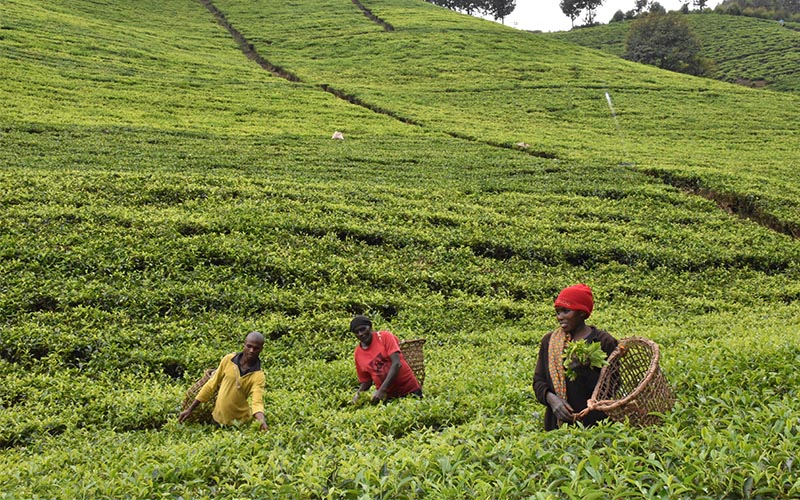
Green leaf prices have nearly doubled in Kigezi, the state is preparing to cancel factory tax arrears and free fertiliser is moving out of Entebbe
Agriculture
A debt about to disappear
On 10 September, the Deputy Speaker of Parliament, Thomas Tayebwa, told mourners at a burial in Bushenyi district that the government is preparing to write off more than Shs35 billion in tax arrears owed by Uganda's tea factories. The waiver, he said, will be processed as soon as Parliament resumes from recess, and he credited MPs from Greater Bushenyi and other tea-growing constituencies with pushing it through.
"The minister directed that, when we resume parliament, we will write off tax arrears worth more than Shs35 billion," Tayebwa said, adding that accumulated tax obligations had become a major obstacle preventing some factories from resuming operations at all.
The waiver is the smaller half of the announcement. Tayebwa also disclosed that Shs212 billion has been earmarked for investment in the tea industry — but with a condition attached that changes the politics of the sector: only factories that can demonstrate they are efficiently and effectively managed will qualify. Government, he said, is separately conducting a deeper review of the tea sector aimed at long-term sustainability.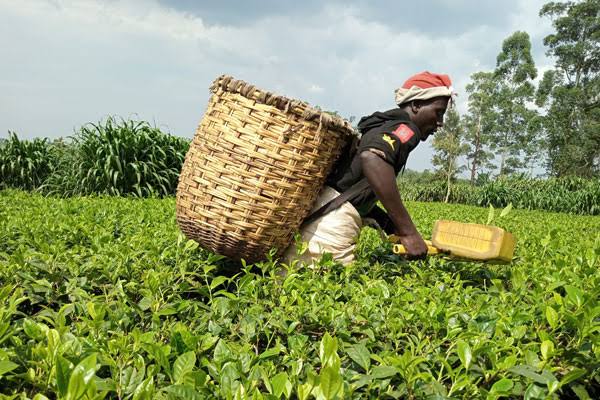
How Uganda's teacup broke
To understand why a tax waiver counts as news, it helps to trace the collapse. Uganda produces mainly CTC black tea and sells the bulk of it through the Mombasa auction, which makes the whole national value chain a price-taker in a single regional market.
That market turned. International demand weakened while large volumes kept arriving, producing an oversupply that dragged auction prices down. Political and economic disruption in key importing countries — Sudan most significantly — removed a substantial slice of East African tea demand. In November 2023 the effect hit Ugandan farmers directly: the farm-gate price of green leaf fell from Shs500 to Shs200 per kilogramme.
Farmers responded the way farmers do. They stopped weeding, stopped applying fertiliser, stopped plucking to standard, and in many cases pulled the bushes out. Francis Byamukama, a Kigezi grower, uprooted half of his 14-acre tea estate and replaced it with maize and bananas, telling Daily Monitor that the earnings no longer covered inputs and labour.
Quality then fell with quantity, which pushed Ugandan tea further down the auction ladder, which cut factory revenue, which cut what factories could pay farmers. Reporting by Daily Monitor and The EastAfrican has put the resulting farm-gate range at roughly Shs183 to Shs330 per kilogramme for the country's estimated 60,000 smallholders — against a break-even the Uganda Tea Association has estimated at above about US$0.13 per kilogramme. Industry estimates of the jobs exposed across factories, plucking, transport and supply run beyond 100,000.
The price signal has turned — for now
There is genuine recovery in the data. By August 2026, processors across the Kigezi region had raised the price of green leaf from Shs250 to Shs450 per kilogramme. Naboth Amutuheire, general manager of Kayonza Tea Factory in Kanungu, attributed the increase directly to improved conditions at the Mombasa auction and said roughly 95 percent of abandoned tea gardens in the area had been rehabilitated.
Caleb Kipande, secretary general of the South Western Uganda Tea Nursery Bed Operators Association, called the rise "not only a relief but a motivation to farmers that had thought of abandoning the enterprise" — while noting that growers still want Shs600. Kanungu district alone hosts about 15,000 tea farmers served by six operating factories with a seventh under construction, and further factories have been built in Kisoro, Kabale and Rukungiri to cut the transport burden on growers.
The catch is that a price recovery driven by an auction in another country is not a policy achievement, and it can reverse as fast as it arrived. What the government is now attempting is to convert a cyclical upswing into structural capacity before the cycle turns again.
Fertiliser as the second lever
On 31 August at the ministry's Entebbe headquarters, Agriculture Minister Frank Tumwebaze flagged off the first consignments of 173,913 bags of fertiliser — 50 kilogrammes each — for free distribution, starting with tea and extending later to coffee and cocoa. The fertiliser was supplied by ITRACOM Fertilizers Uganda under a presidential directive, timed ahead of the August–November planting season.
The scale of the underlying problem is stark: Ugandan farmers apply an estimated 2 to 3 kilogrammes of fertiliser per hectare per year against the 80 to 100 kilogrammes agronomists consider necessary. MAAIF Permanent Secretary Maj. Gen. David Kasura Kyomukama said laboratory results from Makerere University confirmed the consignments meet national and international standards and are safe and fit for purpose — a pointed statement in a market where counterfeit inputs are endemic.
That endemic fraud is, according to farmers themselves, part of why tea collapsed. Canon Apollo Buzaare Turyamusiima, chairman of the Uganda Tea Outgrowers Association, said growers had spent more than three years searching for fertiliser with the right nutrients, and that poor-quality product had helped drive the farm-gate price down from Shs360 to as low as Shs150 per kilogramme. "If every tea farmer gets these fertilisers, then we shall have quality green leaf," he said. "With quality green leaf, we believe the farm gate price will rise to Shs600 per kg."
Input costs compound the problem. Kipande noted that a 50-kilogramme bag of fertiliser has risen from Shs120,000 to Shs180,000 in recent years — meaning that at Shs450 per kilogramme of green leaf, a single bag costs a smallholder the equivalent of 400 kilogrammes of plucked leaf.
ITRACOM's country representative, Jean-Luc Bigirimana, traced the programme to a presidential directive of 12 October 2023 for a fertiliser factory at Kampiringisa in Mpigi district. Tumwebaze framed the wider aim as precision agriculture — soil testing and evidence-based application — and argued that a guaranteed government market should pull in local production and competition, and therefore cheaper fertiliser over time. State Minister for Agriculture Desire Muhoozi confirmed smallholders in tea, coffee and cocoa will receive the inputs at no cost.
The promises still outstanding
Farmers are keeping their own ledger of what has been pledged and not delivered. Turyamusiima recalled a meeting with President Museveni in Bushenyi two years ago at which factories were promised a Shs152 billion facility to clear debts incurred during Covid-19, nursery tea growers Shs112 billion, and farmers engaged in pruning and fertiliser application Shs46 billion.
Frank Byaruhanga, chairman of tea farmers in south-western Uganda, has pressed specifically for settlement of the Shs112 billion owed to nursery bed operators for seedlings supplied between 2016 and 2022, arguing that releasing it would let operators pay casual labourers and restore neglected gardens. He has also called for a tax holiday for processors and exporters, a stabilised electricity grid to end reliance on diesel generators, and budget allocations for rural feeder roads.
Amutuheire's account from inside a factory explains why a tax waiver alone may not restart production: processors are short of working capital to buy fertiliser, service bank loans and pay workers and suppliers. Cancelling arrears removes a liability; it does not put cash on the balance sheet.
Efficiency as a condition — and a governance problem
The most consequential sentence in Tayebwa's announcement may be the qualifier on the Shs212 billion: only well-managed factories qualify. Many of Uganda's tea factories are farmer-owned cooperative companies, and their management has been contested. In August 2026 the High Court at Bushenyi quashed the board of Igara Growers Tea Factory and ordered fresh elections within six months — a reminder that the entity meant to receive public money on behalf of thousands of out-growers may not have an undisputed board to receive it.
That leaves an unanswered question with real money attached: who assesses "efficient and effective" management, against what published criteria, and with what appeal? Without that, an efficiency test becomes a discretionary gate — and in a sector where factory boards are already litigated, discretion invites capture.
What it means beyond the tea belt
Tea matters to the national accounts as a foreign exchange earner, but its real weight is regional. In Kigezi, Ankole, Toro and Bugisu, tea is one of very few crops that pays a smallholder a cash income every fortnight rather than once or twice a year. When the farm-gate price falls below the cost of plucking, that fortnightly income disappears from entire sub-counties, and with it school fees, input purchases for other crops, and demand at local markets.
There is also a template question. The combination now being applied to tea — debt relief for processors, conditional capital tied to management quality, free quality-assured inputs to lift raw material grade, and a state-guaranteed market for a domestic fertiliser manufacturer — is the same architecture being proposed for coffee and cocoa. If it works in tea, it will be extended. If the money lands on contested boards and the fertiliser does not reach the gardens, that will be extended too.
The immediate test is procedural and close at hand: whether Parliament passes the Shs35 billion waiver when it returns from recess, whether the criteria for the Shs212 billion are published, and whether green leaf holds above Shs450 through the next auction cycle.



