Agribusiness
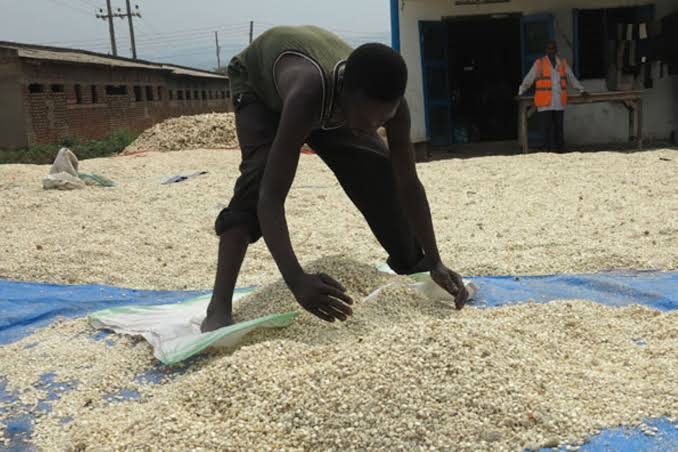
In the parishes of Kibwa and Kamabale, on the slopes above Fort Portal, the barley harvest is a slow, hand-worked affair. Farmers judge maturity by eye, cut by hand, dry on tarpaulins or bare ground, thresh with sticks and bag whatever survives. Somewhere between the standing crop and the buyer's weighbridge, a portion of the season simply disappears — broken grain, mould, stones, moisture readings that push a consignment down a grade.
In late August, Nile Breweries Limited put more than 450 of those farmers through training designed to shrink that gap. The sessions, reported by Nile Post on 24 August, covered crop maturity assessment, harvesting time, drying, threshing, moisture management, cleaning, winnowing, grading and storage — the unglamorous mechanics that decide whether a sack of barley is malting quality or animal feed.
The training was useful, by the farmers' own account. It was also, in their view, aimed at the wrong end of the problem.
"I'm grateful for the knowledge given to me, but the prices for our crop is lower than the cost of production," said Igisha Kirimunda, a barley farmer from Karangura Sub-county. The arithmetic behind that sentence is the story.
Three-to-one against the farmer
Barley farmers in the Rwenzori sub-region currently sell a kilogramme of grain for about Shs1,700. A kilogramme of certified seed costs them roughly Shs5,000. Before a single hoe touches the ground, the input they must buy is priced at nearly three times the output they will be paid for.
Seed is not consumed one-to-one with grain produced, so the comparison is not a direct margin calculation. But it captures something real: at Shs1,700 a kilo, the yield needed to break even is high, and Rwenzori yields are not. Nile Breweries' agriculture team leader for the western region, Bob Mutegeki, acknowledged as much, saying the company works with more than 600 barley farmers in the region but that low yields remain a major challenge.
Add the region's geography. Joseph Mutanywana, an agent with the Rwenzori Barley Farmers Association, pointed to high land and labour costs and expensive transport because of the mountainous terrain. Every sack that comes off a slope in Karangura costs more to move than the same sack on flat ground in Lira — and that cost is borne by the farmer, not the buyer. The margin is squeezed from three directions at once: input prices set in Kampala, transport costs set by topography, and a farm-gate price set by a single industrial buyer.
The one-buyer problem
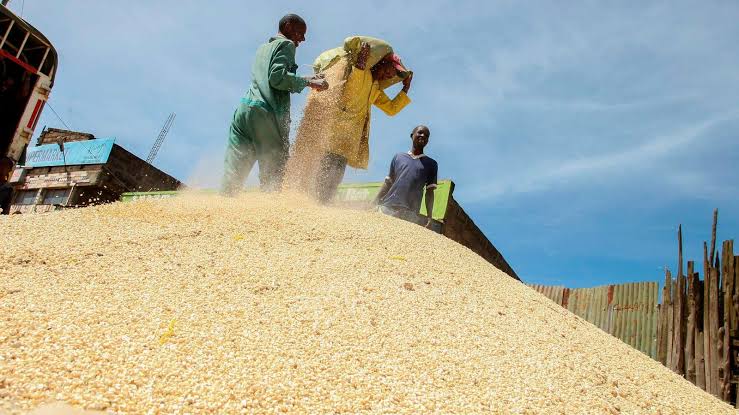
Malting barley in Uganda is not like maize or beans. There is no village trader who will take it, no cross-border demand from Kenya or South Sudan, no household that eats it. It is grown because a brewery has contracted for it, and it is worth what that brewery decides to pay.
Nile Breweries, owned by the global brewer AB InBev, sources more than 95 percent of its raw materials locally — barley, sorghum, cassava and maize — and supports more than 9,000 smallholder farmers each season across Uganda through its Local Raw Material programme, one of the largest private-sector sourcing initiatives in the country. Farmers get improved seed varieties, agronomic training, field officers and, crucially, a guaranteed market. At a "Cheers to Farmers" event in Fort Portal in October 2025, the company recognised more than 300 Rwenzori barley growers and handed out knapsack sprayers, gumboots and overalls.
None of that is trivial. A guaranteed buyer removes the single biggest risk in Ugandan smallholder agriculture, which is not growing a crop but selling it. Sophia Bambu, a Fort Portal farmer quoted at last year's event, said her yields had been low and her harvest hard to sell before the programme reached her: "Now, with better seeds and advice from their field officers, my production has doubled. I have been able to pay school fees for my children and even expand my farm."
But a guaranteed market and a fair price are different things, and a contract-farming arrangement with one buyer resolves the first without automatically resolving the second. The farmers understand this well enough that they built an institution to try to shift it.
"We had formed an association to collectively address some of the challenges and reduce dependence on support from buyers, but we still need help," Mutanywana said.
That is a farmers' association telling a reporter, in public, that it has not yet achieved leverage. It is an unusually candid admission of where power sits in the chain.
Why post-harvest handling still matters
It would be a mistake to read the price complaint as an argument against the training. Post-harvest loss is one of the largest and least-discussed drains on Ugandan agriculture. World Bank estimates repeatedly cited in Parliament put national post-harvest crop losses at between 22 and 30 percent — a figure that came up again during the induction retreat of the 12th Parliament's Committee on Agriculture, Animal Industry and Fisheries in late August, where members heard that Mubende and Masindi districts alone lose an estimated Shs16 billion a year.
For malting barley the stakes are sharper than for a food crop, because barley is bought on specification rather than by the sack. Moisture content, grain size, foreign matter and germination capacity all feed into whether a consignment is accepted for malting at all. Grain dried on bare ground picks up stones and soil; grain bagged above target moisture develops mould in storage. Each is a downgrade the farmer pays for.
"Producing quality barley does not end in the field," Mutegeki said. "The timing of harvesting, drying, threshing and storage all have a significant impact on the final quality of the grain."
He is right, and the training partner matters too: Nile Breweries has been working with Enabel, the Belgian development agency, on productivity and loss reduction. Better handling converts a share of what is currently lost into saleable, higher-grade grain. On a Shs1,700 price, cutting losses by a fifth is a real income gain. The problem is that it is a gain on a low base, and it is the only lever currently being pulled.
What the farmers are actually asking for
Read the requests made at the training and a coherent list emerges. Kirimunda wants a higher price. Jemimah Biira asked for equipment and fertiliser. Mutanywana wants the cost structure addressed — land, labour, transport.
The fertiliser request lands in the middle of an active national debate. Uganda's fertiliser application rate sits at roughly one to 2.4 kilogrammes per hectare, against about 32kg in Kenya and 29kg in Rwanda, and Cabinet resolved at State House Entebbe on 24 August to push a national fertiliser procurement and distribution programme through the Ministry of Agriculture and the Parish Development Model. Whether subsidised fertiliser reaches a barley plot in Karangura — and whether it is genuine, given persistent counterfeit-input problems — is a separate question. But the constraint the Rwenzori farmers named is the one Cabinet has just formally recognised.
The equipment request is harder. Mechanisation on Rwenzori slopes is not about tractors. It means threshers, moisture meters, tarpaulins, drying racks and collective storage — shared capital a farmers' association could own if it had access to finance, and that no individual smallholder will buy on a Shs1,700 price.
The bigger test
Uganda's National Development Plan IV puts agro-industrialisation at the centre of its growth strategy, and local sourcing by manufacturers is exactly the mechanism it envisages. Nile Breweries' programme is one of the clearest working examples of the model in the country, and government policy has pushed in the same direction all year — through the PACEID regional aggregation centres, the AgriConnect Compact with the World Bank and the Uganda Development Bank's agro-industrial lending, most of it premised on manufacturers pulling smallholders into formal value chains.
The Rwenzori barley case shows where that model is thin. Contract farming solves market access, quality assurance and input supply. It does not, on its own, solve price. Uganda has no formal mechanism for setting or arbitrating farm-gate prices in a contracted value chain, and the Contract Farming Bill 2023 — which might have created one — was introduced, reviewed and then withdrawn in March 2026. Opposition legislators have listed its revival among their priorities for the FY2026/27–2030/31 period, but nothing is currently before the House.
In the absence of a rule, the farm-gate price is whatever a buyer and an under-powered association agree on — the same structural imbalance behind Busoga's long-running sugarcane "trash" deduction dispute and this month's Shs2.5 billion maize supplier row in Luweero.
For the 450 farmers who spent August learning to grade and store their grain properly, the practical test arrives at the next buying season. If better handling lifts more of their crop into the top grade and the price per kilo also moves, the training will have paid for itself several times over. If quality improves and Shs1,700 holds, they will have been taught, at their own expense in time and labour, to deliver a better product for the same money.
That is not a criticism of a training programme. It is a description of what happens when one side of a value chain is organised and the other is not.
Published By | Features Editor