Daily Agriculture
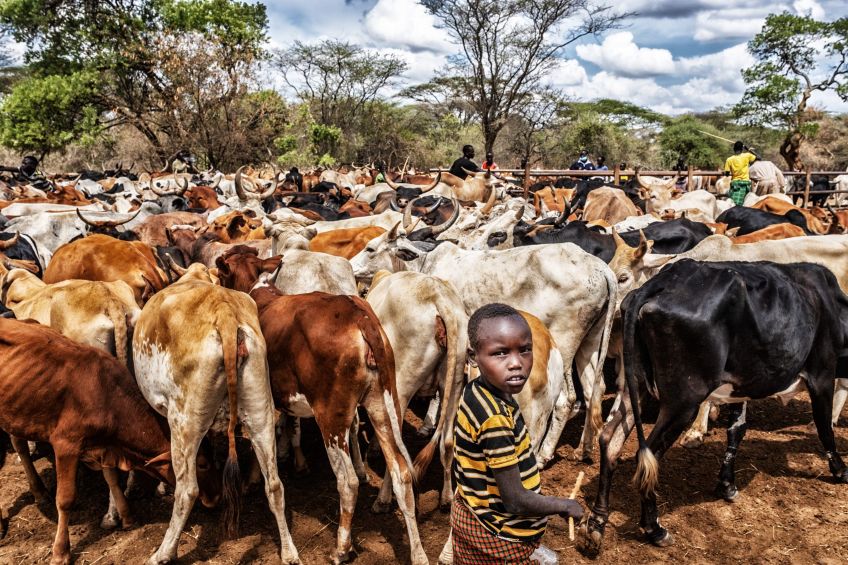
For a sub-region where cattle are currency, kinship and culture all at once, Karamoja's livestock economy has for decades produced more headlines about raids and hunger than about wealth. This week, the Ugandan government, the Intergovernmental Authority on Development (IGAD) and a coalition of development partners set out to change that script, unveiling a new five-year programme that ties the fate of the region's herds directly to peacebuilding, land governance and market access.
The Integrated Livestock Development, Peacebuilding and Resilience Enhancement for Sustainable Livelihoods in Karamoja — ILPRE-Karamoja for short — was presented on Friday during a national consultative workshop convened by the IGAD Mission to Uganda in Naguru, Kampala. If implementation proceeds as planned, the programme will run from January 2027 to December 2031, feeding into a much larger Shs15.1 trillion Karamoja Regional Development Plan that Cabinet approved in July last year.
The scale of ambition is deliberate. Karamoja remains Uganda's poorest sub-region by a wide margin: the 2023/24 National Household Survey put its poverty rate at 74.2 percent, roughly four times the national average, with persistent food insecurity, thin infrastructure and a youth population in which an estimated 84 percent live in multi-dimensional poverty. Successive interventions — the Karamoja Integrated Development Plan, Operation Wealth Creation, the Northern Uganda Social Action Fund and, most recently, the Parish Development Model — have each arrived with fanfare and significant budgets, only for the region to slide back into what local commentators have called a cycle of "start-stop development."
What's Different This Time
Officials at Friday's workshop were candid about that history. Dr Edith Namutebi Nsubuga, Head of the Peace and Security Department at Uganda's Ministry of Foreign Affairs, told participants that while previous programmes had attracted "substantial investment," the results demanded "better coordination, sharper prioritisation and stronger accountability." Her call was for fewer, higher-impact interventions rather than another scattershot list of projects.
That is the organising logic behind ILPRE-Karamoja. Rather than treating insecurity, poor grazing management, weak markets and land disputes as separate problems to be tackled by separate agencies, the programme groups them into five interlocking pillars: raising livestock productivity; managing cross-border grazing land and water sustainably; preventing conflict; strengthening livestock markets; and improving land-use governance.
Joselyn Bigirwa, Head of the IGAD Mission to Uganda, who chaired the workshop, said the initiative grew out of engagements between IGAD Executive Secretary Dr Workneh Gebeyehu and Gen Salim Saleh, followed by guidance from the Office of the President. It is intended to consolidate gains from the IGAD Drylands Strategy and the 14-year Karamoja Integrated Development Programme rather than start from scratch. A multi-agency technical steering committee, chaired by Bigirwa and drawing on specialists from IGAD's pastoral, climate, conflict early-warning and food-policy units, will provide oversight, while implementation will be woven into Uganda's existing planning architecture — principally the Karamoja Integrated Development Programme and the Fourth National Development Plan — with IGAD coordinating alongside Operation Wealth Creation, the Office of the Prime Minister and the Ministry of Foreign Affairs.
The Economic Logic of Peace
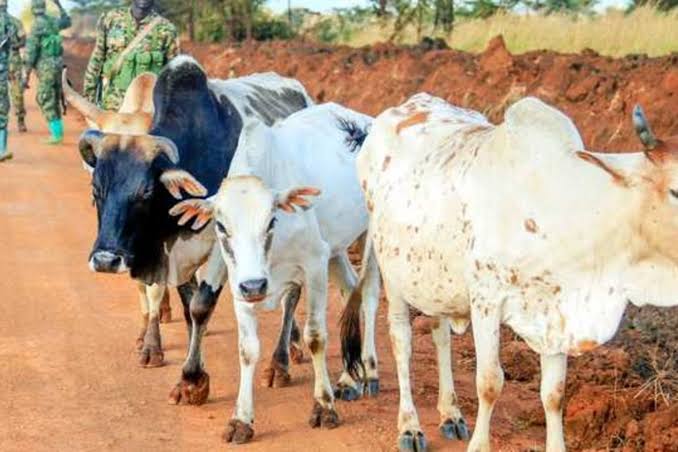
The programme's central bet is that security and commerce are two sides of the same coin. "Peace and social cohesion are prerequisites for communities to access markets, education, and health services," the Karamoja Development Partners Group said at the workshop, urging donors to move beyond conventional restocking and vaccination campaigns toward investment in animal health systems, water infrastructure, rangeland management, value addition and market linkages.
That framing matters because Karamoja's cattle economy has long been trapped by its own contradictions. Livestock is the sub-region's principal store of wealth and social capital, yet insecurity along grazing corridors, weak veterinary infrastructure, poor roads and limited processing capacity mean that wealth rarely converts into cash income or nutrition for the households that hold it. Cattle raiding — both the traditional practice and its more violent, gun-fuelled modern variant — has repeatedly closed markets, displaced herders and deterred the very private investment that could professionalise the sector.
The Shs15.1 trillion Karamoja Regional Development Plan that frames ILPRE-Karamoja is explicit about wanting to break that pattern by 2035, shifting the sub-region from a "predominantly nomadic and agro-pastoral economy" to a "settled and commercially viable" one. Brenda Apio, a senior economist with the National Planning Authority who presented the plan, outlined flagship investments that go well beyond livestock: a Kidepo International Airport, an industrial park and cement plants in Moroto, meat and hides processing facilities in Kotido, and a proposed Karamoja Peace and Technology University, alongside expanded boarding schools and subsidised tertiary education for Karimojong students.
A Lesson From Nakapiripirit
Amid the trillion-shilling figures and institutional architecture, workshop organisers pointed to a much smaller example as proof of concept. Rony Oved, founder of AgroMax Uganda Ltd, described the Sustainable Business Development Initiative, a cooperative and mechanised farming model operating across 11 villages and 370 households in Nakapiripirit District. After the Northern Uganda Social Action Fund's third phase wound down, community members used proceeds from their agricultural activities to rehabilitate tractors and water infrastructure themselves. Five years on, Oved said, the enterprises are still running, still paying members and still attracting new partnerships — without further donor support.
For a region accustomed to programmes that evaporate once external funding ends, that kind of durability is precisely what planners say they now want to engineer at scale. The lesson, participants concluded, is that transformation depends less on the size of the cheque than on whether communities gain lasting access to productive assets, functioning markets and institutions capable of maintaining them long after the ribbon-cutting.
What It Means for Farmers and the Wider Economy
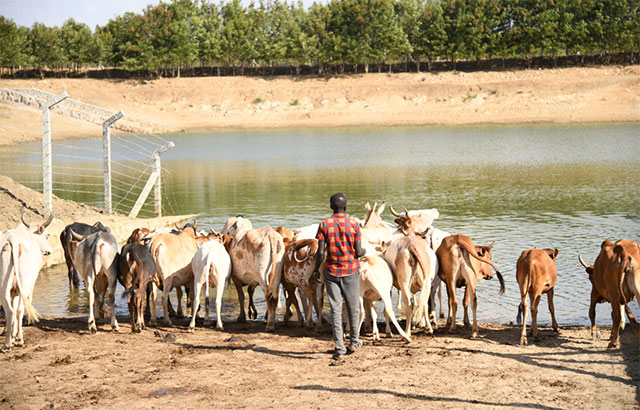
If ILPRE-Karamoja delivers even partially on its aims, the implications extend beyond the sub-region's roughly 1.2 million people. Karamoja's rangelands hold a substantial share of Uganda's national cattle herd, and better-managed, healthier, more market-connected herds there could feed into the beef, hides and dairy value chains that national planners are simultaneously trying to grow through initiatives like the PACEID regional aggregation centres and the National Animal Genetic Resources Centre's breeding programmes. A more secure Karamoja also reduces the drag that recurrent emergency response — food relief, military escorts for traders, disaster financing — places on the national budget.
But the programme's authors have not disguised the risks. It remains a proposal moving through consultation, not a funded, ratified plan; the January 2027 start date is contingent on further refinement, donor commitments and, crucially, the sustained political will to prioritise coordination over the kind of siloed, donor-driven project cycles that have characterised Karamoja's development history. Namutebi Nsubuga's call for "disciplined implementation" between 2027 and 2031 is, in effect, an acknowledgment that the plan's biggest obstacle may not be money, insecurity or infrastructure — but Karamoja's own uneven institutional memory of promises made before.
For now, the workshop's conclusion stands as both an aspiration and a warning: ILPRE-Karamoja "provides a framework for addressing the region's interconnected challenges," but its success will be judged less by the trillions pledged than by whether livestock in Karamoja finally becomes, in the words of one participant, "a commercially productive asset" rather than simply a means of survival.
Published By | Features Editor