Written By | Staff Writer
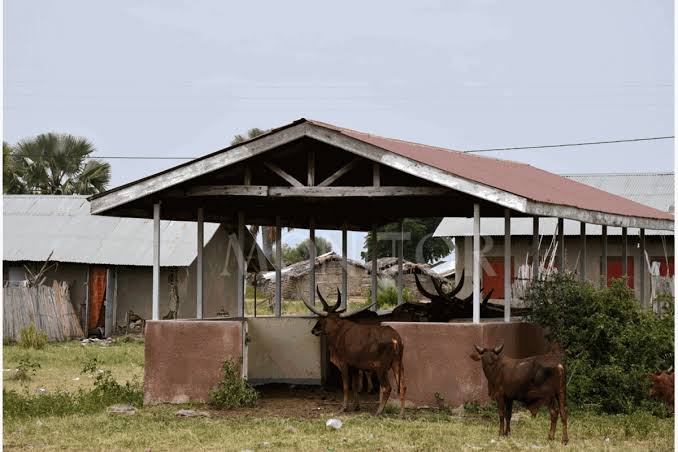
Leaders in Ciforo promise lower fees and daytime trading for a donor-built market that closed soon after opening. Whether it works will depend on pricing, management and disease control, not bricks.
Agriculture
A market that cost more than Shs106 million to build sits empty in Ciforo Sub-county, Adjumani District, while farmers a few kilometres away still haul goats and cattle to distant trading points. This week, local leaders said they will try to bring it back to life, and the first thing they plan to change is the one thing that emptied it: the fees.
The Magburu Commodity and Livestock Market was built in the 2024/25 financial year with funding from the Italian development agency identified in The Cooperator News as "CD". According to the paper's report from Adjumani on 3 November 2026, the facility opened briefly and then closed after traders complained about high market dues. Residents have now asked authorities to cut the charges and reopen it, and leaders from the sub-county to the district have publicly backed the idea.
What leaders said on the record
Betty Kamoyo, a former trader, told the gathering that high charges drove traders away and asked Ciforo authorities to review them. Emmanuel Drani, the Ciforo LCIII chairperson, said the sub-county council has resolved to reduce the dues, that the market will operate by day rather than at night, and that its revival will be a priority. He urged residents to own the facility so that it "transforms us economically".
Willison Moriga, the LC II chairperson, asked residents to take up livestock farming and other productive work in readiness for the reopening. George Andruga Origa, the LCIII chairperson of neighbouring Ukusijoni, called the market a potential "game changer" and argued that leaving it idle wastes public money. An unnamed Ciforo district councillor went further, proposing that local farmers be exempted from the high fees altogether and warning that cattle theft must be guarded against.
Higher up, John Anyanzo Ambayo, the Adjumani LCV chairperson, welcomed the revival, pledged support for more livestock markets, and announced plans for a bigger market in Arinyapi Sub-county meant to link traders with South Sudan. James Leku Pili, the Adjumani West MP, called animal rearing a priority for diversifying incomes and coping with climate change.
The fee problem is a design problem
The story is, on its face, a local one. But it points to a pattern that is familiar across Uganda's districts: public money pays for the building, while the local government then has to pay for everything else, from staff and cleaning to security, out of the revenue the market itself generates. Markets are typically a primary source of own-source revenue for lower local governments, so there is an institutional pull towards setting dues high enough to recover costs. If the dues exceed what a trader's margin can bear, traders simply leave, and the revenue the council hoped for never arrives. The Magburu episode is that dynamic at small scale: the infrastructure exists, but the pricing made it unusable.
A separate Daily Monitor report on the Adjumani Main Market shows how thin the council's finances can be. There, vendors owed about Shs122 million in rent; the council waived Shs62 million but still had roughly Shs60 million outstanding, and only 10 of 69 tenants had paid. The article is undated and concerns a different facility, so it should be read as background rather than as evidence about Magburu. Still, it suggests that Adjumani's local authorities have struggled before to balance revenue collection against what traders will pay, and that unpaid rent can stall renovations.
The decision to open the market by day only is also telling. Night operation raises security and lighting costs and exposes traders and animals to theft, a risk the councillor flagged explicitly. A daytime schedule reduces overheads and may allow lower dues without making the market a loss-maker. Whether it also suits livestock buyers who travel long distances is a question the leaders have not yet answered publicly.
Why livestock, and why now
Leaders framed livestock as a hedge against climate stress. That argument is credible in northern Uganda, where crop failures have been a recurring theme: an allAfrica report from July 2026 advised farmers in Acholi to delay second-season planting after a failed harvest. Animals can be sold in lean periods in a way that a failed bean crop cannot, but only if there is a place to sell them at a reasonable price. A functioning market shortens the distance between a farmer and a buyer, reduces transport costs, and makes prices more visible. Without one, farmers rely on itinerant traders who set the terms.
The wider livestock picture adds urgency. Foot-and-mouth disease has been moving through the country in 2026; a New Vision report published the same day, on a vaccination meeting in Kyankwanzi, listed outbreaks in Nakasongola, Namisindwa, Ntungamo, Madi-Okollo and Kazo, and quoted a presidential adviser saying some export markets, including in West Africa and the UAE, have stopped buying. A market that draws animals from many villages into one place needs disease controls built into its operations, such as health inspection, movement permits and vaccination checks. None of the reporting from Adjumani says whether Magburu has such provisions, and that is a gap worth watching, since quarantines and movement restrictions have been used elsewhere in 2026.
The South Sudan question
The most ambitious element of the announcement is the proposed bigger market in Arinyapi, aimed at linking traders with South Sudan. Livestock trade across that border has a long history, and Adjumani sits on a corridor that has attracted both opportunity and risk. A Daily Monitor report some years back described cattle traders stranded when Juba buyers stayed away, and an Independent report from December 2024 described a Uganda-South Sudan border market that failed to attract traders. Those reports are older and are cited here only to show that cross-border markets can disappoint when security, currency, or policy conditions shift. In October 2026 a separate episode, an alleged notice in Juba that foreigners should not engage in retail, was denied by authorities but still unsettled Ugandan traders, according to coverage in the Daily Monitor.
For Adjumani, the lesson is that the proposed Arinyapi market will only be as good as the reliability of demand across the border. Building yet another facility before fixing the pricing and management of the one at Magburu would risk repeating the same mistake at larger cost. No budget, funding source or timeline for Arinyapi was given in the report.
What would make it work
Several practical tests will show whether the revival is serious. The first is whether the sub-county council formally gazettes lower dues, and at what level, compared with neighbouring markets. A councillor's proposal to exempt local farmers suggests a two-tier structure, but exemptions can erode revenue and create disputes over who counts as local. The second is management: who collects the money, how it is accounted for, and how much returns to maintain the facility. The third is whether trading days are fixed and publicised, so buyers know when to come. Markets succeed on predictability as much as on infrastructure.
The fourth test is political. District leaders were quick to endorse the revival before an audience, and cheap endorsements are easy. The commitments to cut dues and to operate by day are concrete enough to be checked in the coming months, and residents who raised the matter are now in a position to hold officials to them.
Implications
For farmers in Ciforo and neighbouring Ukusijoni, a working market would mean a nearer outlet for goats, cattle and produce, and possibly better prices. For the district, it would turn a stranded asset into revenue and demonstrate that donor-funded infrastructure can be sustained locally. For the broader economy, the episode is a reminder that Uganda's agricultural investments often fail not at construction but at the unglamorous stage of operating, pricing and managing what has been built. The Shs106 million is already spent; the real question is whether the next, smaller decisions on fees and rules will let it earn its keep.
A caveat: the reporting rests on a single article from The Cooperator News plus background reports, and it does not give the old or proposed fee levels, the date of the council resolution, or any figures for expected trade. Those are the numbers that will matter most, and they should be sought from Adjumani District and Ciforo Sub-county officials.



