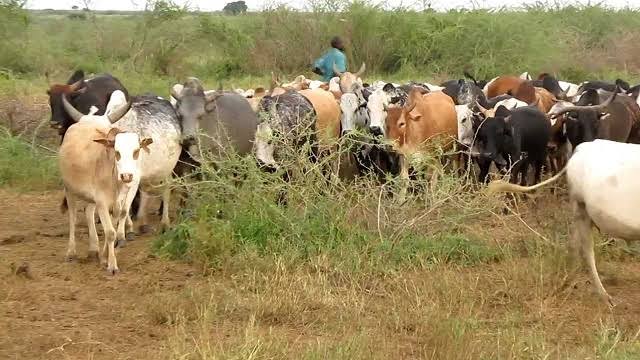
As government signals a larger budget for next year, the Acholi, Lango and Teso cattle programme faces questions about inflated animal prices, farmers' husbandry skills and a movement ban that narrows where cattle can be bought.
Agriculture
Note on this piece: the cattle restocking programme was last examined in this series on 8 September. This is a follow-up, written because of what is new today: an official programme update dated 4 October that names next year's budget and, for the first time in our coverage, spells out the price and sourcing problems the programme has run into.
What is new
Government plans to raise funding for the Presidential cattle restocking initiative in northern and north-eastern Uganda from Shs80 billion in the 2025/2026 financial year to Shs100 billion in the year ahead, according to an update by Obed K. Katureebe of the Uganda Media Centre published by The Independent on 4 October 2026. About 80 percent of the current year's Shs80 billion has already been disbursed.
The update is notable less for the larger envelope than for what it admits. Beneficiaries, it says, lack knowledge of animal husbandry, struggle with treatment costs, and are facing artificially inflated cattle prices because restrictions prevent purchases south of Karuma Bridge. For a programme whose entire logic rests on turning cash into healthy, productive animals, those are not minor footnotes.
How the programme works
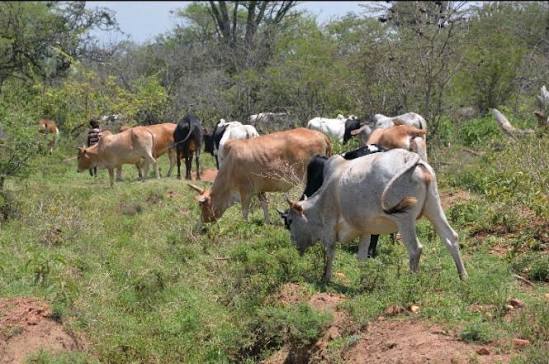
The scheme was introduced by President Yoweri Museveni during the 2025/2026 election campaign as a uniform restocking package for the Acholi, Lango and Teso sub-regions, areas that lost large herds during the civil conflicts of the 1990s through 2006. Each qualifying household receives five animals: two bulls, which provide draught power for ploughing, and three heifers, which allow the herd to multiply and supply milk.
The update puts the target at roughly 16,000 households. Simple arithmetic shows what that means on the ground: 32,000 bulls and 48,000 heifers, or about 80,000 animals, to be sourced and delivered. Dividing the Shs80 billion by 16,000 households gives about Shs5 million per household, which is consistent with the Shs5 million-per-household figure officials gave earlier in the programme, and works out to roughly Shs1 million per animal.
Beneficiaries are meant to be prioritised by vulnerability: the elderly, returnees, former rebels, widows, unemployed youth, female-headed households and people with disabilities. Selection runs through Parish Development Committees and security officers and is validated before payment. In earlier reporting, the Office of the Prime Minister said funds were being paid out electronically to beneficiaries rather than handed over as animals, a design that gives households choice but also exposes them to the market.
The price squeeze
That exposure is where the new admission bites. If a household receives a fixed sum and must buy animals itself, the price of cattle is the single most important variable. The update says prices have been artificially inflated because of restrictions on buying south of Karuma Bridge, the crossing that separates the northern region from the cattle-rich districts of central and western Uganda.
The likely mechanism is straightforward. Movement restrictions of this kind are generally tied to animal disease control, and the north has faced a livestock disease threat this season. Government has been running a foot-and-mouth disease cost-recovery vaccination scheme, and at least one central district, Nakasongola, imposed a total livestock movement ban in mid-September after animal deaths. When buyers are confined to a smaller pool of sellers, and thousands of beneficiaries are shopping at about the same time with cash in hand, sellers have every incentive to raise prices. A farmer who budgets for a Shs1 million heifer may find the same animal quoted well above that, leaving the household with fewer or lower-quality animals than the package intends.
This analysis is our inference from the update's own statement; officials have not published price data comparing northern and southern markets. But it is a testable claim, and one the programme's managers would do well to test, because the gap between the headline number of animals and the animals actually delivered is the difference between restocking and merely redistributing money.
Knowledge, treatment and the cost of keeping animals alive
The second challenge is human rather than economic. Many beneficiaries are returnees, widows and young people with little recent experience of managing cattle, since a generation grew up in displacement camps without herds. The update acknowledges knowledge gaps in husbandry and the cost of treating sick animals.
This matters because the first year of ownership is the riskiest. Tick-borne diseases, worm burdens, poor housing and the lack of dry-season feed can quickly erode a small herd, and a household that must pay privately for veterinary drugs may be forced to sell an animal to treat another. The two bulls are meant to pull ploughs, which only helps if households have the training to yoke them and the land to plough. If extension officers are not paired with each distribution, animals may be delivered without the support that keeps them productive.

Corruption: small numbers, large stakes
The update reports minimal corruption, averaging about 10 cases per district. Across the 33 districts that earlier reporting said are covered by the programme, that could mean several hundred cases in total, though the update does not give a national count or say how cases were resolved. Whether 10 per district is small depends on denominators: with some 16,000 households spread over 33 districts, the average district has fewer than 500 beneficiaries, so 10 cases would be a little over two percent of recipients. That is lower than many cash transfer schemes, but each case deprives a vulnerable household of what is, for many, a once-in-a-lifetime asset.
Transparency would help. Publishing district-level lists of beneficiaries and payment dates, as parish-based programmes often do, would let communities verify who received what, and would make it easier to track whether prices paid were reasonable.
What a bigger budget changes
The planned Shs100 billion is a 25 percent rise on the current year. If the per-household grant stays at Shs5 million, that would cover about 20,000 households, though the update does not say whether the package size or the target will change. That figure is our illustration, not an official projection.
The more important question is whether additional money can be spent well in a market that is already tight. Pouring more cash into a market with constrained supply can worsen price inflation. Options that officials could weigh include phased purchasing so that not all beneficiaries buy at once, bulk procurement from approved breeders, clearer rules on where animals may be bought and quarantined, and ring-fencing part of the budget for veterinary support and training. Which of those is under consideration has not been announced.
The wider economic stakes
For northern and north-eastern Uganda, restocking is about more than cattle. Cattle are savings, insurance, bride-wealth, draught power and a route out of subsistence. A functioning restocking programme could lift household incomes, restore a livestock economy that conflict destroyed and reduce the pressure on the Parish Development Model to carry every poverty-reduction job on its own.
For the national economy, the stakes are tied to how credibly government can run large, politically prominent cash-based programmes. The Shs80 billion already largely spent, and the Shs100 billion ahead, are public money, and the Auditor General and parliamentary committees have previously raised concerns about recovery and monitoring in other parish-level programmes. A visible set of results, such as the number of animals alive and productive twelve months after distribution, would be more persuasive than disbursement percentages.
What to watch
Three indicators will show whether the programme is working. First, the average price actually paid per heifer and per bull in northern markets compared with the budgeted figure. Second, the survival and calving rates of distributed animals after one year. Third, whether the restrictions on buying south of Karuma Bridge are adjusted as disease control permits. If the first number is rising, the second is falling and the third is unchanged, a larger budget will buy fewer cows, not more.
For now, the message from the programme's own update is candid, and arguably welcome: the cows are indeed returning to Acholi, Lango and Teso, but whether they return in the numbers and condition intended depends on fixing the market and support systems around them.
Published By | Features Editor