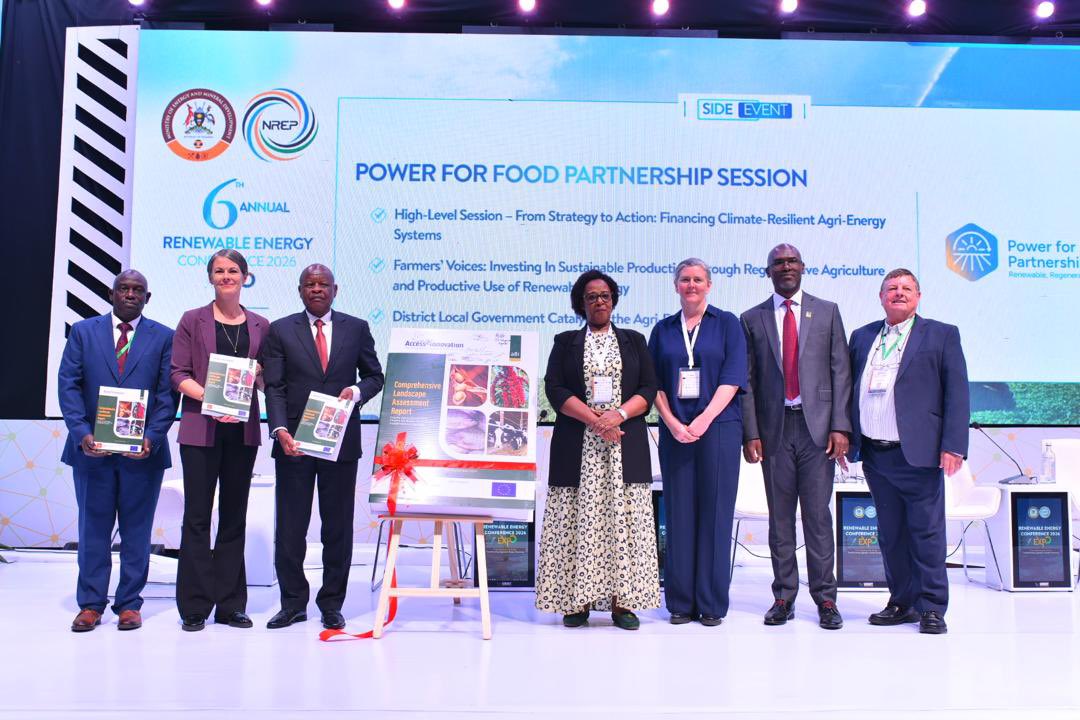
Uganda and Denmark have launched a 24-month green technology transfer fund offering matching grants for solar cold storage, grain dryers and efficient processing. Its real test will be whether small agribusinesses can find the other 70 per cent.
Every Ugandan farmer knows the arithmetic of a harvest that cannot be stored: grain left too wet to dry, tomatoes with no cold room, milk that sours before the truck arrives. On 21 October 2026, at the Renewable Energy Conference in Kampala, Uganda and Denmark launched a fund designed to attack that arithmetic with technology. The Green Technology Transfer Fund (GTTF) is worth about Shs10.34 billion, roughly DKK19 million or EUR2.54 million, and will run for 24 months.
The sum is small by the standards of Uganda's agricultural budget, which was reported at Shs2.26 trillion for the Agro-Industrialisation Programme in 2026/27. But the fund's design, matching grants that must be topped up by private money, makes it worth a closer look. It is less a handout than a wager that a modest public subsidy can pull Danish and European equipment, and the know-how that comes with it, into Ugandan agribusinesses.
What the fund is and who is behind it
According to Nile Post's coverage of the launch and the project pages of Access2innovation, the Danish non-profit that manages the programme, the GTTF is run with aBi Development Ltd, a Ugandan agribusiness development organisation. Funding comes from the Royal Danish Embassy and the European Union. The aim is to connect Ugandan firms with climate-friendly technologies from Denmark and the EU in the food sector, covering processing, water, energy and circular-economy solutions, and to build local capacity to run and maintain them.
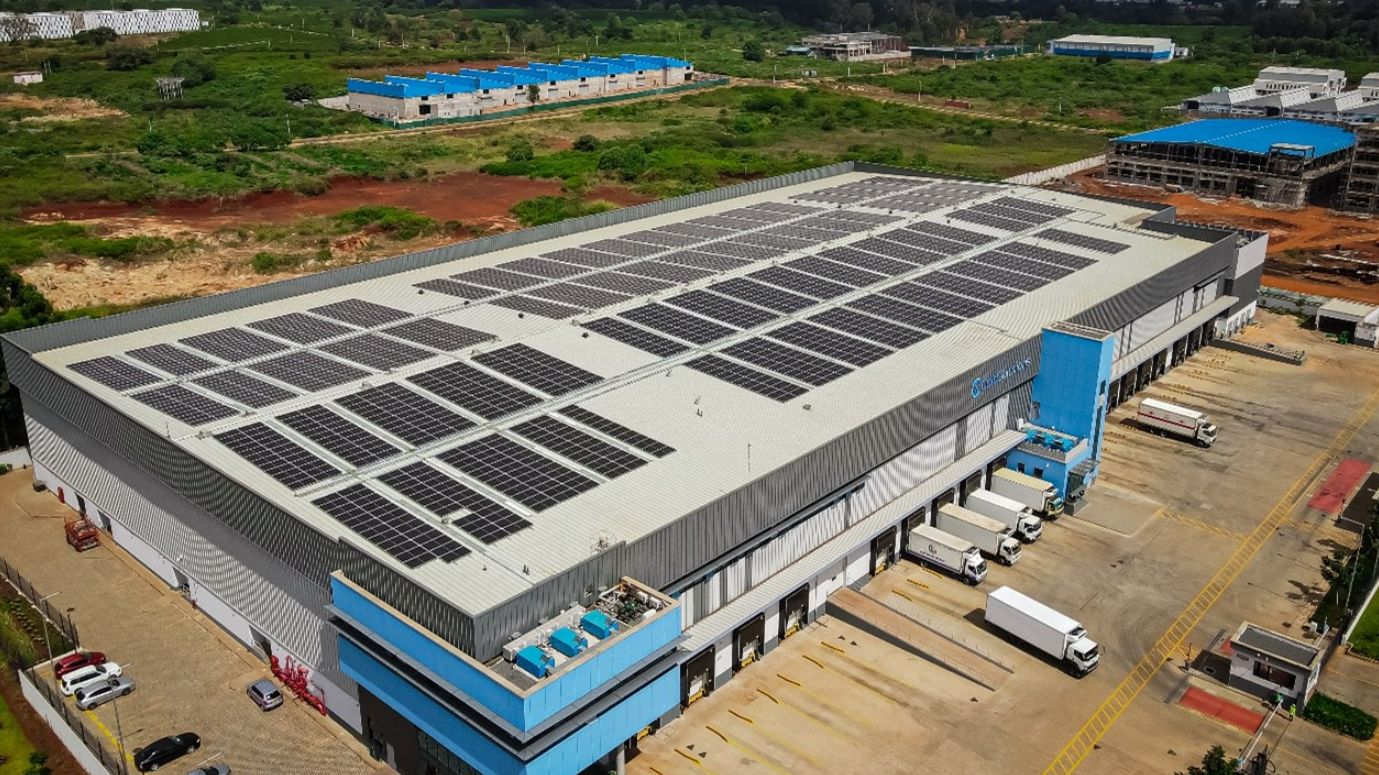
The technologies named at launch are practical rather than exotic: solar-powered cold storage, refrigerated transport, grain-drying equipment, improved grain storage, and energy-efficient processing systems. The fund targets 10 agricultural value chains, including coffee, tea and grains.
State Minister for Trade Wilson Mbasu Mbadi told the launch that agriculture and processing contribute over 42 per cent of national export revenues, and that the fund would help produce reach markets in good condition and meet export standards. That framing matters. Uganda loses money not only when crops rot but also when export consignments are rejected for quality, residues or inconsistent handling.
How the money works
The core mechanism is a matching grant. Under the first funding window, the GRASP Cereals and Oilseeds window announced by Access2innovation on 2 October 2026, the fund covers up to 30 per cent of capital expenditure. The applicant finances the remaining 70 per cent from its own resources, bank loans, supplier credit or other financing. This is the first of six phased windows; the programme's public pages do not describe the other five, nor do they state eligibility criteria, closing dates or the grant share for other windows. Application templates are available through aBi's Grants Management System, and those wanting specifics are directed to Access2innovation.
The fund also has a leverage target. It aims to attract at least Shs40 billion in co-financing from agribusinesses, development finance institutions and impact investors. At roughly four shillings of outside money for every shilling in the fund, that is an ambitious ratio for a 24-month programme, and it will be the clearest measure of whether the fund works.
The problem it is trying to solve
Post-harvest loss is one of the most persistent leaks in Uganda's food system. At this month's World Food Day event in Mbarara, a World Food Programme representative put post-harvest losses at 30 to 40 per cent, according to coverage of that event. Different crops and chains show very different figures, and the numbers are estimates rather than measured national statistics, but few specialists dispute that the scale is large.
Those losses have several causes that the GTTF's technology list maps onto fairly directly. Grain harvested at high moisture develops mould and, in the worst cases, aflatoxin, which can make it unsafe for consumption and unsellable to regulated buyers. Perishables spoil for lack of cooling between farm and market. Processors run on diesel or an unreliable grid, which pushes up unit costs. A grain dryer, a cold room or an efficient boiler addresses one link in that chain.
The timing is relevant too. Earlier reporting this month described an ACSA workshop in Kayunga on solar power for irrigation, drying and cooling, and this week's Nile Post coverage included FAO urging Uganda to move agricultural innovations from research labs to farmers. The GTTF launch fits a broader pattern in which the conversation has shifted from producing more to wasting less.
Who is likely to benefit, and who may be left out
The 30 per cent grant sounds generous, but it comes with a 70 per cent obligation that will rule out many applicants. Equipment such as solar cold rooms or industrial dryers can cost hundreds of millions of shillings once installation, import duties and transport are counted. A firm needs either strong balance-sheet capacity or access to credit to cover the balance.
Credit is the sticking point. Recent reporting on Bank of Uganda's Agricultural Credit Facility showed that large loans captured most of the volume while smallholder-scale borrowers faced documentation barriers, and commercial lending rates for agriculture remain in the high teens. A cooperative or processor that wins a grant but cannot find affordable finance for the remaining 70 per cent may not be able to proceed. That points to a likely pattern: medium-sized agribusinesses, established processors and exporters will be best placed, while smaller farmer groups will need partners, leasing arrangements or blended finance.
The fund's own leverage target suggests its designers know this. By courting development finance institutions and impact investors, they hope to bridge the gap. Whether that capital arrives in time, and in forms that smaller applicants can use, will determine how widely the benefits spread.
Questions worth asking
Several matters remain unclear from the public record. The programme documents reviewed do not set out eligibility rules, deadlines or grant shares for the five later windows, so firms in coffee, tea and other chains cannot yet plan around them. It is also not stated how the fund will handle after-sales service: Danish and EU equipment that cannot be repaired locally can become expensive scrap, a failure that has dogged donor-funded machinery across the region.
Another question is whether the fund will favour imported technology over Ugandan-made alternatives. Technology transfer is the stated purpose, so European suppliers are the intended partners, but local fabricators of dryers and storage units already serve many farmers. A strong programme would encourage joint ventures and local assembly so that skills and spare parts stay in Uganda.
Finally, there is the matter of measurement. A fund with a 24-month life and a leverage target should publish what it supports, the cost of each project and the post-harvest losses actually avoided. Without that, the lessons will be lost when the money is spent.
Implications
For farmers, the benefit will arrive indirectly if it arrives at all: through a nearby aggregator with a dryer, a cooperative with a cold room, or a processor that can pay for quality. Farmers' groups should ask the buyers they supply whether they plan to apply and what quality standards they would then require.
For markets, reduced losses mean more marketable volume without planting an extra acre, an attractive proposition in a year when land, rainfall and input costs are all under pressure. Better handling also supports Uganda's push to meet export standards in coffee, horticulture and grains, where one rejected consignment can close a market for months.
For the wider economy, the GTTF is a small instrument in a large challenge. Its success should be judged not by the launch but by whether, in two years, there are working dryers, cold rooms and efficient mills across the targeted value chains, and whether the private money promised actually flowed. If it does, it could become a template for larger programmes. If it does not, it will be another reminder that technology without finance rarely travels far.
Published By | Features Editor