Agriculture
President Yoweri Museveni has delivered one of his bluntest verdicts yet on decades of farming choices in the Busoga sub-region, telling residents of Buyende District that sugarcane and rice — two crops that have defined the area's rural economy for a generation — were mistakes that trapped smallholder families in poverty rather than lifting them out of it. The remarks, made on September 23 at a thanksgiving ceremony for newly appointed Minister without Portfolio Milly Babirye Babalanda at Iringa Township Primary School in Nkondo Sub-county, have reopened a debate that goes well beyond crop choice: whether Uganda's smallholder farming model can survive land parcels that keep getting smaller.
“Sugar cane growing was a mistake but leaders were not honest to you,” Museveni told the gathering, according to a report in the Daily Monitor. He was no gentler on rice. “Rice is a big mistake. It spoils the environment and you get little from it,” he said, urging farmers instead toward poultry and piggery enterprises that he argued are better matched to the region's shrinking landholdings.
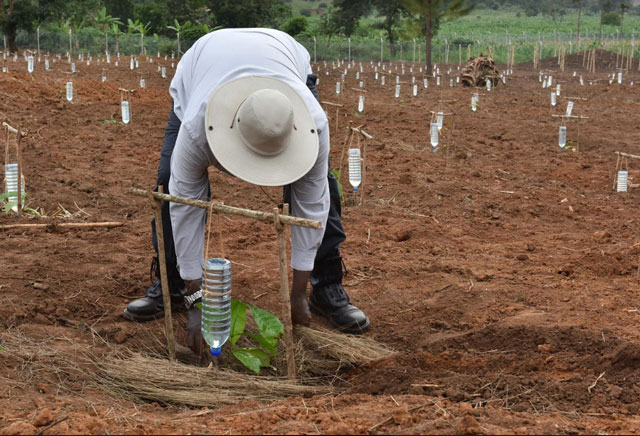
That last point is the real story. Museveni's own framing conceded what agricultural planners have flagged for years: Busoga's land is being subdivided, generation after generation, into parcels too small to sustain any commercially viable enterprise — sugarcane, rice or otherwise. According to figures cited at the same event, landholdings in parts of Busoga now average roughly 0.6 acres per household, a fraction of the four acres that the government's flagship Parish Development Model (PDM) assumes a family needs to move from subsistence into profitable, bankable production.
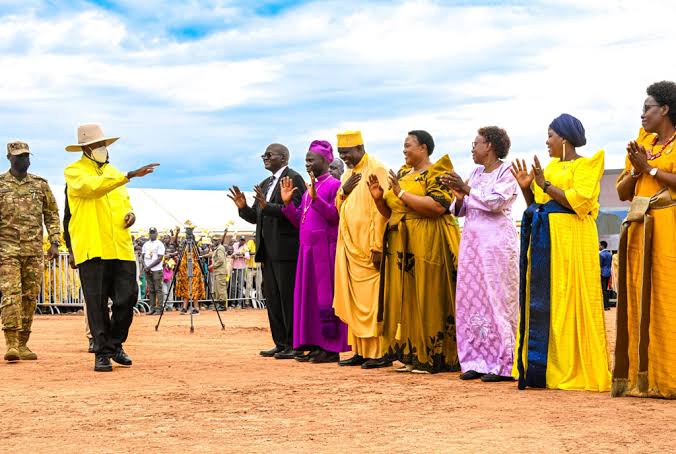
The arithmetic behind that gap explains why the President's call for a wholesale shift to poultry and piggery, however well-intentioned, has met a pointed response from local leaders. Hajji Abubakar Walubi, the Iganga District NRM chairperson, told the same gathering that the government's four-acre commercial farming template simply does not fit a district where most families are working with under an acre. He called instead for a land programme tailored to Busoga's realities — one that does not assume every farmer has room to diversify into new enterprises at scale.
The tension Walubi identified is structural, not rhetorical. Poultry and piggery are less land-hungry than sugarcane, but they are capital- and input-intensive in their own right: day-old chicks, commercial feed, vaccines and biosecurity all cost money that a smallholder squeezed out of a shrinking sugarcane crop is unlikely to have on hand. Without a financing mechanism designed for fragmented landholdings, the directive risks becoming an instruction without a pathway — which is precisely the criticism that has followed similar top-down pushes toward commercial agriculture elsewhere in the country.
Busoga's stakes in getting this right are unusually high. Government data places roughly 840,700 people in the sub-region below the poverty line as of the 2023/24 financial year, among the highest concentrations of poverty in Uganda despite the region's historical status as a food and cash-crop basket anchored by sugar milling. The PDM, the government's chief tool for addressing that poverty, has already reached 3,571,108 beneficiaries nationally as of September 16, 2026, channelling Shs4.317 trillion through 10,589 PDM-affiliated SACCOs — a scale that underscores how central the programme has become to rural policy, and how much now rides on whether it can adapt to places like Busoga where the underlying land economics do not match its four-acre assumption.

Other officials at the Buyende event used the moment to press unmet commitments rather than embrace new ones. Third Deputy Prime Minister Hajjat Lukia Isanga Nakadama raised the long-delayed South Busoga Forest Reserve resettlement and a Shs1 billion pledge first made in 2010, telling Museveni directly: “We ask you, Your Excellency, to fulfil your pledge to the fishermen.” Minister Babalanda, for her part, asked for practical infrastructure to make any pivot to dairy work in practice — “We need a milk truck that can collect 2,000 litres of milk so that we can take it to where we can sell it,” she said — a reminder that a directive to change crops means little without the cold chains, markets and logistics to move whatever farmers grow or raise instead.
Museveni did make some concrete commitments in response, pledging refrigerators and milk-cooling tanks to support dairy farmers in Buyende as an alternative to sugarcane, and reviving talk of a fisheries fund. Whether those pledges materialise faster than the 2010 promise Nakadama was still chasing sixteen years later is likely to shape how seriously Busoga's farmers take this latest directive.
The Buyende remarks did not arrive in isolation. Two days earlier, in neighbouring Kakumiro District, Prime Minister Robinah Nabbanja had outlined a related but distinct push: a directive from Museveni to draft legislation barring farmers with less than four acres from growing certain crops altogether, on the logic that fragmented plots cannot be farmed commercially regardless of which crop is chosen. Together, the two statements point to a hardening view within government that land fragmentation, not crop selection, is the binding constraint on rural incomes — and that Uganda may be moving toward more prescriptive rules about what smallholders can and cannot grow on the smallest parcels.
That shift carries real risk alongside its stated intent. Uganda's rural land tenure system is a patchwork of customary, freehold and leasehold arrangements that has resisted consolidation for decades, in Busoga as much as anywhere; subdividing land among sons and daughters through inheritance is a deeply rooted cultural practice, not simply a policy failure to be corrected by ministerial decree. A programme that discourages sugarcane and rice on small plots without offering a credible, financed alternative — and without addressing the inheritance dynamics that produced 0.6-acre holdings in the first place — could leave thousands of households in a worse position: neither growing the crop they know, nor equipped to succeed at the one they are being told to adopt.
There is also a wider economic angle for Busoga specifically. Local leaders elsewhere in the sub-region have been pushing value addition and agro-tourism as complements to any shift away from raw sugarcane, arguing that the region's comparative advantage lies less in what is grown and more in what happens to it afterward — processing, packaging and marketing that captures more value locally rather than exporting raw cane to mills for a fraction of its eventual worth. If that logic gains traction alongside Museveni's push toward poultry and piggery, Busoga's transition could end up being less about abandoning cash crops entirely and more about restructuring who profits from them.
For now, the practical test is straightforward and near-term: whether the refrigerators, milk-cooling tanks and fisheries fund promised at Iringa Township arrive before the next planting season, and whether a land programme responsive to 0.6-acre realities — the kind Walubi asked for — follows the presidential rhetoric. Busoga's farmers have heard commercialisation pitches before; what has been missing, on the evidence of Nakadama's still-unfulfilled 2010 pledge, is delivery that keeps pace with the announcements.
Published By | Tech Wiz