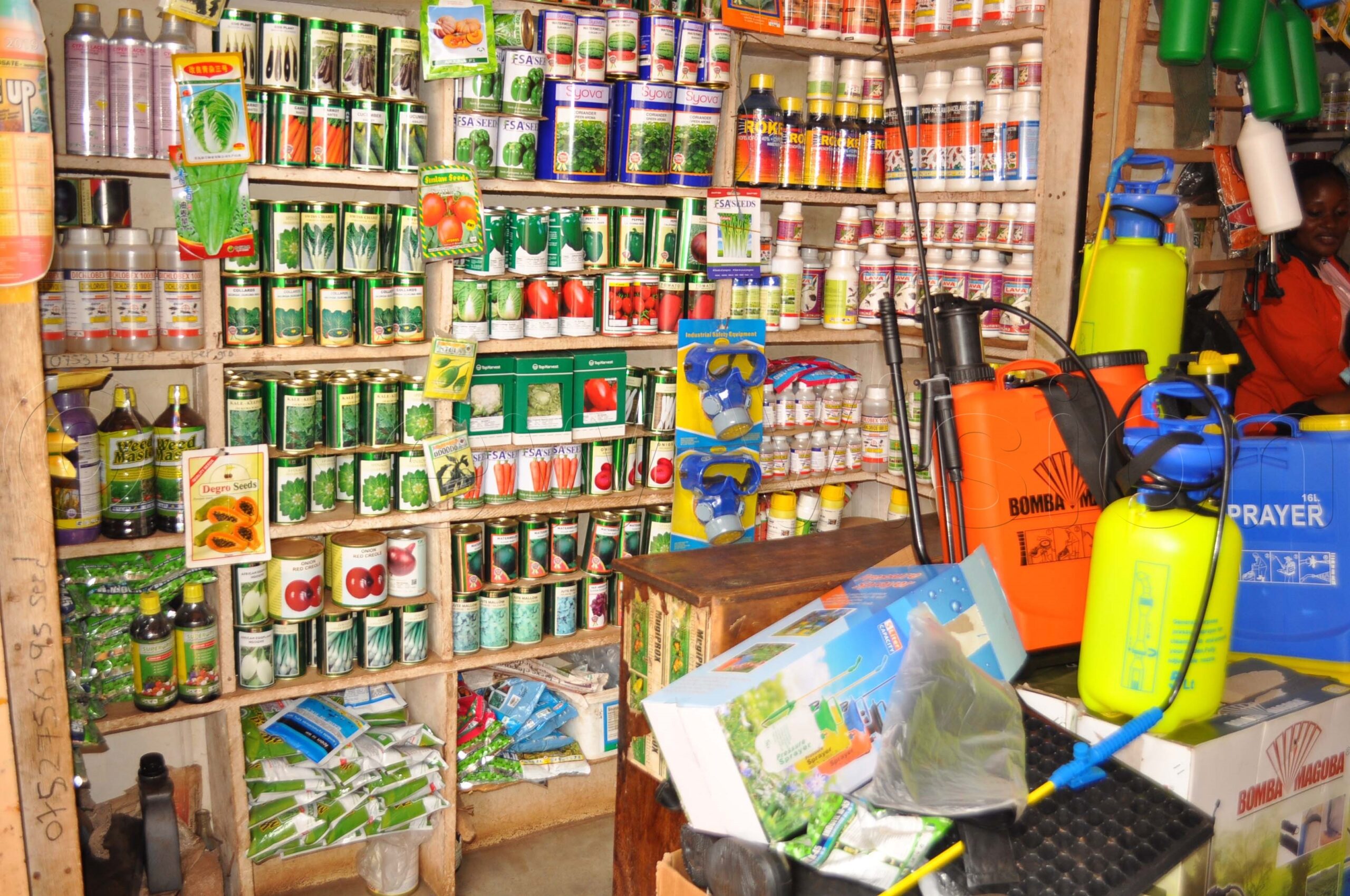
A one-week inspection that closed three in every ten agro-input shops in one district lands just as farmers reach for their planting-season money — and just as government pours 173,913 bags of fertiliser into the same retail network it cannot police.
Agriculture
A raid timed to the season
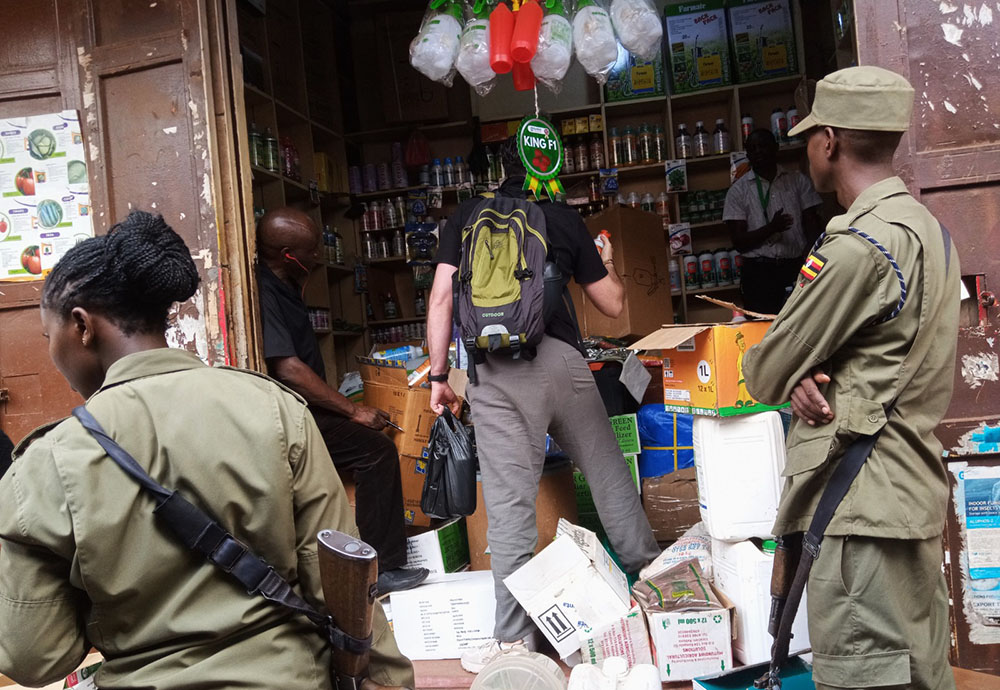
When inspectors from the Ministry of Agriculture, Animal Industry and Fisheries (MAAIF) walked into the trading centres of Luweero District this week, some shopkeepers did not wait to be asked questions. They locked up and left.
It did them no good. The team, led by Taban Talibu of MAAIF's Department of Crop Inspection and Certification, sealed the abandoned premises anyway. “Running is a waste of time because you will have to come to the district and fix this situation, and we remove the seals,” Talibu told Nile Post on Thursday, 17 September.
By then the operation had closed, by Talibu's own count, at least 30 percent of the shops inspected — dealers trading without licences, or stocking agricultural chemicals whose expiry dates had passed. “Among the inputs impounded include Rocket, Ametryne and others because they were expired. They will be taken to Namalere for destruction,” he said, referring to the ministry's agrochemical facility in Wakiso. District Senior Agricultural Officer Kalule Mbagatuzinde said the sweep would run a week: “We are nearing the planting season, and we want our farmers to get genuine agricultural products which will not affect their health and plants.”
The timing is the story. Luweero sits in the central cattle-and-coffee belt where the second planting season opens on the September rains, and where farmers who lost a crop to this year's drought are about to spend scarce cash on seed, fertiliser and chemicals. It is the moment of maximum exposure — and, for anyone selling a fake, of maximum profit.
One district, and a number that travels
Luweero has more than 110 agro-input shops. Only about 70 of those dealers have been through MAAIF's training on handling and prescribing agricultural chemicals, Talibu said. That gap — roughly forty shops selling restricted products without having been taught what they do — is not a Luweero peculiarity. It is a fair sketch of the national retail layer.
The scale of what sits behind it is documented. A May 2026 analysis by the Global Initiative Against Transnational Organized Crime, drawing on Ugandan official and parliamentary sources, put the share of fake seed on the market at 30 to 50 percent and the share of fake pesticides at more than 60 percent. It noted that nearly 46 percent of agro-input businesses operate without national registration, which makes traceability close to impossible, and that Uganda scored 7.50 on the 2025 Global Organized Crime Index measure for trade in counterfeit goods — well above the East African regional score of 6.22 and the global 5.09.
The mechanics are unglamorous and effective. Urea is cut with sand. NPK is bulked out with ash or clay. Genuine packaging is refilled. The Global Initiative research found counterfeit bags typically priced only 10 to 20 percent below the real thing while costing a fraction to make — a bag produced for about UGX15,000 can sell for more than UGX120,000. That margin is the whole business model, and it is why the trade survives every raid.
For the farmer, the loss is invisible until harvest. A 2017 Uganda study found fertiliser bought from retailers was missing 30 percent of its declared nutrients compared with the same product from wholesalers, and that hybrid maize seed from retailers was only about 50 percent authentic. Fake inputs can take as much as 30 percent off farm earnings; an FAO estimate put the annual national loss to counterfeit agrochemicals at around Shs13.8 billion as far back as 2012.
And the farmer often cannot tell: research by the Anti-Counterfeit Network Africa found 72 percent of farmers surveyed in Bugisu could not distinguish genuine from counterfeit agro-inputs. In practice the product is judged by the shop, and the shop by the price.
Why enforcement keeps arriving late
The Luweero operation is the enforcement model Uganda has: periodic, district-level, seasonal, dependent on a small inspectorate physically walking into shops. Its limits are structural. The Uganda Revenue Authority estimates roughly 30 percent of agro-inputs enter the country outside formal channels, bypassing inspection entirely. An electronic traceability system for agricultural chemicals has been designed but not implemented. Testing capacity — laboratories, equipment, certification at import — remains the binding constraint, a weakness Parliament's Committee on Agriculture, Animal Industry and Fisheries flagged when it described the market as “flooded with counterfeit agrochemicals”.
Talibu's own suggestion points to where the ministry's thinking is going. He said MAAIF may in future require agro-input dealers to hold qualifications in agriculture-related courses before being issued a safe-use certificate, on top of the current minimum schooling requirement. For now the bar is lower: “Dealers with Senior Four certificate should come and get a safe-use certificate,” he said.
Raising that bar would professionalise the counter. It would also, at least initially, shrink the number of legal outlets in districts that already have too few — and unlicensed trade expands into exactly that kind of vacuum. Licensing reform that runs ahead of enforcement capacity risks pushing sales further into the informal market rather than out of it.
The collision with this year's fertiliser push
What makes the Luweero sweep more than a routine district story is what else is moving through the same pipes right now.
On 31 August, MAAIF flagged off 173,913 bags of fertiliser at Entebbe, the first tranche of a Cabinet-backed distribution programme aimed at lifting Uganda's application rate from a national average of 1 to 2.4 kilogrammes per hectare — against the Abuja Declaration target of 50kg/ha that the continent set for 2015 and missed. Tea growers were served first, with coffee and cocoa to follow. In Rubanda District alone, 2,000 bags went to tea and 800 each to coffee and other crops.
A programme of that size introduces a large volume of genuine, subsidised product into a retail network in which, by the ministry's own inspection results, a meaningful share of outlets are unlicensed. Subsidised stock leaks sideways — diverted, repackaged, or used to launder counterfeit product by association. The same week MAAIF was sealing shops in Luweero, it was relying on that network to deliver.
The input-quality problem also collides with this year's pesticide transition. MAAIF halted import permits for nine agricultural chemicals on 21 May 2026 — among them alpha-cypermethrin, atrazine, carbofuran and dichlorvos — with full withdrawal due by year-end, and placed nine more under restriction. When a legal product is withdrawn without an equally cheap replacement, demand does not vanish; it migrates. Expired and unregistered stock of banned actives is exactly what an inspector should expect to find during the transition window, and roughly what the Luweero team found.
What it costs, and who pays
Uganda imported roughly US$54.75 million worth of fertiliser in 2024, with volumes down from over 100,000 tonnes in 2018 to about 67,000 tonnes in 2022. A 50kg bag of phosphate fertiliser that cost UGX93,000 in 2019 now runs to around UGX200,000. At those prices a farmer buying a diluted bag has not simply wasted money — they have made the season's most expensive decision on a false premise, and will usually conclude that fertiliser does not work rather than that this bag did not.
That conclusion is the real damage. Uganda's agricultural strategy — the Shs2.26 trillion agro-industrialisation allocation in the FY2026/27 budget, the CAADP Kampala Declaration commitments, the tenfold growth ambition to 2040 — rests on smallholders using more inputs, more often. Every adulterated bag is an argument against that, delivered directly to the household policy is trying to persuade.
It travels downstream too. Misapplied and unregulated agrochemicals resurface later as residue violations: Uganda's fresh fruit and vegetable exporters have absorbed more than US$60 million in residue-related losses in a single year, and EUROPHYT/TRACES recorded over 787 harmful-organism interceptions of Ugandan produce between 2015 and 2024, some 70 percent in fresh produce. The dealer without a safe-use certificate in a Luweero trading centre and the rejected consignment at a European port are two ends of one chain.
The test after the seals come off
Sealing a shop is reversible. The seals come off when a dealer regularises — licence, training, clean stock — and that is the point: compliance, not closure. The question the district answers over the coming season is whether the seventy trained dealers take market share from the forty untrained ones, or whether the sealed shops reopen and the cheap bag returns to the shelf.
Two things would change the odds. The first is the electronic verification system that has been designed but not deployed: a scannable check at the point of sale moves verification from the inspector's calendar to the farmer's phone, every day rather than one week a year. The second is the Food and Agriculture Regulatory Authority Bill 2026, which had its first reading on 25 August and folds the Agricultural Chemicals Control Act and the Food and Drugs Act into a single regulator across 13 parts and 101 clauses. One authority with laboratory capacity policing both the import point and the retail counter is closer to the shape of the problem than a district inspectorate on a one-week rotation.
Neither is in place this September. What is in place is a team with seals, a week, and a district with 110 shops — arriving, as always, just before the rain.
Published By | Features Editor