A new $40,000 sweet potato processing facility planned for Serere district could finally let Teso farmers turn a humble staple crop into puree, pasta and spaghetti for national and export markets — but only if training, financing and market linkages hold up where past value-addition dreams have stalled.
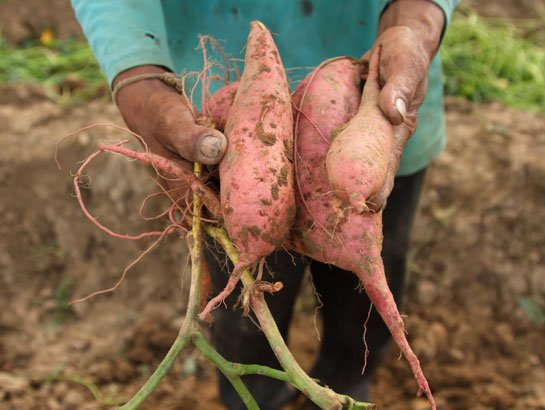
For as long as anyone in Kyere town council can remember, the sweet potato has been Teso's insurance policy against hunger — a crop that grows in poor soils, survives erratic rain, and fills the gap when maize and sorghum fail. What it has rarely done is make anyone rich. Farmers dig the roots, load them onto bicycles and pickup trucks, and sell them fresh at village markets for whatever price the day offers, often watching a third of the harvest rot before it ever reaches a buyer.
That calculus is about to be tested. A new sweet potato processing facility valued at $40,000 (about Shs148.5 million) is set to be built in Kyere town council in Serere district, in a move aimed at helping farmers across the Teso sub-region add value to their produce and access commercial markets, project organisers announced this month.
The facility will be spearheaded by the Soroti Sweet Potato Producers and Processors Association (SOSPPA), with financing from the Global Agriculture and Food Security Program (GAFSP), technical support from the International Potato Centre (CIP) and Uganda's Ministry of Agriculture, Animal Industry and Fisheries, and oversight from the World Bank. The announcement was made during the inaugural steering committee meeting for the SOSPPA-GAFSP project, held at Soroti Hotel from August 14 to 15.
According to GAFSP's own project records, the fund has committed a $2.4 million grant to SOSPPA to build the resilience of the rural economy and livelihoods across eastern Uganda by improving farmers' market access and adding processing and value-addition capacity, while also increasing productivity of the underlying crop. The Kyere facility — one component of that larger four-year investment — is designed to process orange-fleshed sweetpotato varieties, including Ejumula, Naspot 8, Naspot 10, Naspot 13, Narospot 7 and Tanzania, into shelf-stable products such as puree, pasta and spaghetti.
"We will be processing sweet potato into puree, pasta, and spaghetti, ensuring there is a market for our product, especially since importing fresh roots poses a problem due to its bulk," said Joseph Okalebo, SOSPPA's coordinator, who briefed journalists in Soroti City on August 14.

A staple crop, an underused opportunity
Uganda is the world's second-largest producer of sweet potato after China, and within the country, Teso's sandy loams and rainfall pattern make it one of the crop's most productive strongholds. Research on the sub-region has found that sweet potato — much of it now the vitamin A-rich orange-fleshed variety — contributes roughly 61 percent of annual per-capita food energy for Teso households, underscoring both its centrality to food security and the risk of leaning on a single crop for so much of the nutritional load.
The orange-fleshed varieties being targeted for the Kyere plant carry a public-health rationale as much as a commercial one. Just 125 grams of orange-fleshed sweet potato can meet a pre-school child's daily vitamin A requirement, according to research cited by international nutrition agencies, making the crop one of the most cost-effective tools available against vitamin A deficiency, a health problem that remains widespread in Uganda's poorer regions. Teso, where malnutrition and stunting rates track above national averages in several districts, is precisely the kind of place development planners have targeted for orange-fleshed sweet potato promotion for more than a decade.
Yet despite that head start, adoption has plateaued at the production stage. Studies tracking the crop's value chain estimate that on average only about a third of the sweet potatoes harvested in Uganda ever make it to a formal market; the rest are consumed at home, fed to livestock, or lost to spoilage because the roots are bulky, perishable and expensive to transport once dug. It is precisely that bottleneck — not a shortage of sweet potatoes, but a shortage of ways to preserve and sell them — that the new facility is meant to address.
How the plant is meant to work
Once built, the Kyere facility is expected to process one tonne of fresh roots into puree every hour, according to Okalebo, turning a highly perishable raw commodity into products with a shelf life measured in months rather than days. Puree can serve as a thickener or base ingredient for soups, sauces and baked goods; sweet potato pasta incorporates the root into dough; and sweet potato spaghetti offers a low-carb, gluten-free alternative to conventional wheat noodles — a product category with growing demand in urban Ugandan supermarkets and, potentially, regional export markets.
Dr Fredrick Kobina Ebo Grant, CIP's Uganda country manager and a nutrition scientist involved in the project, said the plant is expected to be completed by the end of the year, with tenders for contractors to be advertised soon. He said the project's ambitions extend beyond the factory gate: farmers will also receive training in climate-smart agronomic practices and access to clean, disease-free planting material to ensure a steady, high-quality supply of roots once the plant is operational. Kobina added that expanded production and processing capacity in Teso could open up markets not just locally, but in food-insecure neighbouring regions such as Karamoja and Gulu.
The project is expected to benefit around 20,000 farmers organised in 100 groups, plus roughly 3,000 schoolchildren, across six districts of Teso — Serere, Ngora, Amuria, Katakwi, Soroti and Bukedea — over its four-year lifespan. SOSPPA itself, founded in 2006, currently counts more than 2,090 registered farmers across 97 groups in the sub-region, giving the project an established, if still small, organisational base to build from.

The economics behind the ambition
The stakes for Teso are significant. The sub-region is home to an estimated 2.5 million people, more than 70 percent of them under the age of 35, and over 53 percent living in extreme poverty, according to figures cited at the project launch. Years of recurrent food shortages, compounded by the lingering effects of the Covid-19 pandemic on market access and production, have left the local economy especially exposed to shocks — a vulnerability starkly illustrated earlier this year when officials warned of crop failure and hunger risk across parts of Teso following poor rains.
Farmers who attended the steering committee launch described a familiar frustration: knowledge and market access, not effort, have been the missing ingredients. "Farmers had previously struggled with agronomic practices and lacked knowledge about value addition, limiting them to selling sweet potato roots in local markets," said Zebulon Ejomu, a farmer from Serere district, welcoming the project. Fellow farmer Christine Akello Ekinyu said the planned training in value addition, combined with eventual certification from the Uganda National Bureau of Standards (UNBS), could let farmer groups sell nationally and internationally for the first time — a leap from subsistence-level trading to formal commerce.
That leap, however, is not guaranteed. Uganda's agricultural landscape carries a long list of processing facilities — fruit, cassava, grain — that were built with donor enthusiasm but later struggled with underutilised capacity, inconsistent raw-material supply, or weak links to buyers once the ribbon-cutting cameras left. The Kyere project's planners appear alert to this risk: Okalebo said SOSPPA intends to work with farmers to diversify away from a "monotonous cycle" of sweet potato monocropping even as the facility scales up demand for the very crop it depends on, and organisers have prioritised farmer training and clean planting material ahead of construction rather than after it — a sequencing choice meant to ensure the plant has reliable, quality inputs from day one.
For a sub-region where economic transformation has too often been promised and too rarely delivered, the Kyere plant is a modest wager: that a crop long treated as a hunger backstop can, with the right machinery, financing and training, become an income engine instead. Whether that wager pays off will depend less on the puree line itself than on whether the market linkages, farmer organisation and quality systems being built around it hold together once the facility is running at full capacity.
Published By | Features Editor