Written By | Staff Writer
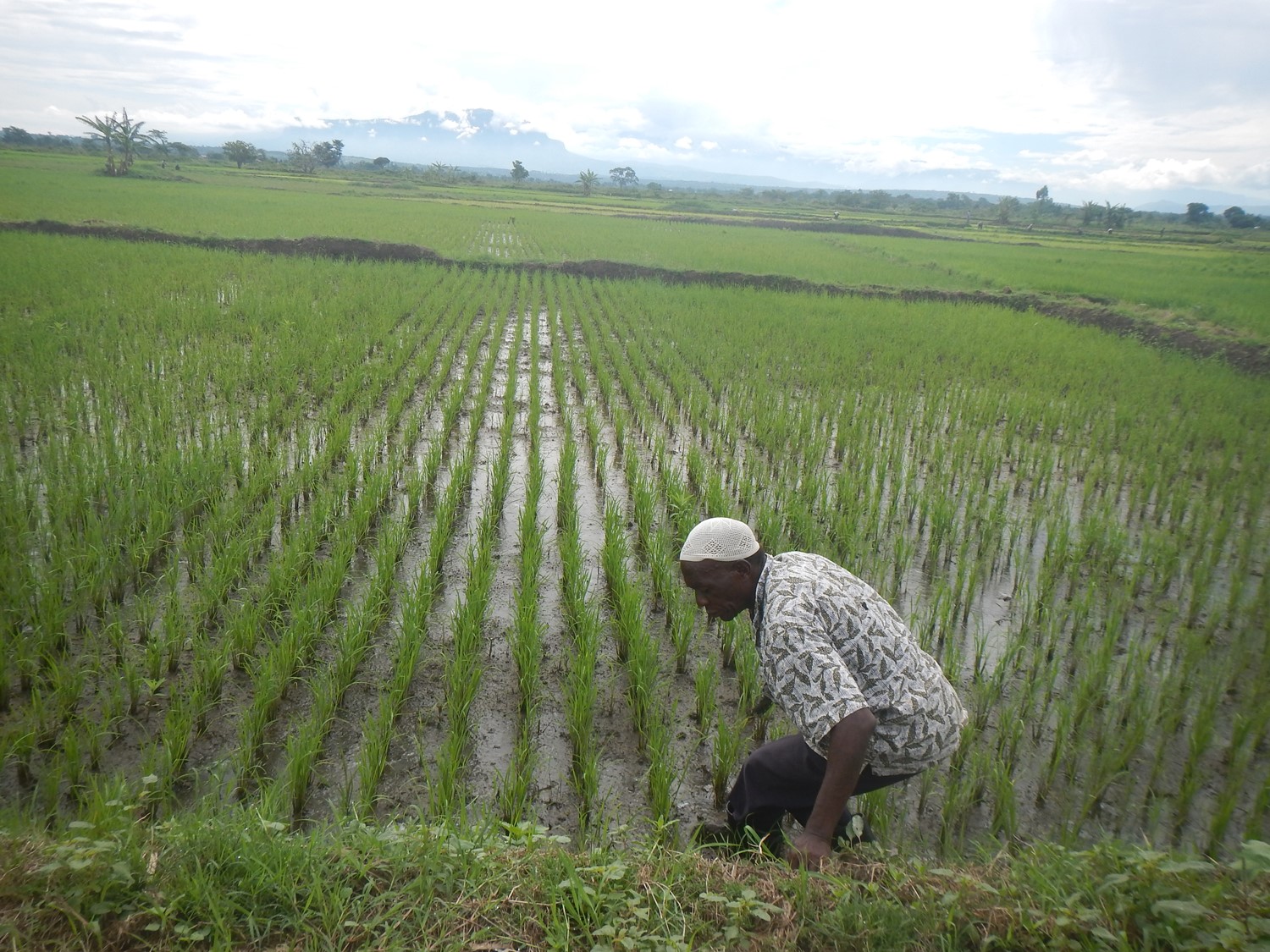
alf of Bukedi grows rice. Rice occupies four-fifths of the economic activity in the sub-region's wetlands.
Agriculture
There is a particular kind of poverty that looks, from the roadside, like prosperity. Drive through Butaleja, Pallisa or Budaka in the planting months and the wetlands are a solid green sheet of paddy, bent-backed workers strung across it, the roads lined with bagged grain waiting for a buyer. It has the appearance of a working agricultural economy. It is, by the numbers, one of the poorest places in Uganda.
A report published by Daily Monitor on September 14 put the contradiction plainly. Rice now accounts for roughly 80 percent of economic activity in Bukedi's wetlands, and about half the sub-region's population is engaged in growing it. Yet according to Uganda Bureau of Statistics figures cited in the same report, 34 percent of Bukedi's people are poor, 58.3 percent of households are in subsistence farming, and the sub-region's 2,376,744 residents are packed onto 4,504 square kilometres at a density of 528 people per square kilometre — among the highest rural densities in the country.
How a cotton belt became a rice belt
The switch was not spontaneous. Bukedi was zoned for cotton under the colonial crop-allocation system that ran roughly from 1910 to 1942, which put coffee in Buganda and Busoga and cotton in the east. Former Budaka County MP Arthur Wako Mboizi, quoted in the Monitor report, argues that the collapse of that industry left a vacuum no policy ever filled. "Cotton was very profitable in Bukedi, but government pushed farmers to abandon cotton and opt for rice farming. Farmers found their way to the wetlands," he said, adding that "something went wrong when cotton farming was abolished. The prevailing poverty is attributed to the killing of the cotton industry without any substantial alternative."
Rice was a rational response to that vacuum. It is a crop with genuine and growing urban demand, it tolerates the waterlogged soils that defeat most alternatives, and — crucially for households with no savings — it can be planted on land nobody holds a title to. The wetland was the collateral-free entry ticket.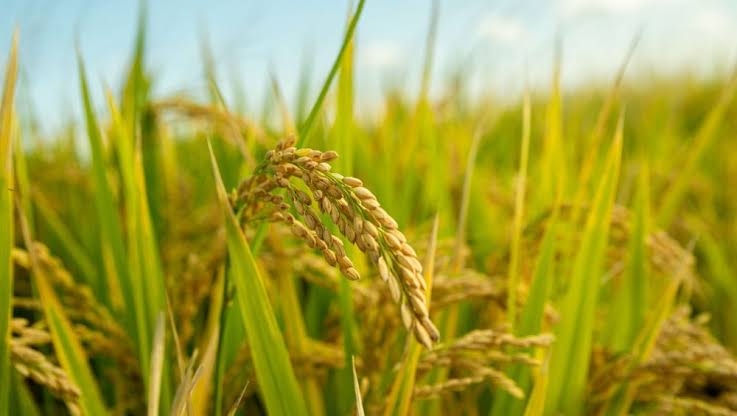
The economics that don't add up
The trouble is margin. Farm-gate prices reported from the sub-region put a kilogramme of Kaiso at about Shs2,300 and Super at around Shs3,500. Against that sits the labour bill, and paddy in a swamp is among the most labour-intensive crops a smallholder can choose: land preparation, transplanting, weeding, bird-scaring, harvesting and threshing, almost all of it by hand and much of it standing in water.
"What people invest into rice-growing is high yet the outcome is too small. This leaves families trapped into a vicious cycle of poverty," said James Lyadda, an elder from the region, who urged a shift into fish farming, poultry and piggery. "The time wasted in the swamps cultivating rice should be invested in doing viable enterprises which bring in fast returns compared to rice." He also noted a cost that never appears in a gross-margin calculation: children dropping out of school to work the rice gardens, which converts this season's labour shortage into next generation's poverty.
Farmers themselves frame it less as a choice than a constraint. "Lack of viable alternative enterprises coupled with high poverty levels have pushed locals into destroying swamps," said Moses Talyampindi, a grower in Butebo. Another farmer, John Watala, offered the most honest defence of the crop: "Much as rice has not made people rich, it has enabled them to meet basic needs. People are able to educate their children and pay for health care." That is the definition of a subsistence trap — an enterprise that reliably prevents destitution and just as reliably prevents accumulation.
A national yield problem, not a Bukedi problem
Bukedi's arithmetic is a local version of a national one. Under the second National Rice Development Strategy (NRDS2, 2020–2030), Uganda is working to lift paddy output from 247,000 metric tonnes in 2023 to 717,000 tonnes, expand harvested area from 115,000 to 190,000 hectares, and — the decisive variable — raise yields from 2.1 tonnes per hectare to 3.8. Uganda's problem is not that it grows rice on too little land. It is that each hectare produces roughly half of what it should.
Meanwhile demand keeps running ahead of supply. Uganda imported an annual average of 344,000 tonnes of rice worth close to US$152 million between 2020 and 2023, with Tanzania the dominant source. A country where half of one sub-region's population grows rice is still spending well over a hundred million dollars a year importing it — a direct measure of the productivity and milling-quality gap between what Bukedi's swamps produce and what Kampala's supermarkets will buy.
The border makes it worse
Trade policy adds a second squeeze. Uganda applies the East African Community's punitive 75 percent duty on rice originating outside the bloc, a wall built specifically to protect farmers like those in Bukedi. In practice the wall leaks. Asian rice — Pakistani grain in particular — is routinely repackaged in the region and re-exported into Uganda as an EAC-origin product, entering duty-free. The Uganda Revenue Authority has responded with origin testing, at one point intercepting more than a hundred rice trucks at Mutukula and moving to laboratory sampling of consignments to establish true country of origin. Rice has repeatedly been flagged as the most smuggled item in eastern Uganda.
The result is a market in which the domestic grower carries the full cost of protection and captures little of its benefit. Millers, squeezed between thin local supply and cheap grey-market imports, have warned that the influx threatens an industry already under strain.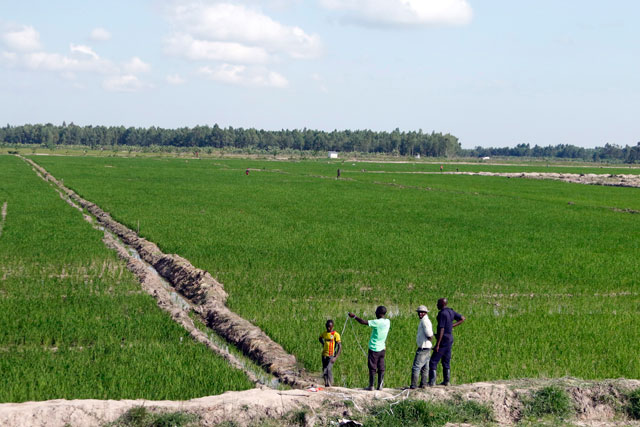
The wetland reckoning
Then there is the land itself. The rice that sustains Bukedi sits on the ecosystem that regulates its water. The Ministry of Water and Environment's Green Climate Fund and UNDP-backed project, "Building Resilient Communities, Wetland Ecosystems and Associated Catchments in Uganda," covers 24 districts across eastern and south-western Uganda — Butaleja and Pallisa among them — and targets the restoration of 64,370 hectares of wetland and 11,630 hectares of associated catchment. More than 51,000 hectares have reportedly been rejuvenated, with over 13,000 households supported and household incomes in those groups rising sharply.
Restoration, however, means exit. Thousands of farmers have been moved off rice fields in the east, with millers reporting reduced throughput as a consequence. Mboizi's response captures the policy bind exactly: "I support government's move to evict locals from wetlands. But what alternative are we giving them?"
The alternatives, so far, are pilot-scale. Pallisa District natural resources officer Mohammad Ssamuka says the Green Climate Fund work has supported 40 beneficiaries in dairy farming, 27 in micro-irrigation and 77 in fish farming — 144 households against a sub-region of roughly 475,000. Budaka's natural resources officer Cyprian Kamwada points to partner-supported restoration now under way. Both are real; neither is scaled to the problem.
What would actually break the trap
Three levers matter more than exhortation. The first is yield: closing the gap between 2.1 and 3.8 tonnes per hectare would nearly double household revenue on the same land, and would do more for wetland pressure than any eviction notice, because the incentive to expand area falls when area becomes more productive. The second is milling and grading — Uganda's import bill exists partly because domestic milling loses grain to breakage and cannot consistently meet the quality urban buyers pay a premium for. The third is enforcement of origin rules at the border, which determines whether the 75 percent tariff protects Ugandan farmers or merely taxes them through intermediaries.
There is a fourth, quieter lever: honesty about agro-ecology. Bukedi has been the target of campaigns to take up coffee and cocoa. Mboizi's objection — that the soils will not support it and that "forcing them to shift to growing coffee will be a waste of time and resources" — deserves a technical answer rather than a promotional one. The lesson of the cotton collapse is that switching a region's crop without first proving the replacement's economics leaves the same vacuum a second time.
President Museveni launched the Bukedi Development Strategic Plan 2024–2040 on August 22, 2024, with the explicit aim of raising household incomes. Whether it changes anything will not be measured in hectares planted. It will be measured in whether a household that grows rice for a living can, at the end of a season, save.



