Written By | Staff Writer
A 15-year experiment in Kasese shows what climate finance looks like when it reaches the village: small payments, savings groups and a stubborn question about who captures the value.
Agriculture
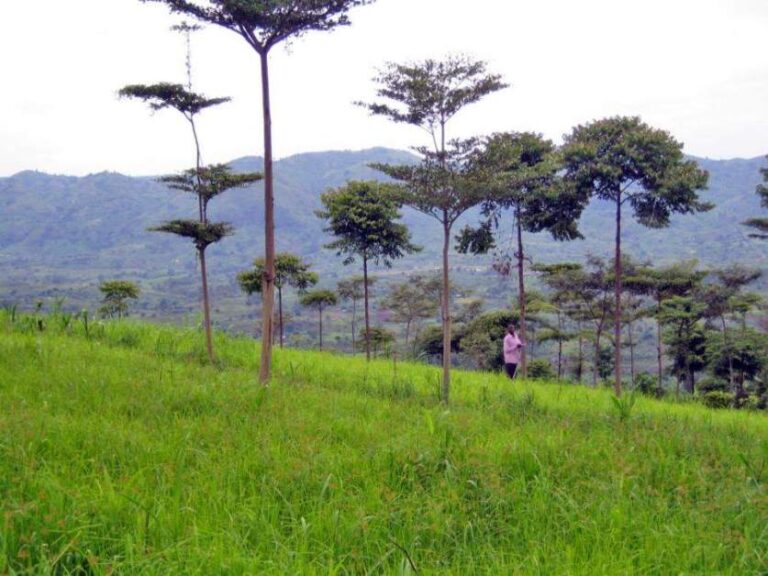
Philmon Baluku is 46, farms three hectares in the shadow of the Rwenzori Mountains, and says something few farmers anywhere can claim: "I was paid for my trees at the same time I harvest from the same garden." His plot grows coffee intercropped with trees, and the trees are counted, verified and converted into carbon credits that donors buy.
Two reports published on 5 October 2026, one by Nile Post and one by SoftPower News, offer a close-up of how that arrangement is working in Kasese District. Together with earlier documentation of the programme, they suggest that Uganda's most mature community carbon scheme is as much a story about savings groups and cooperatives as it is about trees.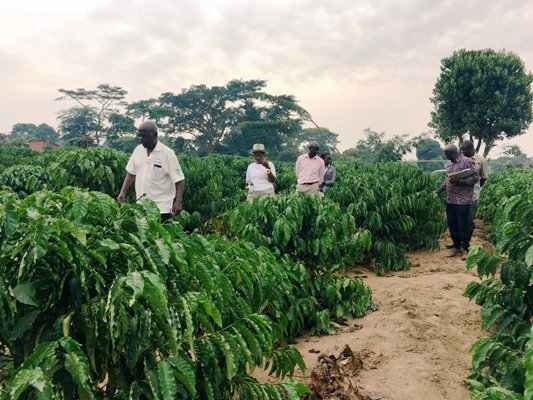
The model in plain terms
The programme is run by the Environmental Conservation Trust of Uganda, known as EcoTrust, under the Trees for Global Benefits (TGB) initiative. Pauline Nantongo Kalunda, EcoTrust's Executive Director, told Nile Post that the organisation helps farmers map their landscapes and decide whether agroforestry or reforestation fits best. Farmers plant trees alongside food and cash crops; the carbon stored in those trees is assessed periodically; and the resulting credits are sold. "We link them with donors who buy their credits based on the emissions they absorb," she said.
According to SoftPower News, farmers receive 60 percent of the carbon payment directly into their bank accounts, while a further 10 percent is automatically contributed to a Community Carbon Fund (CCF). The reporting does not detail how the remainder is used, and that is a question worth asking of any scheme of this kind. Earlier documentation of the programme published by the climate-finance group Earthly describes annual payments to farmers over a 10-year period, with revenue channelled through savings and credit cooperatives rather than handed over as cash.
Scale after fifteen years
Earthly's account, which is undated, puts the programme's reach at 31,102 farmers across 58 groups, with more than 3.6 million trees planted and 17,205 hectares restored across four landscapes in Kasese and surrounding areas. It says the initiative began in 2010 with 12 farmers. One cooperative, the Kyarumba Banywani Tree Farmers Cooperative Savings and Credit Society, is described as growing from 50 to more than 11,200 members and planting 2,240,000 trees. These are figures as reported by the programme's supporters rather than independently audited numbers, and should be read that way.
What stands out is not the tree count. It is the financial plumbing around it. Carbon revenue flows through savings and credit cooperatives, which let members buy shares, take loans and pool money into the Community Carbon Fund. In effect, the payment for a tree becomes the seed capital for a local financial institution.
What the money actually does
SoftPower's profiles give a sense of the sums involved, and they are small. Janeta Muhindo, 63, from Karambi Sub-County, received carbon payments for trees on one hectare and spent her first payment on a pig. Subsequent litters paid school fees, she now tends 205 trees, and she built a permanent house with income from the programme. William Ndungwa, a young farmer in the Rwenzori Slopes Trust, received 200 tree seedlings, of which 180 survived. His payments were Shs200,000, Shs250,000, Shs230,000 and Shs200,000. He is using them to pursue a diploma in customs clearing and forwarding.
None of these sums will transform a household overnight. But they are predictable, they arrive in a bank account, and they are paid for something the farmer does anyway: keep trees alive. In a country where smallholder income swings with weather and commodity prices, a modest, scheduled payment has a value beyond its size. It is the kind of income a bank can lend against and a family can plan school fees around.
Where coffee comes in
The carbon story is entwined with coffee, which is why the Rwenzori model matters to Uganda's agricultural policy conversation. SoftPower reports a farm-gate coffee price of about Shs15,000 per kilogramme in the area, fluctuating to between Shs13,000 and Shs14,000 within days. Volatility of that kind is exactly what makes a second, steadier income stream attractive. Shade trees also help coffee: they moderate heat stress, protect soils and, in a year of erratic rainfall, can soften the blow of a dry spell.
The cooperatives are pushing further up the value chain. William Kimera, the project coordinator for the Kyarumba cooperative, said of processing equipment: "If we get our own machine, that means we shall be branding for ourselves, and then we get the ready coffee for export." Simon Masereka, chairperson of the Mubuku Integrated Farmers Association (MIFA) Rukoki Branch, which manages 1,634 members across several livelihood activities, said the branch bought a 50-by-100-foot plot for Shs5.5 million after three coffee seasons. Collective ownership, rather than individual payouts, is becoming the programme's real product.
Risks and open questions
The Nile Post report is candid about one threat. Baluku warned that termites at times destroy trees, threatening both the environmental investment and future carbon returns. This is a structural weakness in any payment-for-performance scheme: farmers bear the biological risk of tree loss, while credit buyers expect verified carbon. How scheme rules treat farmers when trees die from pests or drought is critical and is not explained in the reporting available.
There are other questions, offered here as analysis. How long will donors keep buying credits at current prices? Carbon markets have been volatile, and a programme that depends on a handful of buyers is exposed to their budgets. What happens when the 10-year payment window closes for early joiners? And can the model scale beyond Kasese, where EcoTrust has built relationships and cooperatives over many years, to districts without that infrastructure?
There is also a policy question. Uganda has recently had its own large test of forest-linked payments, with the Green Climate Fund's US$31 million REDD+ results-based payment reported by the Monitor on 20 September. National programmes of that kind are slow-moving and government-led. The Rwenzori approach is the opposite: small, community-owned and run through cooperatives. How the two interact, and whether household payments under one scheme could be confused with or double-counted against the other, will need clear rules.
What it means for farmers and the economy
For smallholders elsewhere in Uganda, the lesson is less about carbon than about organisation. The farmers in Kasese did not get paid because they planted trees; they got paid because they were grouped, mapped, trained, banked and monitored. That institutional work took years. Any district hoping to replicate it should budget for the patient, unglamorous part first.
For the cooperatives sector, the programme is a case study in how external money can strengthen rather than undermine local institutions: payments flow through savings groups, which build capital and make loans. For the wider economy, it hints at a model in which environmental services become a regular line in rural household budgets, alongside coffee, bananas and pigs. EcoTrust's Kalunda frames impact through five capitals: natural capital in the trees, financial capital in savings and loans, physical capital in assets, human capital in education and skills, and social capital in collective organisation.
That framing is a useful corrective to the usual headline about carbon cash. The money is real, but it is small. What is large, and what has taken fifteen years to build, is the web of cooperatives that can hold it, grow it and, increasingly, use it to process their own coffee.



