In 2013, Master Grain Milling Limited produced its first bag of wheat flour from a single production line in Jinja — a modest, owner-run operation typical of thousands of small agro-processors scattered across Uganda. Thirteen years later, in the 2025/2026 financial year, the company posted an annual turnover of more than Shs60 billion, running an integrated production, distribution and sales operation with a nationwide depot network, a modern European production line, and roughly 22 dedicated sales representatives serving distributors across the country.
The company's own account of that transformation, detailed this week by its management, credits a specific and increasingly familiar factor in Uganda's manufacturing story: sustained access to bank financing at a scale and structure that matched the pace of its ambitions. It is a story that agro-industrial policymakers in Kampala would like to see repeated many times over — and one that also exposes, by its very rarity, how difficult that remains for most of Uganda's agribusinesses.
A financing relationship born of necessity
Master Grain Milling's turning point came in 2018, when the company's previous bankers reached the limits of what they could offer as the business sought to expand. "Equity Bank saved us some time back. Our former bankers reached a point where they couldn't support us financially, but Equity Bank came on board and gave us the exact funds we needed," said Hajji Swammit Itaaga, the company's Managing Director. He said the new financing arrangement gave the company sufficient capital on favourable terms, combined with trade financing that supported the company as its operations grew. "Equity Bank offered us a great deal with sufficient capital and has consistently supported our growth through reliable trade," he said.
The capital arrived at a pivotal moment. In 2019, Master Grain Milling used the financing to acquire a modern production line imported from Europe, significantly lifting its manufacturing capacity. That investment was matched by an equally important, if less visible, transformation: the company restructured internally, establishing dedicated finance, production and sales departments in place of what had been an informally managed, owner-run business. "Initially, the structures weren't there because it was a one-man-run business, but right now the business has structures," said Meddy Mbaziira, the company's Head of Sales and Marketing. "We have dedicated finance and production teams, as well as a sales department with around 22 sales representatives across the country. Where we once relied on a fleet of very old trucks, we now operate with brand-new ones, making distribution easy."
That combination — new machinery, new corporate structure, and an expanded distribution footprint including regional depots — allowed the company to move beyond simply making more flour to building an integrated business that controls its own path to market. The company's current production capacity stands at 540 tonnes per day; management says the next priority is not further expansion of capacity but fuller utilisation of what it already has, which will require additional working capital to purchase raw materials, maintain inventory and bridge the gap between production costs and customer payments. "If we continue working closely with Equity Bank to meet these current needs, we will be able to employ even more people," Itaaga said.
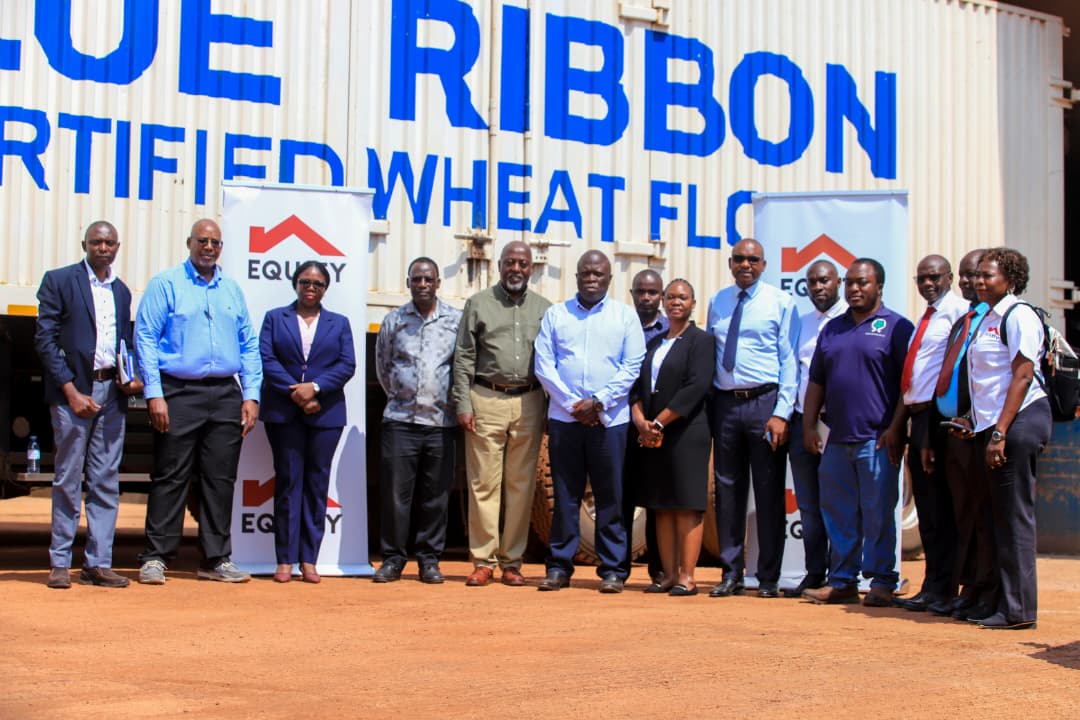
The relationship was underscored this week when Equity Bank's top leadership — Board Chair Henry Rugamba and Managing Director Gift Shoko — toured the company's Jinja plant to review its growth and discuss further support, a visit the bank frames as part of a broader approach of engaging manufacturing clients beyond conventional lending to help them strengthen supply chains and create jobs.
An industry built on imported grain
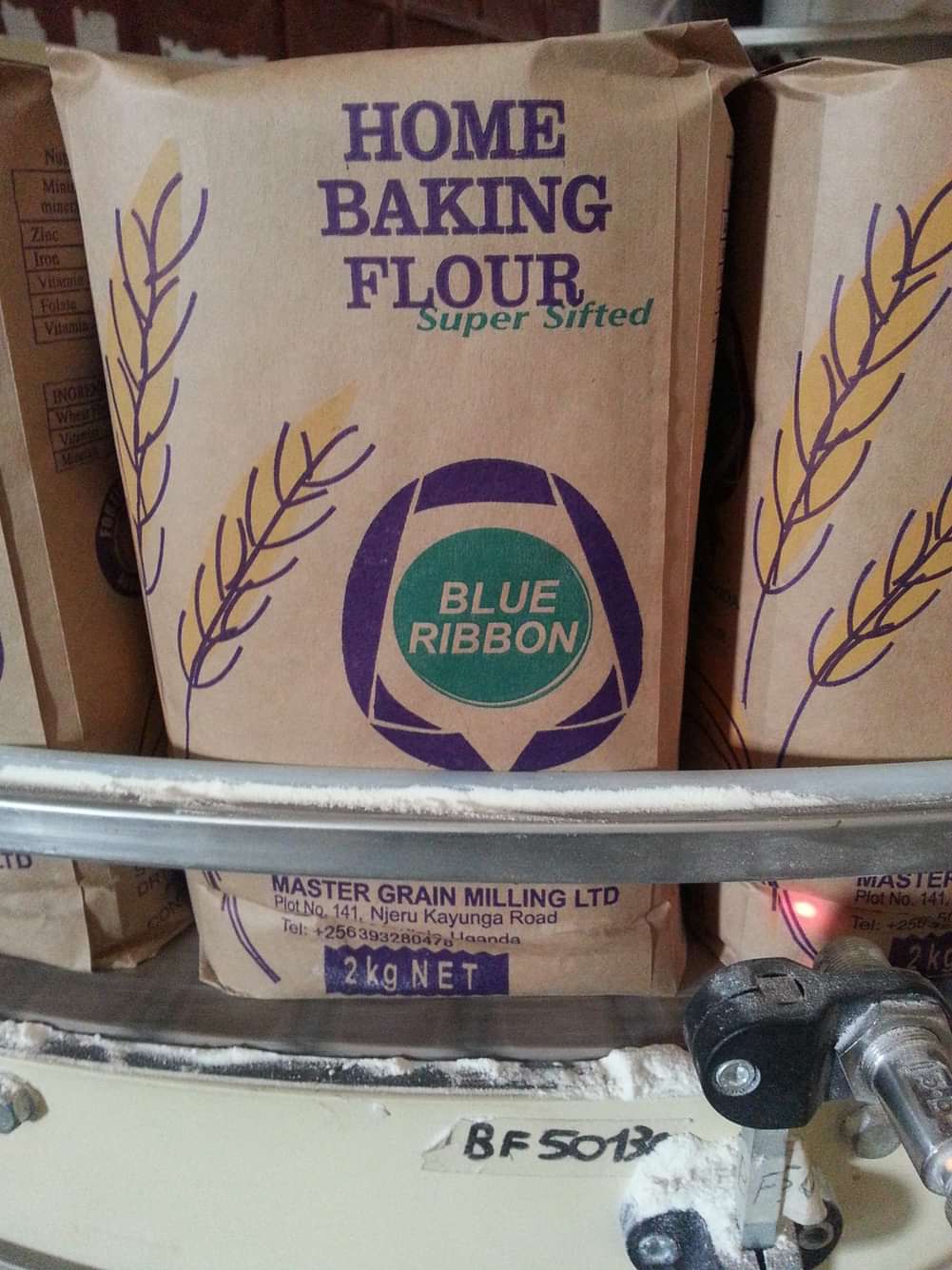
Master Grain Milling's growth sits inside a wider — and structurally precarious — Ugandan wheat industry. Uganda grows essentially no wheat of its own; every miller in the country, including Master Grain Milling, must import the raw grain that goes into every bag of flour sold, building that cost and currency exposure into their business model from day one. Despite that dependency, demand keeps climbing: national wheat consumption is projected to reach roughly 690,000 metric tonnes in 2026, growing at around 1.3 percent a year since 2017, propelled by urbanisation, a growing middle class, and rising demand for wheat-based convenience foods such as bread and pastries. Four major millers have traditionally anchored the industry, though the sector remains young enough that new entrants continue to arrive — Mandela Millers, for instance, recently brought a 300-tonnes-per-day facility online, underscoring both the opportunity in the sector and the competitive pressure companies like Master Grain Milling face to keep investing.
That import dependency also means milling is a capital-intensive, low-margin business exposed to currency swings and global grain prices — precisely the kind of operating environment in which access to flexible, well-structured bank financing becomes existential rather than merely helpful. Industry observers have also flagged a shortage of qualified miller technicians across East Africa's grain sector, a reminder that capital alone does not solve every constraint facing companies like Master Grain Milling as they scale.
The financing gap most agro-processors still face
Master Grain Milling's experience is instructive precisely because it runs against the grain of what most of Uganda's agribusinesses report. Uganda's small and medium enterprise sector — of which agro-processors form a significant share — accounts for roughly 90 percent of the country's private sector, more than 80 percent of manufactured output, and about three-quarters of GDP, yet researchers at the Economic Policy Research Centre have repeatedly pointed to financing gaps, not lack of ambition, as the primary constraint stalling Uganda's broader agro-industrialisation push. Bank of Uganda data cited by the central bank's own governor shows agricultural lending still makes up less than 13 percent of total bank loan portfolios nationally, with interest rates on agricultural loans often exceeding 20 percent and most facilities structured as short-term credit poorly suited to the multi-year investment cycles manufacturers like Master Grain Milling require.
Government and development partners have been trying to close that gap from several directions at once. The national budget for the 2026/27 financial year allocated roughly Shs2.26 trillion to the Agro-Industrialisation Programme, some of it earmarked for the kind of value-addition infrastructure that supports processors. Separately, the START Facility — run jointly by the Private Sector Foundation Uganda, the UN Capital Development Fund and the Uganda Development Bank — now offers concessional loans at around 10 percent alongside grants and guarantees specifically for equipment and post-harvest handling investment, backed by a fresh EUR 11.5 million in European Union financing aimed at unlocking USD 20 million for more than 250 agribusinesses by 2027. Commercial banks, too, are shifting tactics: several lenders are moving toward cash-flow-based lending models rather than relying solely on traditional collateral, an approach that better fits agro-processors whose main asset is often their production and distribution pipeline rather than land or property.
What Master Grain Milling's trajectory shows
For policymakers pursuing Uganda's long-stated ambition of value-added, export-oriented agro-industrialisation, Master Grain Milling's growth is a useful proof of concept: given sustained, appropriately structured financing, a small Jinja processor can become a Shs60-billion enterprise employing dozens of staff directly and supporting a national distribution network within little more than a decade. The company's own leadership is explicit that further growth — and further job creation — is now a function of continued access to working capital rather than any shortage of market demand or managerial ambition.
But the same story that demonstrates what is possible also underscores how exceptional that outcome remains. With agricultural lending still starved relative to the sector's economic weight, and interest rates that price out all but the most bankable agribusinesses, Master Grain Milling's rise looks less like evidence that Uganda's financing constraints have been solved and more like a case study in what happens when one company manages to find the right banking partner at the right moment — a moment that, for many equally promising Ugandan agro-processors, has yet to arrive.
Published By | Features Editor