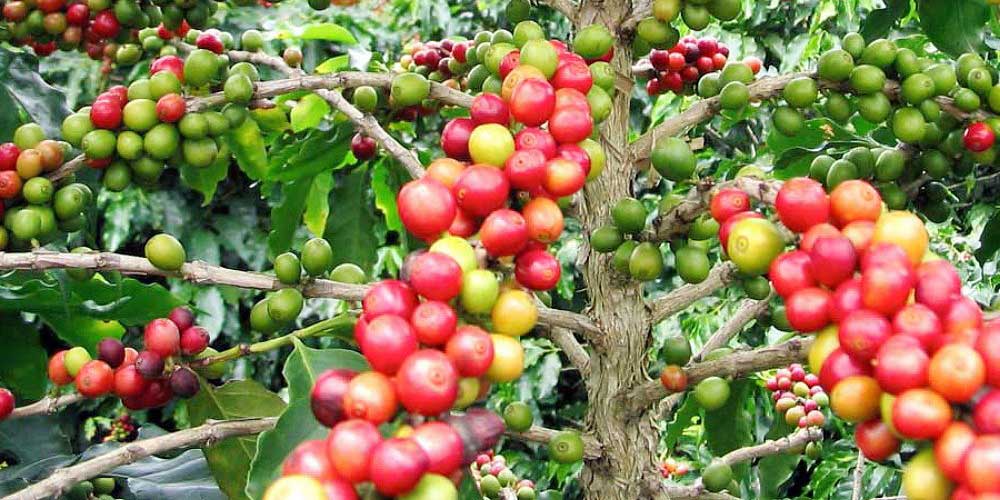
A new WWF-led project aims to rescue ageing plantations in western Uganda through agroforestry and soil care. The numbers from Kasese show how far national ambitions of 20 million bags must travel from the farm.
Agriculture
In Kasese District, in the foothills of the Rwenzori Mountains, coffee has been a household crop for generations. It is also, increasingly, a disappointing one. District Agricultural Officer Julius Rukara told Nile Post on 10 October that productivity, measured per tree, has fallen to less than one kilogram of coffee in a season. Younger trees, he said, once yielded two to three kilograms.
That is a fall of between one half and two thirds in output from the same tree, and it explains why a conservation organisation is now treating a commodity problem as a climate and land-use problem. WWF Uganda and development partners have launched the Forest-Friendly Coffee for Climate Resilience Project, targeting 2,500 smallholder households in Kasese and the neighbouring area the article names as Nyangavu.
A plantation that has grown old
The scale of ageing is striking. About 60 percent of the trees in Kasese, according to the report, are more than 20 years old. Kasese's Chief Administrative Officer, Edward Kasagara, said the district has a long history of growing coffee, but that most trees are now old and are affected by climate change. Productivity in coffee generally falls with tree age, and Rukara tied the district's low yields directly to the age of its plantations.
Farmers keep old trees for understandable reasons. Replanting means waiting years for the first harvest, paying for seedlings and labour, and losing income from the plot in the meantime. For a household with a small plot and no savings, uprooting a tree that still gives half a kilogram of coffee can feel like a risk not worth taking. The result is a landscape where yields drift down year after year, with no single moment that triggers a response.
Climate adds pressure. The report notes that prolonged dry spells and excessive sunshine are compounding growers' challenges. Older trees with shallow, depleted soils are less able to withstand water stress than vigorous young ones. The same pattern is visible elsewhere: this series has previously covered drought losses among coffee farmers in Nyakyera, and the Ministry of Agriculture has blamed drought and high temperatures in parts of Greater Masaka, Kyotera, Sembabule and Luwero for output about 10 percent below normal in those areas.
What the project proposes
The WWF-led project promotes agroforestry, improved soil fertility, and soil and water conservation, including the integration of suitable trees into coffee plantations. WWF Uganda Country Director Ivan Tumuhimbise said it helps farmers adopt sustainable practices that improve both productivity and climate resilience.
The logic is well established. Shade and companion trees moderate temperatures at the level of the coffee plant, reduce evaporation from the soil, and return nutrients through leaf litter. Soil and water conservation, such as terraces, mulching and catchment trenches, matters especially on hillside plots like those of the Rwenzori, where heavy rains can wash away topsoil as quickly as dry spells scorch it. Combined with the replacement of old trees, these measures are meant to lift yields without clearing new forest for coffee.
The project's name signals a second goal. The European Union's deforestation regulation, now scheduled for enforcement from 30 December 2026 for large operators and 30 June 2027 for small-scale farmers, as reported by the Monitor, requires proof that coffee was not grown on land cleared after 2020. A strategy that raises output on existing land, rather than expanding into forests, serves both climate resilience and market access. If a farmer gets more from each tree, the pressure to open new ground eases.
The national numbers behind a local problem
Kasese is not an outlier from a national story but a clear illustration of it. Charles Mugabi, a regional agricultural officer in the Coffee Department, said Uganda's current exports are about 8.3 to 8.7 million bags and the target is 20 million bags a year by 2030. The arithmetic is demanding: reaching 20 million from roughly 8.5 million means more than doubling output in about four years.
Recent export data show how fragile the current base is. UG Business reported that August exports fell 13.6 percent from a year earlier to 737,766 60-kilogram bags, following a record 8.26 million bags in 2024/25. Agriculture Minister Frank Tumwebaze blamed drought and high temperatures. The ministry projects about 700,000 bags for September, around 17 percent below the same month last year. The International Coffee Organization called the fall a normalisation from an exceptionally high benchmark, but the pressure from weather is real.
Expansion will not come from acreage alone. The simplest route to higher output is higher yield per tree on land already planted, and Kasese's figures suggest the gap is large. If a tree that produces under a kilogram could be restored to even the lower end of the two to three kilograms that younger trees gave, output from the same land would at least double. That is an illustration of the potential rather than a forecast, and it assumes replanting, soil recovery and enough rain, but it shows why yield, not area, is the central question.
The income stakes for households
For the 2,500 households targeted, the effect would be felt directly in cash. Farm-gate prices have been under pressure: robusta FAQ fell to Shs11,500 to Shs12,000 a kilogram in early September, down 14.5 percent from a year earlier, according to the ministry's figures reported by Nile Post, though arabica parchment prices rose about 8.5 percent. The ministry's own models, cited in the same report, suggest farmers who improve productivity and add value can break even at around Shs7,000 for FAQ. With world prices not guaranteed to stay high, raising yield is a more reliable lever than hoping for a better price.
A smallholder with, say, 400 trees would, at the district's current yield of under a kilogram per tree, harvest fewer than 400 kilograms in a season; at two kilograms per tree, the same plot would give 800 kilograms. These are hypothetical figures to show scale, not data from the project. The difference, multiplied across thousands of households, is the difference between coffee being a reliable income and a fading habit.
Risks and open questions
The report itself acknowledges that the project's success depends on farmers adopting the recommended practices and on whether those practices actually raise yields and earnings. Several practical hurdles stand in the way. Seedlings must be available, healthy and affordable. Farmers need advice that reaches them: extension coverage nationally is thin, with one officer often serving well over a thousand farmers, as noted in earlier coverage of Karamoja. The income gap during replanting must be bridged, possibly through staggered replacement of a few trees at a time or intercropping with food crops. And the benefits of agroforestry take years to show, longer than most project cycles.
There is also the matter of scale. A project reaching 2,500 households is useful but small against the roughly 60 percent of Kasese trees that are over 20 years old. For the national 20-million-bag ambition to be credible, the Ministry of Agriculture and the Uganda Coffee Development Authority would need a replanting effort far larger, with predictable funding. Pilots like this one are valuable if they generate clear evidence on cost, yield gain and farmer uptake that can be copied by government programmes and private buyers.
The Kasese story, in short, is not about a failed harvest but about a slow erosion that is easy to ignore. Trees age, rains falter, soils tire, and the yield per tree slips below a kilogram. Fixing it will take patience, finance and extension support, but the payoff, for households and for a national export that earns more than $2 billion a year, is large.
Published By | Features Editor