Agriculture
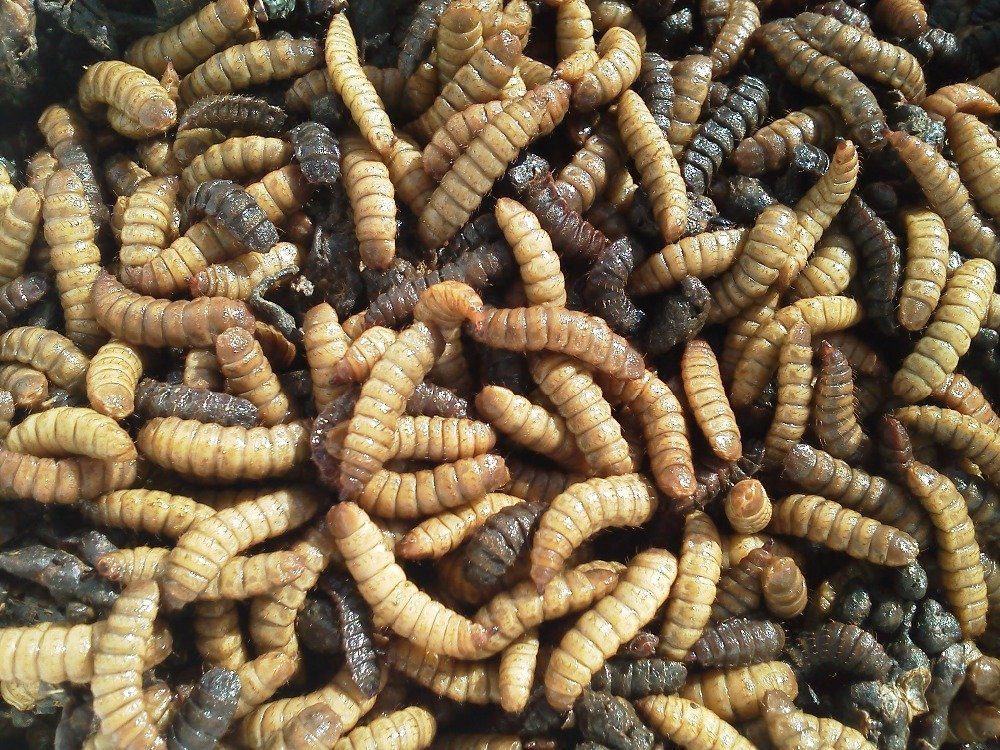
The first reaction, almost universally, is disgust. Then, for the farmers who gathered in Jinja last week for a training organised by the Association for Strengthening Agricultural Research in Eastern and Central Africa (ASARECA) and the National Organic Agricultural Movement of Uganda (NOGAMU), came something more surprising: a taste test. Fresh Black Soldier Fly larvae, popped briefly into a microwave, were passed around the room. Diana Nankwanga, patron of Blossom Integrated Development in Jinja district, was among those who tried it. "It tasted like grasshoppers," she said. "That thing tastes like crunchy crisps, if you have not put salt. When you put salt, the taste even becomes more like you are eating those tasty crisps."
The moment captured, in miniature, the challenge and the opportunity now facing efforts to scale up Black Soldier Fly (BSF) technology in Uganda: a genuinely promising climate-smart solution to two of agriculture's most persistent cost problems — expensive animal feed and expensive fertiliser — that has to first overcome a wall of instinctive revulsion before farmers will touch it.
Black Soldier Fly larvae are voracious consumers of organic waste — food scraps, brewery residue, market refuse, even water hyacinth choking Uganda's waterways — which they convert into two valuable outputs: a protein- and fat-rich meal that can substitute for conventional animal feed ingredients, and nutrient-dense frass that works as an organic fertiliser. For a country where soil fertility has been declining for decades and where synthetic fertiliser use remains among the lowest in the region, the appeal is obvious. But the Jinja training, and the fledgling businesses built around BSF in Busoga, also illustrate just how much groundwork — technical, commercial and psychological — is still needed before insect farming moves from demonstration project to mainstream practice.

Joshua Okonya, ASARECA's Program Officer for Technology and Innovation, frames the case in blunt economic terms. "The idea of BSF is that it can bring down the cost of production because nearly 50 percent to 70 percent of the cost that goes to production is mainly feed, and that is the source of protein that you will usually have," he said. Much of Uganda's poultry and fish feed industry currently leans on mukene, the small silverfish harvested from Lake Victoria and other water bodies, as a protein source — the same mukene that forms a dietary staple for millions of Ugandans and has itself been the subject of fishing bans and enforcement crackdowns amid concerns about overexploitation of juvenile stocks. BSF, Okonya argues, offers farmers an alternative protein source that does not compete with the human food chain and does not depend on an already-stressed fishery. "We compete with people who also eat it," he said of mukene. "So this comes as an opportunity for farmers to embrace not only that it is good for the environment, it is good for public health and hygiene, but it is also good that it gives them more money."
NOGAMU's board chairperson, Samuel Nyanzi, argues the fertiliser side of the technology may be the easier entry point, precisely because of the stigma Nankwanga's taste test was designed to puncture. "People still have this mentality that the maggots are from the toilets," he said. "But if we started from the fertiliser side, then people will see." He believes demand for organic fertiliser — driven partly by the cost of synthetic alternatives and partly by export markets that reward organic certification — could pull farmers toward BSF adoption even before they are comfortable with the insect-as-feed proposition. "The BSF can really produce a lot of fertiliser, but it is also a very sustainable way of waste management," Nyanzi said.
The commercial proof of concept already exists in Jinja, in the form of Bioconvision (Uganda) Limited, founded in 2023 by Swiss national Konstantin von Hoerner and his Ugandan wife after a research project exposed how little locally produced feed and fertiliser was available to farmers. The company now produces more than a tonne of BSF-based fertiliser daily, sold mainly to commercial farmers, and earlier this year won a National Environment Management Authority (NEMA) Sustainability Award for a project that fed water hyacinth — a persistent and costly nuisance at Jinja's hydropower dams — to its larvae alongside other organic waste. Getting there took time and trial and error: an early attempt to feed the insects water hyacinth directly failed because the plant on its own did not provide enough nutrition, forcing the company to experiment with supplementary feed blends before finding a workable balance.
Von Hoerner is candid about the limits of the business, and by extension the limits of how fast BSF can scale elsewhere in Uganda. Fresh larvae for animal feed are highly perishable and require refrigerated transport that Bioconvision has not yet been able to afford, confining its feed sales to the immediate Jinja area even as demand from Kampala goes unmet. "We are producing fresh larvae, we can't even reach Kampala, we need to save money for the cooling truck so that we have a wider reach," he said. He also pushed back on the idea that Uganda's BSF sector should be thinking about exports any time soon, arguing the domestic market for organic fertiliser alone remains far from saturated. His advice to prospective farmers eyeing the enterprise was equally pointed: the waste that feeds BSF larvae is not actually free once the labour of sourcing, sorting and transporting it is counted. "It took us almost two years for us to have a stable set up," he said, noting that more than 50 people are currently employed collecting waste for the company alone.
The push to popularise BSF in Busoga carries an added layer of urgency tied to the sub-region's deepening economic troubles. Geoffrey Nkurunziza, Deputy Chief Administrative Officer of Jinja District, told the training that Busoga Kingdom's development think tank has now formally dropped sugarcane cultivation from its regional development plan, concluding after study that the crop — long the backbone of the local economy — has instead driven impoverishment, with some farmers leasing out land to sugar millers for periods as long as 15 years at prices that leave them worse off. "Sugarcane growing is the reason why our people in Busoga are poor," Nkurunziza said, framing BSF as one of the alternative enterprises district leaders are now actively promoting to wean farmers off cane. With a kilogram of BSF breeding eggs reportedly fetching up to Shs1 million, officials see a potential income stream that requires far less land than sugarcane while producing a genuinely climate-smart input.
Whether that promise translates into wide farmer adoption will depend on solving the same unglamorous problems that constrain most agricultural innovations in Uganda: financing for cold-chain logistics, sustained extension and demonstration support beyond a single training session, and — as both Nyanzi and Okonya acknowledge — a slow, patient campaign to normalise an insect that most people's first instinct is to recoil from. The training closed with the establishment of a small BSF demonstration facility in Namulesa Town Council, intended to give organic farmer groups a place to build the practical skills and confidence that a single workshop cannot. ASARECA is also encouraging farmers to use social media to market whatever they produce, pointing to a Rwanda-based logistics-sharing app as a model for how smallholders might pool transport costs — the same cold-chain and market-access barriers that are currently keeping Bioconvision's larvae confined to Jinja's outskirts.
Published By | Features Editor