Written By | Staff Writer
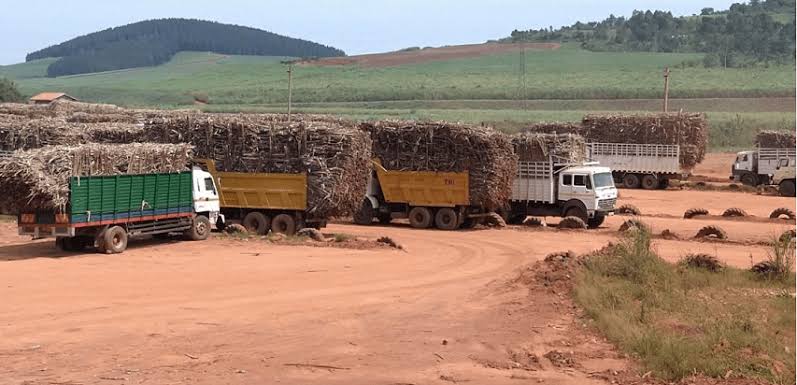
A new 1,500-tonne-a-day mill for Kayunga, four licences issued in one batch and a prime-ministerial commissioning have expanded Uganda's sugar industry this month.
Agriculture
On 26 August, the Ministry of Trade, Industry and Cooperatives signed Licence No. 054, permitting Shakti Sugar Limited to build a mill at Nalyamabidde Village in Kayunga District with a crushing capacity of 1,500 tonnes of cane per day. The document was made public on 1 September by the Minister for Local Government, Balaam Barugahara, and reported by New Vision the following day.
The framing was celebratory. "This is a major milestone for Bugerere, Kayunga and Uganda's economic transformation," Barugahara said, calling it Bugerere's first sugar factory and first major manufacturing industry, and promising jobs for more than 1,500 young people and a market for over 5,000 commercial cane farmers. Ministry spokesperson Hadija Nakakande confirmed Shakti was one of four factories licensed in the same recent batch, all of which she said had met the requirements, including on raw-material sourcing and outgrower organisation. Uganda now has more than 15 sugar factories.
There is a complication that none of the announcements mentioned. Shakti Sugar Limited is one of the two companies whose earlier permissions the High Court struck down in January 2025.
A judgment that has not gone away
Ruling on a petition brought by the Uganda Sugar Manufacturers Association (USMA) — whose members include Kakira, Kinyara, SCOUL, Bugiri Sugar and Sango Bay Estates — against the Attorney General, the Trade Minister, CN Sugar Limited and Shakti Sugar Limited, Justice Dr Douglas Singiza of the High Court's civil division declared every licence the ministry had issued to sugar and jaggery mills since 2010 null and void. The argument was procedural: under the Sugar Act, mill licences are to be issued by the Uganda Sugar Board, not the ministry, and the ministry had been issuing what amounted to licences in the guise of Letters of No Objection.
The court agreed, and went further. It found the ministry's failure to establish the Board a breach of its statutory duty under section 4 of the Act. It issued an order of certiorari cancelling the Letters of No Objection granted to CN Sugar and Shakti, ordered both companies to halt operations until duly licensed by an authorised body, declared that siting mills within 25 kilometres of existing mills was contrary to government policy and presidential guidance on zoning, and directed the ministry to constitute the Uganda Sugar Board within three months.
The three-month deadline expired in April 2025. Twenty months after the ruling, the Board has not been constituted. What fills the vacuum is the Sugar Cane Council — described in official communications as the National Sugar Stakeholders Council — chaired by Rajbir Singh. Licence No. 054 rests on that council's recommendation and the signature of Trade Minister Sanjay Tanna, and remains, by its own terms, revocable by the minister. Administratively, Nakakande is probably right that Shakti met every box on the ministry's form. The court's finding was about who has the legal power to hold the form.
CN Sugar and the commissioning that a court had barred
The second respondent in the 2025 case has produced an even sharper test. In a letter dated 13 August 2026, Prime Minister Robinah Nabbanja directed the Trade Minister to finalise preparations for her to commission CN Sugar Limited's factory in Namayingo District on 4 September, noting she was acting on instructions from President Museveni. The High Court order halting the facility's operations was, on the face of the record, still standing. CN's proposed site sits roughly 19 kilometres from Bugiri Sugar, inside the 25-kilometre zone the regulator applies and the court endorsed; on 26 February 2026 SCOUL's Lugazi operation wrote to the council chairman warning that licensing CN would contradict a subsisting judgment.
The growers are not on the millers' side
It would be convenient if this were simply a story about incumbents defending their catchments, and it is partly that. But the growers are pushing the other way. Farmers in Namayingo, Bugiri, Buyende, Luuka, Mayuge and neighbouring districts have spent much of 2026 demanding that the Uganda Sugar Board — the body that does not exist — approve four pending factories, CN Sugar among them. In Namayingo, cane has been left standing past maturity while licensing dragged, and growers report mounting debts on crops they cannot sell. That is the real cost of the vacuum, and it falls on the least protected party in the chain.
Zoning rules exist for a defensible reason: a mill needs a catchment large enough to keep its rollers turning, and a district that converts every acre to cane has no food crop left. Prof David Katamba of Makerere University Business School, who welcomed the Kayunga licence for the jobs and export earnings it may bring, cautioned that the historical standard was one factory every 50 kilometres, precisely to guarantee raw-material supply and leave room for other crops. He warned that clustering factories could trigger food insecurity as land converts to cane, spark unhealthy competition, and concentrate effluent and smoke in one airshed.
John Mukasa of Kakira Sugar Works put the industry's version of the same point plainly: existing players have no objection to new entrants who meet the requirements, but "the problem is the raw materials. You must have land. That is why, as the association, we guard this space well. You have to develop your outgrowers." His warning on price was blunter: "Every time raw materials go up, the price of sugar also goes up."
What a working outgrower contract looks like
Uganda's sugar production now exceeds 800,000 tonnes a year, with Kakira, Kinyara and SCOUL accounting for about 380,000 tonnes of it. Installed capacity has roughly doubled from 400,000 to 800,000 tonnes in recent years — the expansion that drove retail sugar prices down by about 30 per cent, and the figure the manufacturers' association cited in opposing the proposed doubling of excise duty from Shs100 to Shs200 a kilogramme.
Against that backdrop, Kinyara Sugar offers a useful control. In July the company announced Shs5.5 billion — about US$1.51 million — in cash top-ups to farmers who supplied cane in 2025/26, on top of interim prices already paid: a further Shs1,500 a tonne for those who delivered at Shs128,000, and Shs8,000 a tonne for those who delivered at Shs114,000. The current interim price is Shs112,000 a tonne, reviewable at year end, negotiated between chief executive Ravi Ramalingam and Robert Atugonza of the Masindi Sugarcane Growers Association. Kinyara has roughly 8,000 registered outgrowers supplying more than 60 per cent of its cane.
None of that is guaranteed by a licence. It exists because there is one identifiable buyer, a growers' association with a board and a mandate, and a price that is published and periodically renegotiated. Where those institutions are absent, a grower's only remedy is protest.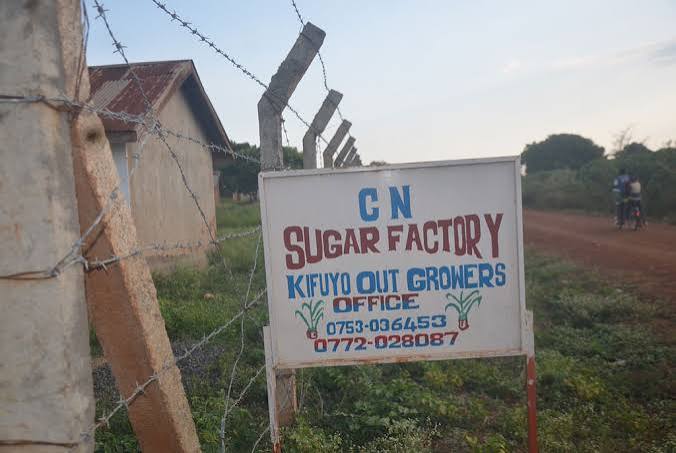
A database is not a regulator
The state's answer, unveiled in late August, is the Sugar Industry Information Management System (SIIMS), developed by the ministry with the National Sugar Stakeholders Council. Linked to satellite imagery, it is designed to register every cane grower and record acreage and miller capacity for real-time monitoring. Launching it, Tanna warned millers against underpaying farmers and buying cane from unregistered growers, saying breaches could attract fines and imprisonment.
SIIMS is a genuine improvement on a sector that has never known how much cane it grows. But it is an information system, not an authority. It can tell the ministry who planted what and where; it cannot hear an appeal against a licence, adjudicate a zoning objection, arbitrate a cane-price formula, or revoke a permit and make the revocation stick. Those are the functions the Sugar Act assigns to a Board — and the functions a court has already ruled cannot be exercised by ministerial discretion.
Why it matters beyond the mills
Sugar is one of the few agro-processing subsectors where Uganda has surplus capacity rather than a shortfall, at a moment when the Tenfold Growth Strategy leans on agro-industrialisation for its US$20 billion export target and Kenya's Finance Act 2026 has imposed a US$308-a-tonne excise on Ugandan sugar. Capacity that cannot be exported must be absorbed at home or idled — which is why the sector keeps pressing for more mills and more cane at once.
Investors also read judgments. CN Sugar told the court it had committed US$35 million relying on the 2010 National Sugar Policy; Shakti pointed to a Uganda Investment Authority foreign investment licence dated 15 November 2022 and a Kayunga district development permit from 19 May 2023. The court held those did not amount to lawful authority. That this much capital was committed on their strength is the indictment of the framework.
The Sugar (Amendment) Bill, which would replace the Board with a stakeholders' council and retrofit legality onto current practice, has been pending for years; industry players were complaining about the delay as far back as February 2025. Until it passes or the Board is constituted, every new sugar licence in Uganda carries a contingency no feasibility study prices in: it can be challenged, and one covering this very company has already been cancelled once. For the farmer who plants cane at Nalyamabidde this season on an 18-to-24-month cycle, the question is not whether the mill has a licence. It is whether the licence will still be valid when the cane is ready.



