Written By | Staff Writer
Karamoja's Recovery Keeps Stalling despite several intervetions
Agriculture
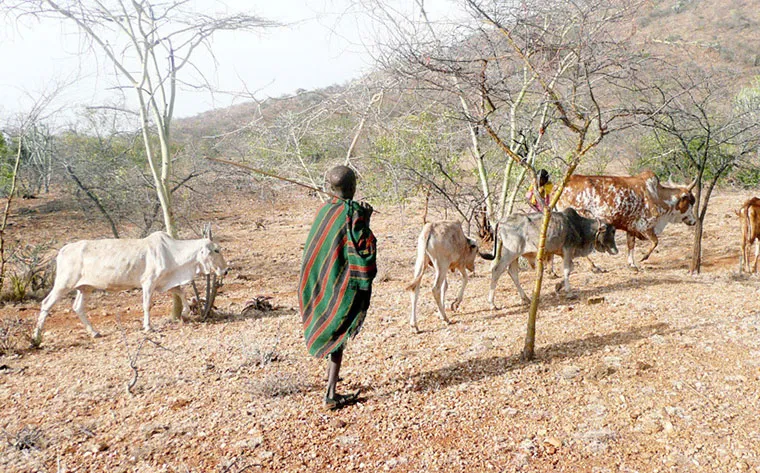
Deep in Uganda's north-eastern cattle corridor, a quiet contradiction is playing out. On one hand, the government has repeatedly told the nation that Karamoja has turned a corner — that decades of gun-enforced cattle raiding have ended and the sub-region is now, in President Yoweri Museveni's own words, "criminal-free." On the other hand, the country's own equity watchdog has just told a room full of Karamoja's Members of Parliament the opposite: that land grabbing, cattle rustling and insecurity are still actively undermining the sub-region's food security, livelihoods and economic recovery.
That warning came on July 10, when the Equal Opportunities Commission (EOC) convened a high-level stakeholders' dialogue on gender and equity issues affecting Karamoja at its Kampala headquarters, bringing together the Karamoja Parliamentary Forum and district leaders. Presenting findings from recent engagements with district councils across the sub-region, EOC Senior Compliance Officer Irene Nafungo did not mince words. "Land grabbing, land disputes, human-wildlife conflict, cattle rustling and male-dominated land ownership continue to threaten livelihoods, food security and women's economic empowerment," she told the gathering, according to a New Vision report on the dialogue.
The findings, released as the sub-region also grapples with a hunger crisis that has already claimed at least 19 lives this year, paint a picture of a recovery that is real in parts but far from complete — and one that carries direct consequences for how Uganda feeds itself and manages its national cattle herd.
A poverty gap that dwarfs the rest of the country
The scale of the challenge is laid bare in the numbers the EOC presented. An estimated 74.2 percent of Karamoja's population lives below the poverty line, compared with a national average of 16.1 percent — meaning a Karamojong resident is more than four times as likely to be poor as the average Ugandan. According to the 2024 National Population and Housing Census by the Uganda Bureau of Statistics (UBOS), the sub-region is now home to 1,496,117 people, a population base for whom livestock is not a lifestyle choice but the primary economic asset.
That matters far beyond Karamoja's borders. Despite being one of Uganda's poorest regions, Karamoja is disproportionately important to the national livestock economy: it accounts for an estimated 39 percent of the country's cow milk value, 28 percent of goat milk value, 47 percent of national sheep offtake value and 27 percent of cattle offtake value, according to livestock sector data. In simple terms, a large share of the beef, milk and hides moving through Uganda's markets originates in a sub-region where, by the government's own equity commission, insecurity is still disrupting production.
The EOC's district-level findings sharpen the picture. In Kaabong, councils reported ongoing insecurity, food shortages and the marginalisation of the Ik community — an indigenous minority numbering roughly 27,872 people who face limited access to education, healthcare and infrastructure because of their geographic isolation. In Karenga, persistent human-wildlife conflict, land grabbing, poor connectivity and disputes over resource allocation were flagged as recurring problems. Across the sub-region, the Commission found that only about 19 percent of children who enrol in Primary One make it to Primary Seven, undermined by non-coded schools, inadequate secondary and technical facilities, and seasonal disruptions tied to the very insecurity and mobility that pastoralism demands. Roughly 84 percent of Karamoja's youth were found to experience multi-dimensional poverty — high unemployment, scant vocational training, weak access to government livelihood programmes and low financial literacy.
The gap between the political narrative and the ground
The dialogue's timing is pointed. It comes months after Museveni publicly praised Karamoja for "shunning cattle rustling and embracing peace for development," part of a long-running government narrative that the military's disarmament campaigns of the 2000s and 2010s pacified the region for good. The EOC's own compliance officers, working directly with district councils, are now telling a different story: cattle rustling has not disappeared, land disputes are multiplying, and — crucially — the insecurity is gendered. Male-dominated land ownership patterns mean women and other vulnerable groups bear a disproportionate share of the economic fallout when disputes flare or herds are raided.
EOC chairperson Hajjat Safia Nalule Juuko used the dialogue to push Karamoja's MPs toward a harder, more evidence-based style of advocacy. "We can speak on the floor of Parliament, and the papers can capture it, but you will not have done anything good for your people," she told them. "What we have to do is sit down, look at the list of issues affecting Karamoja, place them under the specific ministries and programmes responsible, and engage the relevant authorities with facts and figures." She challenged legislators to engage ministries before, not after, budgets are finalised: "You are the people who pass the national budget. How do you fail to work with the Speaker and ministers to ensure that a budget cannot be passed until it has issues of Karamoja?"
Karamoja Parliamentary Group chairperson and Dodoth West MP Ben Baatom Koryang welcomed the report as ammunition for advocacy but acknowledged that persistent gaps in education, health, water and agricultural development continue to impede recovery "despite existing government commitments." Abim District Woman MP Joyce Akamoe Aayoo offered perhaps the dialogue's most direct plea, describing years of cattle raids that have hollowed out household economies. "The cattle raids have left our people orphans, left families with children as heads of households and left us poor. It will take us many years to recover from this poverty, and the only thing that can help us get out of it is when we are restocked," she said, calling for government compensation and restocking support for affected communities.
Why restocking alone hasn't worked
Aayoo's appeal lands against a troubled record. Restocking has been one of the government's recurring tools for rebuilding pastoralist livelihoods in Karamoja, most notably through a roughly Shs39 billion goat distribution programme approved in 2021 that promised livestock and dignity to former rustlers who had surrendered their arms. In practice, the rollout faltered badly in places: in Abim District, only a fraction of the promised goats ever arrived, and many of those that did were sick, stolen or dead within days, according to local reporting on the programme's failures. Museveni has since endorsed a newer cattle restocking framework — describing it as "realistic, inclusive and transformative" — with a plan to deliver five cows, or their cash equivalent, to each affected household. Whether that framework fares better than its predecessor will depend heavily on the land security and market access questions the EOC has just flagged; restocked herds mean little if grazing land is being grabbed out from under them or if raiders can strike again with impunity.
What it means for farmers, markets and the wider economy
For ordinary livestock keepers in Karamoja, the practical stakes are immediate: a raided kraal or a disputed grazing corridor can wipe out a household's entire asset base overnight, in a sub-region where formal insurance and banking penetration are minimal and where roughly 170,000 residents identify cattle-keeping as their primary livelihood, alongside smaller numbers in goat rearing and piggery. For downstream markets, the risk is one of supply volatility — Karamoja's outsized contribution to national milk and offtake values means that disruptions in the sub-region ripple into prices and availability for meat and dairy traders across the country, at a time when Uganda's dairy sector is simultaneously trying to expand into new export markets in West Africa. For the national budget, the EOC's message is a direct challenge: infrastructure, security and education spending earmarked for Karamoja needs to be tracked and defended in Parliament before allocations are finalised, not lamented afterward.
The Commission's dialogue does not offer an easy fix. What it does offer is a rare, unflinching acknowledgement — from inside government's own machinery — that the "peace dividend" narrative told about Karamoja has outpaced the reality on its roads, in its schools and on its rangelands. Whether Parliament acts on Juuko's challenge to legislate with "facts and figures" rather than floor speeches will determine whether the next restocking drive succeeds where the last one collapsed, and whether Karamoja's considerable, largely untapped contribution to Uganda's livestock economy can finally translate into household-level prosperity rather than another cycle of loss and recovery.



