Written By | Staff Writer
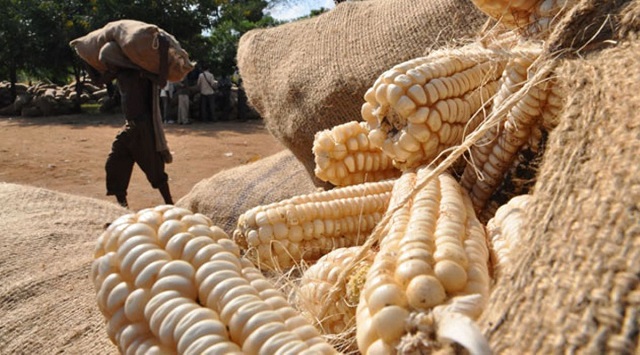
A drought across the border has turned Uganda's grain surplus into a bidding war - and Ugandan consumers, poultry keepers and feed millers are paying for it
Agriculture
A windfall that hurts
For as long as anyone in the grain trade can remember, a bad season in Kenya has been good news in Uganda. When the North Rift fails, trucks queue at Malaba and Busia, farm-gate prices in Bugiri and Kapchorwa climb, and the money moves down the chain to aggregators, transporters and village traders. That is the arithmetic Ugandan farmers have counted on for decades.
This year the arithmetic still holds. What has changed is who is capturing the gain - and what it is costing everybody else.
When Kenya's Cabinet Secretary for Agriculture, Mutahi Kagwe, announced that Nairobi would facilitate the importation of up to 25 million 90-kilogramme bags of maize to close a looming food gap, the news landed across the border with what the Daily Monitor described as cautious optimism. Within days that optimism had curdled into something more complicated. Ugandan consumers are now paying between Shs135,000 and Shs150,000 for a 100kg bag of dry maize grain in Kampala's Kisenyi and Nakawa markets, up from Shs105,000 to Shs125,000 in January. Posho, the maize flour that anchors the diet of most Ugandan households, has moved from an average of Shs2,200 per kilogramme in December to between Shs2,800 and Shs3,200 across most Kampala suburbs.
A regional food emergency, in other words, has become a domestic cost-of-living event - and it has done so in a season when Uganda has more maize than it knows what to do with.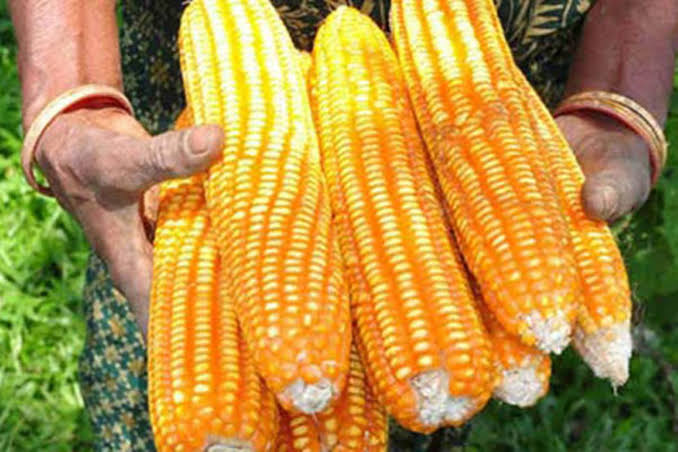
The size of the gap
Kenya consumes between 70 million and 75 million 90kg bags of maize a year. The shortfall Mr Kagwe described - roughly 25 million bags - is more than a third of national consumption. Kenyan officials attribute it to prolonged drought in the country's core maize belts, where crop failure across the North Rift, Laikipia, Nakuru, Uasin Gishu and Trans Nzoia has wiped out thousands of hectares. In Trans Nzoia alone about 20,000 hectares were destroyed, roughly a fifth of the county's production; Uasin Gishu is projecting a 60 percent drop.
Crucially, Mr Kagwe made clear that the Kenyan state would not itself be doing the buying. “It is the private sector that will purchase the maize. The money does not come from the government exchequer,” he told The Nation, adding that Nairobi would open normal commercial channels for private traders while continuing to top up strategic reserves through the National Cereals and Produce Board.
That distinction matters for Uganda. A government-to-government purchase would have been negotiated, specified and scheduled; a private-sector scramble is none of those things. Kenya's own domestic price war is instructive: the government targeted two million bags for its National Strategic Food Reserve and received just 180,000, because farmers preferred private millers offering KSh5,400 per bag against the Board's KSh4,000. That premium is now being exported across the border.
Trucks in the villages
In previous seasons, Kenyan demand reached Ugandan farmers through licensed aggregators clustered at Busia and Malaba. This season, buyers are driving trucks deep into eastern Uganda - Bugiri, Iganga, Mbale, Kapchorwa - and into central districts including Mubende, Mityana and Nakaseke, with cash in hand.
Farm-gate prices in Mbale and Busia have jumped from Shs900 to Shs1,400 per kilogramme. For a smallholder who has spent two seasons watching maize prices sag, that is a genuine and welcome windfall, and it would be dishonest to pretend otherwise.
But Mr Henry Musisi, Managing Director of the Grain Council of Uganda, argues that the structure of the trade is doing damage the price signal conceals. “If only this could be followed to allow Ugandan entities like the GCU to supply the grain, rather than having Kenyan traders buy directly from farmers deep in the villages,” he said. “This bypasses the established value chain and compromises quality.”
The Council's concern is specific. When buyers purchase straight from the farm, the grain skips the drying, cleaning, grading and aflatoxin-testing infrastructure that Ugandan warehouse operators have spent years and considerable capital installing. What crosses the border meets a weight specification but not a quality one.
That is not an abstract risk. Only last week, Bukedea County MP David Beecham Okwere told Parliament that around 80 percent of cereals bought by PELA Commodities at Soroti Industrial Park had tested positive for aflatoxin, while an aflatoxin-removal machine at the same facility has stood idle since 2018. The East African Grain Council has put potential regional losses from aflatoxin contamination at $577 million, with Ugandan export rejections worth Shs32.8 billion since 2023. Kenya banned Ugandan maize imports outright in 2021 over precisely this issue. A rush that rewards volume over quality is, in effect, rebuilding the conditions for the next ban.
The millers and the birds
The sharpest domestic pain is being felt not in households but in poultry sheds. Maize makes up about 60 percent of animal feed formulations, and feed prices have risen 18 percent in the past month, according to industry representatives - enough to force smallholder poultry keepers to cut flock sizes.
Aga Sekalala Jr, an industry leader representing feed millers and poultry breeders, put the mechanism plainly: “Kenyan millers have deeper pockets and are willing to pay above local market prices to secure supplies, which in turn sets a higher price floor for Ugandan millers.” A Ugandan feed mill is not competing with a Ugandan household for grain. It is competing with a Kenyan miller whose selling market can absorb a far higher cost.
The knock-on runs through eggs, broilers and, in time, animal protein on Ugandan tables - at a moment when the Uganda Bureau of Statistics has already recorded August headline inflation at 4.1 percent, with core inflation of 3.5 percent driven partly by maize flour and cassava flour.
A bigger board than it looks
Uganda is not the only supplier at the table, and this is where the season could turn against Ugandan farmers rather than for them. Kenya's maize imports rose 51.4 percent in 2025 to 468,109 metric tonnes, helped by a duty-free window for yellow maize destined for feed manufacturers. Much of that came from Zambia - which committed up to one million 90kg bags - and from international markets.
Within the region, Tanzania remains Kenya's largest supplier, accounting for 152,880 metric tonnes, or 57 percent of regional trade, in the last quarter, ahead of Uganda's 117,390 tonnes. In Busia, Ugandan traders report Tanzanian trucks transiting through Uganda to reach Kenya, tightening logistics and pushing up truck rental costs on Ugandan roads.
The pattern regional analysts describe is a familiar one: Kenyan millers buy affordable Ugandan and Tanzanian grain at harvest, driving up regional prices; when those prices climb too far, the millers lobby Nairobi for duty-free access to cheaper global maize - leaving East African sellers holding expensive stock they can no longer move. Uganda's farmers have been the last party in that sequence before.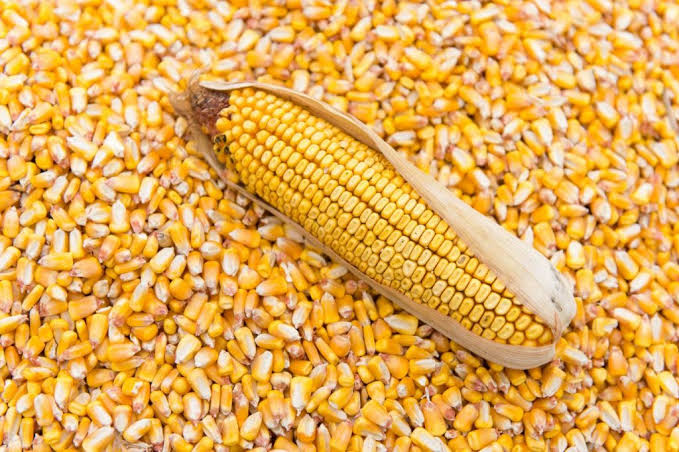
The alternative on the table
The Grain Council of Uganda estimates that the country has an exportable surplus of more than one million metric tonnes of maize this season. That is a serious contribution to Kenya's deficit - if it moves through a structure rather than a scramble.
Under the Council's proposal, Kenya would publish the exact specifications and volumes required for its strategic reserves; certified East African suppliers would bid; Uganda would aggregate grain through its roughly 40 certified warehouses, apply quality control, and export through a single streamlined window. “An organised arrangement would protect farmers, safeguard consumers, and maintain quality,” Mr Musisi said. “What we have right now is an unregulated rush that primarily benefits middlemen.”
The uncomfortable truth is that Uganda has been here before and has repeatedly declined to build the machinery. The Contract Farming Bill 2023, which would have given growers enforceable terms with buyers, was introduced, reviewed and withdrawn in March 2026. A National Post-Harvest Management Policy and a warehouse receipt system exist largely on paper. The World Bank estimates Ugandan post-harvest losses at 22 to 30 percent. Parliament's Committee on Agriculture, Animal Industry and Fisheries has flagged all of this; none of it is fixed by September.
What it means for the season ahead
For farmers holding maize now, the advice is straightforward: the price is real, and it is worth selling what can be dried properly to a buyer who will pay for quality. For those planning the next planting, the signal is more treacherous. Regional demand spikes driven by a neighbour's drought are, by definition, temporary; Kenya's own agricultural agencies are already banking on October-December rains to restore production, and better Kenyan rains mean a smaller Kenyan deficit next season. Planting decisions made on 2026 prices could easily meet a 2027 glut.
For policymakers, the episode demonstrates an argument the sector has been having with itself all year. Uganda produces more than it can market. Its neighbours periodically need exactly what it produces. In between sits an unbuilt layer of aggregation, quality assurance and negotiated trade that would let Ugandan farmers capture the value instead of watching it disperse into truck-side cash and higher posho prices at home.
A surplus you cannot sell on your own terms is not really a surplus. It is a queue.



