KAMPALA
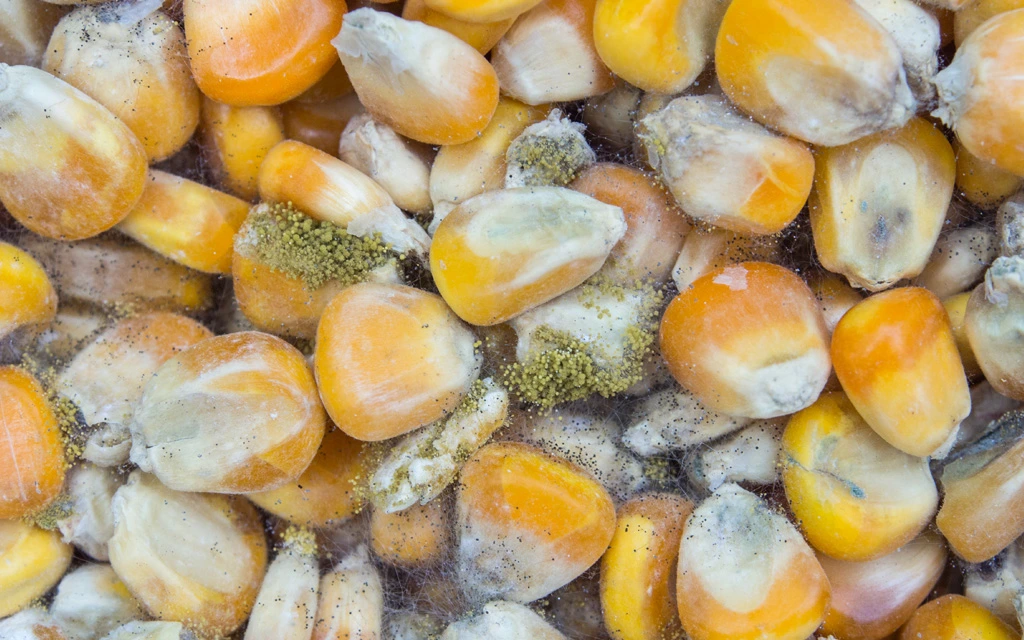
Every harvest season, thousands of tonnes of Ugandan maize, sorghum and groundnuts leave village stores looking, to the naked eye, perfectly fine. Grain buyers in Nairobi, Juba and Kinshasa cannot tell by looking at a sack whether it is safe. Neither, often, can the farmer who grew it. The danger is invisible: aflatoxin, a potent carcinogenic mycotoxin produced by the fungus Aspergillus flavus, which colonises grain that has been harvested too wet, dried too slowly, or stored in humid conditions.
It is not a new problem. But a stakeholder engagement convened in Kampala in late July by the Eastern Africa Grain Council (EAGC) has thrown fresh urgency behind an issue that industry figures say is quietly bleeding hundreds of millions of dollars out of Uganda's grain economy every year — and locking farmers out of exactly the regional markets the country is counting on to drive its next phase of agricultural growth.

A THREAT WITH A PRICE TAG
Speaking at the engagement, held at Hotel Africana under the theme "Promoting the Competitiveness of Uganda's Grain Trade Sector for Local and Export Markets," EAGC country director Herbert Kyeyamwa did not mince words about the scale of the problem. Aflatoxin contamination, he said, "remains one of the biggest threats to the grain sector, public health and export competitiveness."
The numbers he and other speakers cited are sobering. Uganda spends an estimated $910,000 a year treating aflatoxin-related illness, according to health experts who briefed the meeting. Far larger is the trade cost: the country faces potential economic losses of up to $577 million annually from trade restrictions tied to contaminated grain. Jonathan Lubega, a policy analyst with the Southern and Eastern Africa Trade Information and Negotiations Institute (SEATINI), told the gathering that non-compliance with food safety requirements has cost Uganda roughly Shs32.8 billion in lost exports since 2023 alone — grain turned away at the border, or rejected after arrival, because it failed aflatoxin testing.
The health stakes are just as serious as the financial ones. Aflatoxins are highly stable, resistant to conventional cooking, and can pass into the human food chain not just through direct consumption of contaminated maize or groundnuts, but through animal products and even breast milk in nursing mothers who have eaten tainted food. Chronic exposure is linked to liver cancer, stunted growth in children, and suppressed immune function — making it as much a public health emergency as a trade one, even though it rarely makes headlines the way an outbreak of a more visible disease does.
WHY IT KEEPS HAPPENING
Uganda's grain sector remains dominated by smallholder farmers who dry their harvest on tarpaulins, mats or bare ground, often for too short a time before bagging it for storage or sale. Traditional granaries and jute sacks trap humidity. Middlemen who aggregate grain from many small farms rarely test for aflatoxin before reselling, and much of the trade — particularly informal cross-border exports to Kenya, South Sudan and the Democratic Republic of Congo — moves through channels with little quality oversight at all.
That informality is precisely what worries officials trying to position Uganda's grain sector for bigger regional ambitions. Edith Mwanje, permanent secretary in the Ministry of East African Community Affairs, told the meeting that the government sees enormous opportunity for Ugandan grain in blocs such as the Common Market for Eastern and Southern Africa (COMESA), the Southern African Development Community (SADC) and the African Continental Free Trade Area (AfCFTA) — markets covering hundreds of millions of consumers. But market access on paper, she cautioned, means little without compliance in practice.
"The right of access to these markets alone is not enough. Our businesses must also be competitive in compliance and market entry," Mwanje said, adding that meeting sanitary and phytosanitary standards is becoming non-negotiable as regional and global buyers grow more quality-conscious.
This is not an abstract risk. Kenya suspended maize imports from Uganda and Tanzania in 2021 over aflatoxin contamination, a move that shut Ugandan traders out of their single largest regional market for grain for months and highlighted how quickly a food-safety lapse can translate into a trade shock. Uganda's grain currently reaches Kenya, South Sudan and the DRC, among other destinations — precisely the markets most exposed to renewed restrictions if contamination levels are not brought under control.

WHAT IS BEING DONE
The EAGC's response has centred on building the market infrastructure that smallholder-dominated systems typically lack. The council has helped establish grain business hubs that organise scattered farmers to supply a single, more accountable buyer, and it has rolled out an online trading platform called E-Soko, which connects farmers, traders, warehouse operators, processors and buyers in a system designed to be more transparent and to reduce the transaction costs that push farmers toward informal, unregulated sales in the first place.
The council has also secured accreditation as an ISO 9000:2015 inspection body, giving it the standing to certify that grain handled through its networks meets the quality thresholds regional and international buyers increasingly demand. Kyeyamwa framed the challenge as fundamentally one of investment discipline rather than technology: "Every year, significant volumes of grain lose value because they do not meet acceptable safety standards. Improving competitiveness therefore requires a collective investment in post-harvest handling, warehouse management, testing, certification and continuous capacity building across the value chain."
On the government side, Mwanje said her ministry is working to strengthen implementation of regional trade commitments, including harmonising standards and eliminating non-tariff barriers, while also improving border and port procedures and coordinated border management — the unglamorous administrative machinery that determines whether a truckload of maize clears a border in hours or sits rotting for days. Meanwhile, Enterprise Uganda's David Baziwana used the platform to promise training support for stakeholders looking to invest in the grain business, part of a broader push to professionalise a sector still built largely on informal trading relationships.
WHAT IT MEANS FOR FARMERS
For the smallholder farmer, the aflatoxin problem is a trap with no easy exit. Investing in proper drying tarpaulins, moisture meters, hermetic storage bags or warehouse space costs money that many farming households do not have readily available, especially in a season when input costs and, in parts of the country, drought stress are already squeezing margins. Yet the alternative — selling grain that fails to meet aflatoxin thresholds — means accepting lower prices from buyers willing to take the risk, or losing access to formal markets altogether.
That dynamic helps explain why reform efforts are increasingly focused on aggregation models like the EAGC's grain hubs: pooling farmers together makes it economically viable to share drying equipment, testing services and warehouse space that no single smallholder could afford alone. It also creates a single point of accountability — and a single point of testing — that is far easier for buyers and regulators to trust than thousands of individual homesteads each handling grain differently.
For a country that has set ambitious targets for agricultural export growth and is counting on regional trade blocs to absorb a rising volume of maize, sorghum, beans and other staples, the aflatoxin problem is a reminder that the biggest obstacles to Uganda's agribusiness ambitions are not always found in trade negotiations or new infrastructure. Sometimes they are sitting quietly in a warehouse, in a sack of grain that looks perfectly fine.
Published By | Features Editor