Written By | Staff Writer
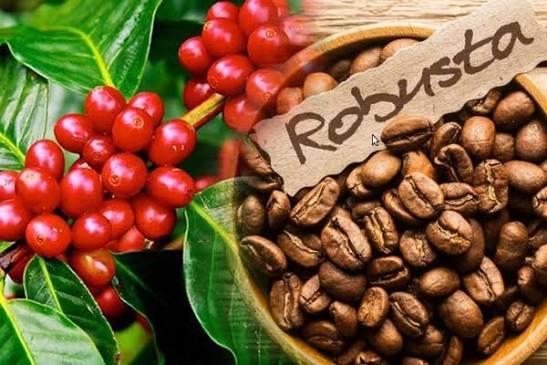
A study published in the Wiley journal Sustainable Development argues that robusta coffee's reputation for climate resilience rests on flawed analysis
A study published in the Wiley journal Sustainable Development argues that robusta coffee's reputation for climate resilience rests on flawed analysis. Roughly 80 to 85 percent of Uganda's coffee is robusta, and the national plan is to double output by 2030. The finding deserves a serious reading in Kampala.
A comfortable assumption, dismantled
For about a decade, the coffee industry has told itself a reassuring story. Arabica, the delicate high-altitude bean that commands premium prices, is acutely vulnerable to warming. Robusta — hardier, hotter-climate, lower-value — is the hedge. As temperatures rise, the thinking went, the world shifts toward robusta, and countries with a robusta base inherit an advantage.
A paper published late on Thursday, August 27, in the Wiley journal Sustainable Development argues that this story is not science. Its lead author, Aaron Davis, senior research leader for crops and global change at the Royal Botanic Gardens, Kew, used a blunter word in an interview with Reuters: robusta's supposed climate resilience is, he said, "an internet myth" that emerged roughly ten years ago and then propagated through media, industry commentary and even peer-reviewed work without being properly interrogated.
"I found it troubling that people weren't interpreting the science correctly and that they were advocating robusta as the savior of the coffee sector under climate change," Davis told Reuters. "Robusta is more heat-tolerant than arabica, but it's drought-intolerant."
That single distinction — heat tolerance is not drought tolerance — is the paper's core, and it matters enormously for Uganda.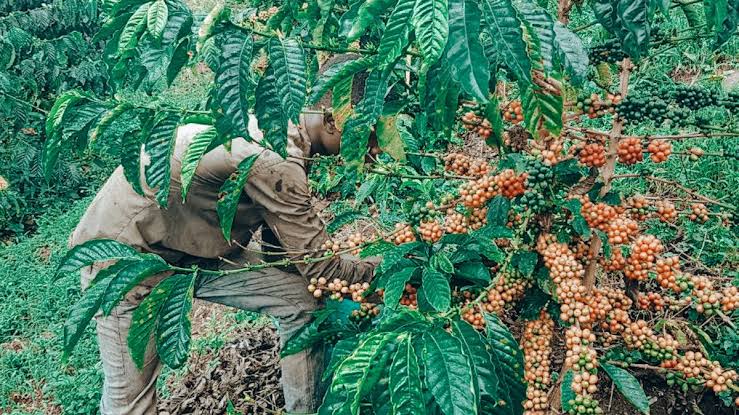
The methodological error
The study's central technical claim is that previous climate-suitability assessments for robusta contained a systematic bias: they treated existing high-performing robusta farms as evidence that those locations are climatically suitable for robusta.
The problem is that many of the world's most productive robusta farms are irrigated. Vietnam's Central Highlands, Brazil's Espírito Santo and Rondônia, and large parts of India's robusta belt run on supplementary water. When a model reads a heavily irrigated, high-yielding farm as a signal of natural climatic suitability, it silently attributes to the plant a resilience that actually belongs to the pump. Strip the irrigation out of the analysis, the paper argues, and the major producing regions do not in fact display the climate suitability the industry has assumed they have.
The paper concludes that earlier assessments of robusta's resilience should be treated as "provisional at best," that any expansion of robusta production must explicitly account for the crop's water requirements, and that growers in several regions already face serious constraints on irrigation water. "The global coffee supply needs major structural and systemic change," Davis said, "if it's to survive over the long term."
Why this lands hard in Uganda
Uganda is not Vietnam. Its robusta is overwhelmingly rain-fed, grown by smallholders on plots of a few acres, frequently intercropped with banana, and concentrated in the Lake Victoria crescent, Greater Masaka, and increasingly in the west and north. It has no irrigation to strip out of the model — formal irrigation covers under 2 percent of Uganda's farmland, and Agriculture Minister Frank Tumwebaze flagged that stagnation as a national failure only three weeks ago.
That cuts both ways. On one hand, Ugandan robusta yields have never been inflated by water infrastructure, so the country's production figures are an honest reading of what rain-fed robusta can do. On the other hand, if robusta is genuinely drought-intolerant, then Uganda has built its single largest export industry on a crop with a water vulnerability and no water infrastructure whatsoever to buffer it.
The scale of the exposure is considerable. Robusta accounts for roughly 80 to 85 percent of Uganda's coffee production. Coffee exports hit a record of about 8.6 million 60-kilogramme bags worth some US$2.3 billion, a volume rise of about 16 percent that pushed Uganda past Ethiopia to become Africa's largest coffee exporter. The national coffee roadmap targets 20 million bags by 2030. Coffee is not one export among many; it is the export.
The evidence is already on the ground
Ugandan farmers did not need a journal paper to learn this. The 2025/26 season delivered the lesson directly.
Prolonged rains in late 2025 rotted robusta flower buds on the branch in central and western Uganda. Then, in May 2026, the rains stopped abruptly, and an intense dry spell wilted what remained. Farmers in the coffee belt reported ferrying swamp water on motorcycles to keep young trees alive — an improvised, unscalable response that is itself the clearest possible evidence of the irrigation gap. The Daily Monitor columnist Michael J. Ssali documented newcomer coffee farmers in central Uganda losing crops in both directions within a single season.
The market registered it. Uganda's June coffee export earnings fell 36.3 percent year-on-year to US$184.43 million, with volume down to 773,308 bags from 1.01 million a year earlier. Some of that is price and timing. Some of it is trees that did not set fruit.
The Ministry of Water and Environment's outlook for August to December 2026 anticipates above-normal rainfall under a weak-to-moderate El Niño, with an active Indian Ocean Dipole — meaning the next stress on the coffee crop may be the opposite one. Whiplash between waterlogging and drought is precisely the regime in which a drought-intolerant, rain-fed perennial performs worst, because neither the tree nor the farmer can adapt fast enough between shocks.
What the study does not say
It is worth being careful about the claim's boundaries, because the headline is more alarming than the finding.
The paper does not say robusta will fail in Uganda. It does not model Uganda specifically; its named producer examples are Brazil, Vietnam and India. It does not say arabica is a better bet — arabica's heat vulnerability is unchanged, and Uganda's arabica zones on Elgon and the Rwenzoris are altitude-constrained and cannot simply expand. And it does not say the coffee sector is doomed; Davis's prescription is structural and systemic change, not retreat.
What it does say is narrower and more useful: that the industry's confidence in robusta as a climate solution was not earned, that water is the binding constraint rather than heat, and that expansion plans built on the resilience assumption need to be re-examined with water availability as an explicit input rather than an afterthought.
The policy question for Kampala
Uganda's coffee roadmap to 20 million bags is, in effect, a plan to more than double the area and productivity of a rain-fed, drought-sensitive perennial in a country with under 2 percent irrigation coverage, in a climate that has just delivered a flood-then-drought whiplash year. The Kew study does not invalidate that plan. It does raise the cost of ignoring the water question inside it.
Three responses follow reasonably from the finding, and none requires abandoning robusta.
The first is that irrigation policy and coffee policy should stop being separate conversations. The inter-ministerial committee on water for production that Tumwebaze convened in mid-August is the obvious venue. Coffee is the country's highest-value use of supplementary water, and small-scale, solar-pumped, dry-season supplementary irrigation for coffee — not full irrigation of the crop cycle — is the intervention the science points to. It is also far cheaper than scheme irrigation.
The second is shade. Agroforestry and banana intercropping, which much of Uganda's smallholder robusta already uses, buffer soil moisture and canopy temperature. This is an existing Ugandan practice with a strong evidence base, and it is currently treated as traditional rather than strategic. Formalising and extending it through the coffee roadmap costs little and hedges directly against the vulnerability the paper identifies.
The third is varietal work. The National Agricultural Research Organisation has demonstrated with its NAROPOT potato series and the WDE75 rice line that it can move a climate-adapted variety from station to farmer. Drought-tolerant robusta selections — including material from Uganda's own wild Coffea canephora populations in forests such as Zoka, Kalangala and Mabira, which represent globally significant genetic diversity — are an underused national asset. The Kew paper's logic is that the myth deterred exactly this kind of breeding investment, because a crop already believed to be resilient does not obviously need improving.
The uncomfortable part
There is one further implication that Ugandan policymakers may find harder to sit with. If the global industry collectively revises its view of robusta's climate future, robusta's forward price and investment case change — not because Ugandan beans got worse, but because the sector's story about them did. Buyers, lenders and insurers price narratives as well as harvests.
Uganda has just spent a year successfully marketing itself as the continent's coffee leader, with Portrait Country status secured at the 2027 World of Coffee expo in Brussels. That platform is an opportunity to get ahead of the revision rather than be caught by it: to present Ugandan robusta as shade-grown, genetically diverse and actively adapting, rather than as a commodity resting on an assumption that a botanist at Kew has just described as an internet myth.



