Written By | Staff Writer
Agriculture is the cradle of Uganda's economy
Agriculture
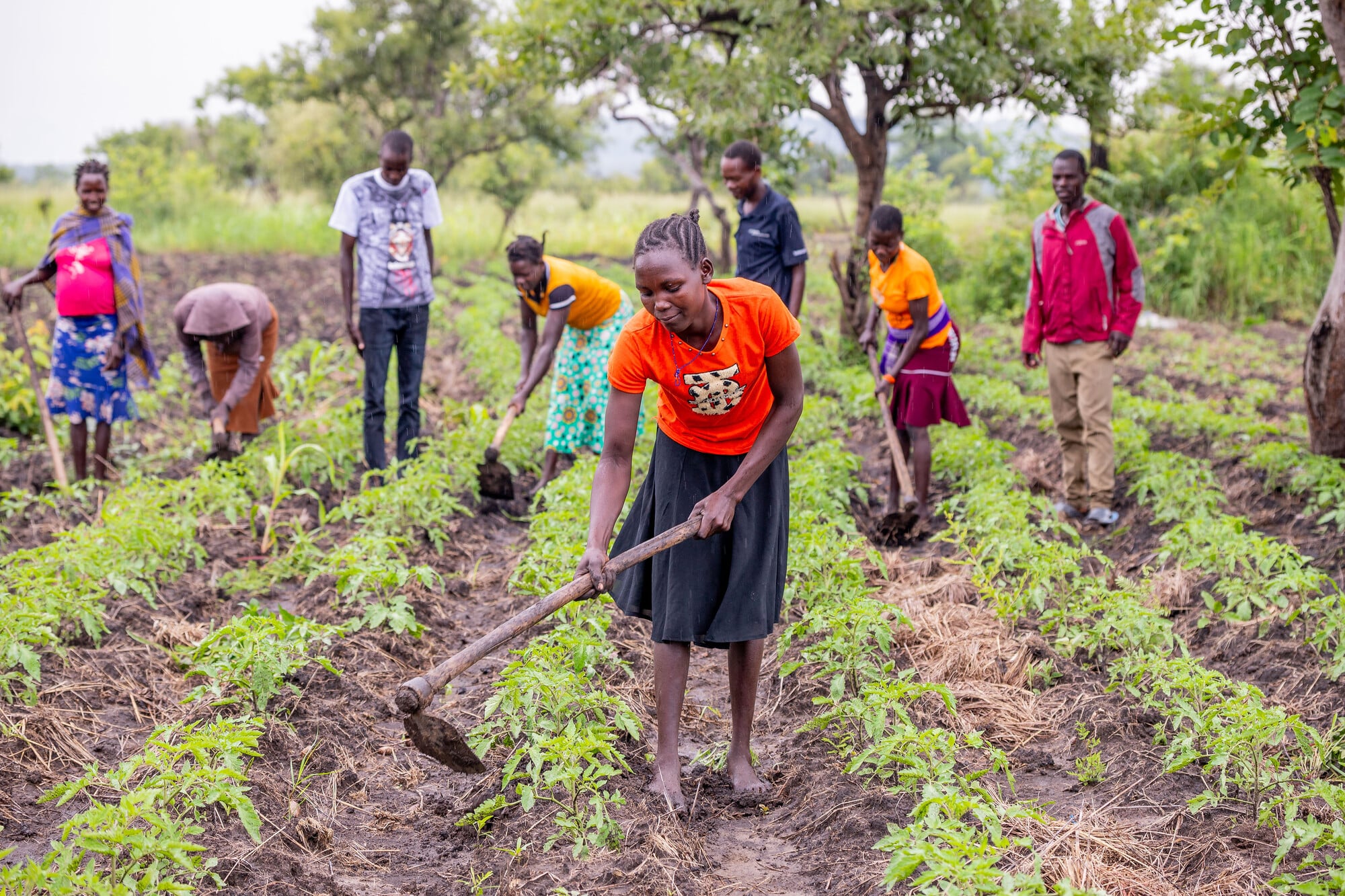
On Saturday, at an induction retreat for the newly constituted Committee on Agriculture, Animal Industry and Fisheries, the 12th Parliament's point person on farming issues delivered a blunt diagnosis of the sector that employs seven in ten Ugandans: it is still, fundamentally, a way of life rather than a business, and unless that changes, the country's growth ambitions will keep running into the same wall.
"Agriculture is the cradle of Uganda's economy," said Amelia Kyambadde, the committee's chairperson and a former trade, industry and cooperatives minister, addressing legislators gathered to set the panel's agenda for the term ahead. "If we are to accelerate its contribution to national growth, then we must modernise it and move our farmers away from traditional practices." She was more pointed later in the session: "Our farmers cannot continue to rely on hoes and rain-fed agriculture if we want to compete and feed a growing population."
It is a familiar complaint in Ugandan policy circles, but the timing gives it weight. The committee, formally constituted in early July when the 12th Parliament named its backbench commissioners and committee memberships, is now translating that mandate into a concrete legislative and budget agenda for the 2026/27 financial year, a cycle that will determine how much of the government's rhetoric about agricultural transformation actually reaches farmers in the form of irrigation infrastructure, functioning cooperatives and research funding.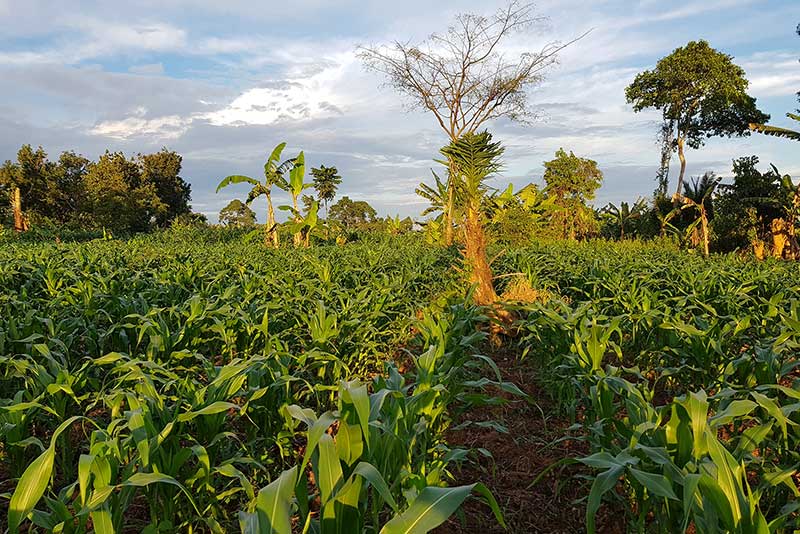
A SECTOR GROWING FASTER, BUT FROM A WEAK BASE
The backdrop to Kyambadde's appeal is a sector that, by the government's own figures, has recently found unusual momentum. President Museveni told this year's State of the Nation Address that agriculture grew 6.7 percent in the 2025/26 financial year, up from an average of 4.2 percent over the preceding decade, and that its share of GDP had risen to 27.4 percent, compared with a ten-year average closer to 23 percent. The president attributed the acceleration to wealth-creation programmes, Operation Wealth Creation, the Parish Development Model and Emyooga, aimed at nudging households out of subsistence farming and into the "money economy."
Kyambadde's message to fellow MPs amounts to a warning that this momentum is fragile unless Parliament backs it with structural fixes that government programmes alone have not delivered. Three problems dominated her remarks: collapsed farmer institutions, chronic post-harvest losses, and underfunded research.
On cooperatives, the concern is not new but remains largely unresolved. Many of Uganda's rural cooperative societies, once central to input supply, bulk marketing and farmer credit, have fallen into disrepair or outright dysfunction over the past two decades, leaving individual farmers to negotiate alone with buyers who often hold all the pricing power. "We must also advocate for the revival of dysfunctional cooperatives, storage, and value addition facilities," Kyambadde told the retreat. "These are critical if we are to reduce post-harvest losses and help farmers earn more from their sweat." Functional cooperatives, she argued, would give smallholders collective bargaining power, better access to inputs and more reliable routes to market, benefits that solitary farmers essentially cannot secure on their own however hard they work.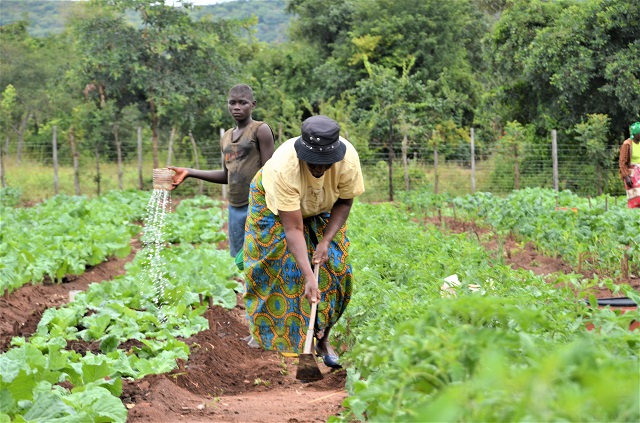
THE COST OF WHAT NEVER MAKES IT TO MARKET
Post-harvest losses are where the numbers are most stark, and most persistent. Research cited in national reporting puts losses in Uganda's largest grain-producing districts, Mubende and Masindi, at more than Shs16 billion a year from poor handling alone. Nationally, the Food and Agriculture Organization estimates that more than 17.6 percent of grains, including maize, millet and rice, are lost annually to inadequate post-harvest handling, translating into roughly 2.8 million metric tonnes of wasted food and forgone income every year. In Busoga, farmers have reported losing up to 40 percent of their grain harvest to poor farming, handling and storage practices. A World Bank assessment cited in Parliament's own legislative priorities document put the broader national post-harvest loss figure at between 22 and 30 percent across crops, a range that dwarfs almost any single productivity gain a new seed variety or fertiliser subsidy could realistically deliver.
That arithmetic explains why the previous Parliament's attempt at a Contract Farming Bill, intended partly to formalise buyer-farmer relationships and reduce the informal, high-loss transactions that dominate rural grain trade, went through a troubled path of introduction, review and eventual withdrawal in March 2026. Kyambadde's committee inherits that unfinished business, alongside a stack of other pending legislation flagged in Parliament's own priorities for this term: a National Post-Harvest Management Policy, a Warehouse Receipt Systems framework, an Agricultural Finance Policy, a National Agricultural Mechanisation Policy, and amendments to the Animal Diseases Act, the Dairy Industry Act and fisheries and aquaculture legislation. Committee members at Saturday's retreat agreed to prioritise legislation and budget advocacy on mechanisation, irrigation, extension services and agro-processing for the coming budget cycle, effectively picking up threads that have been left dangling across several parliamentary terms.
THE FUNDING GAP BEHIND THE RHETORIC
Underneath the institutional wish list sits a blunter problem: money. Agricultural programming in Uganda has long been criticised as chronically underfunded relative to its economic weight; despite contributing roughly a quarter of GDP and employing more than seven in ten Ugandans, the sector has in past budget cycles received a low single-digit share of the national budget, prompting years of appeals from farmer groups and researchers for Uganda to move toward the African Union's Malabo Declaration target of allocating at least 10 percent of national budgets to agriculture. Kyambadde specifically called for increased funding to the National Agricultural Research Organisation (NARO) and other research bodies, an appeal that comes against a backdrop of well-documented strain inside the research system itself, including reported budget arrears and stalled projects at NARO in the past financial year that have slowed the pipeline of new seed varieties and technologies farmers are counting on to cope with erratic rainfall.
Irrigation is the starkest illustration of the gap between ambition and delivery. Agriculture Minister Frank Tumwebaze has publicly acknowledged that irrigation uptake covers less than 2 percent of Uganda's farmland, even as the National Irrigation Policy sets a target of 1.5 million hectares under irrigation by 2040 and formal schemes have stagnated at roughly 23,000 hectares for years. An inter-ministerial working committee was set up earlier this month specifically to unblock water-for-production investment, but committee members at Saturday's retreat made clear they see irrigation, alongside mechanisation and climate-smart practices, as an area where legislative and budget pressure from Parliament, not just executive initiative, will be needed to move the needle.
WHY IT MATTERS BEYOND THE COMMITTEE ROOM
For farmers, the significance of an induction retreat lies less in the speeches than in what committees like this one actually do with their oversight powers over the coming five years: whether they can get the Contract Farming Bill re-tabled and passed, whether NARO's budget line grows enough to unstick delayed research, and whether the National Post-Harvest Management Policy moves from a name on a priorities list to an implemented programme with real storage and processing infrastructure behind it. Kyambadde framed the stakes for her colleagues in unambiguous terms, telling the committee to see itself as "the voice of the farmer" in Parliament: "Let us use this committee to ensure that agriculture moves from being a way of life to a real business that creates jobs and wealth for Ugandans."
Whether that framing survives contact with budget negotiations, competing sectoral demands and the slow grind of legislative process is the test facing the 12th Parliament's agriculture committee over the next five years. Uganda's farmers, who have watched post-harvest management policies and contract farming bills stall in previous terms even as GDP growth statistics improved, will be measuring the committee's success not by retreat communiqués but by whether a harvest actually reaches market, stored properly, sold at a fair price, and paid for on time.



