Written By | Staff Writer
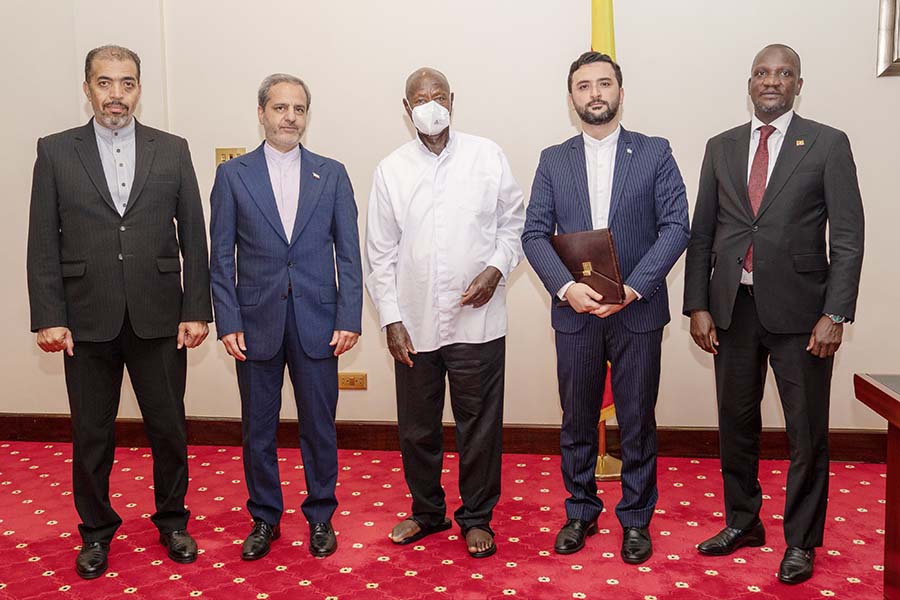
A farewell audience for Tehran's ambassador turns into a pitch for the value-addition model Uganda wants from every foreign investor.
Agriculture
President Yoweri Museveni has a message for the next wave of foreign investors eyeing Uganda's farmland: do not come to buy it, come to build factories. In a meeting at State House, Entebbe, on Monday 26 October 2026 with Iran's outgoing ambassador, Majid Saffar, the president steered a conversation about Iranian farming interests firmly toward agro-processing, naming cocoa, coffee and pineapples as the opportunities he wants foreign capital to chase, according to Nile Post's report published today.
The remarks are not new policy, but they land at a particular moment. Uganda's farmers are absorbing falling coffee prices, a weak shilling and a sharp interest-rate rise, while the country's export basket still leans overwhelmingly on raw commodities. What is new today is the specific pitch to a specific partner: Tehran's envoy, in his farewell audience, was told that the kind of investment Kampala wants is processing capacity that buys from Ugandan growers, not large commercial estates that compete with them for land.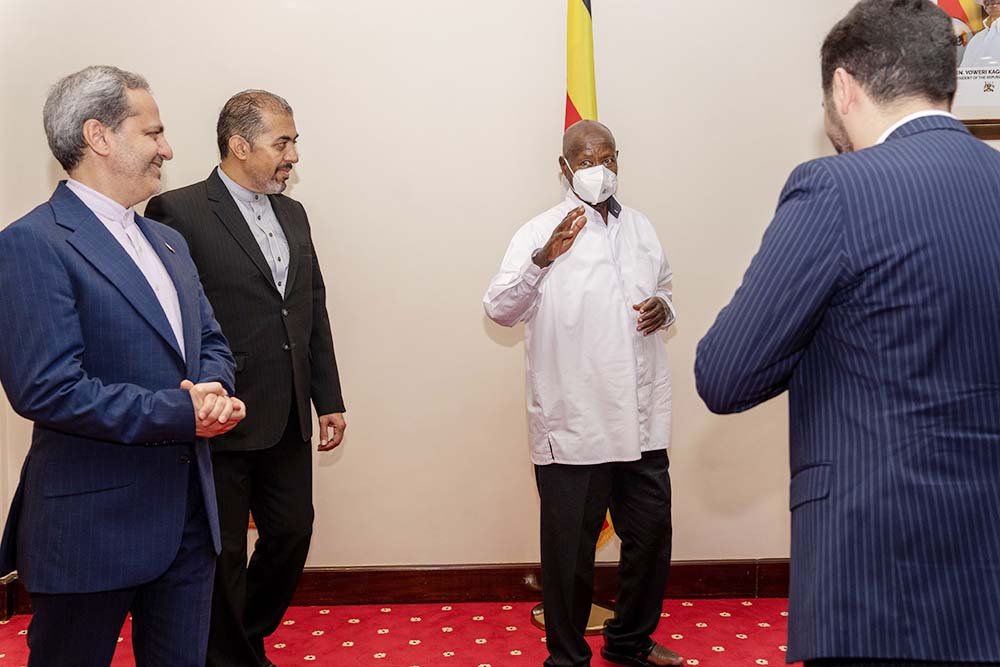
What was said at State House
According to Nile Post, the talks covered agriculture, healthcare and education, with agro-processing, seed and fertiliser supply, agricultural machinery and investment on the table. Museveni told Iranian investors to establish processing factories rather than acquire large tracts for commercial farming, arguing that Uganda should add value before it exports. His formula, as reported, was blunt: "Let the people here produce, and your companies process." Ugandan farmers would supply raw materials, and foreign firms would process them for domestic and export markets.
Ambassador Saffar, for his part, said Iranian investors wanted to set up agricultural farms in Uganda, and that Iran was ready to support cooperatives and agriculture unions in promoting trade and jobs. The two positions are not identical, and the gap between them is the real story. The president wants factories; the envoy talked about farms. The meeting marked the end of Saffar's tenure, so the follow-through will fall to his successor and to Ugandan agencies that have not yet announced any concrete Iranian project, financing figure or site.
Museveni also used the audience to comment on Middle East politics, urging an end to what he called identity-based politics and saying both Iran and Israel should recognise each other, and that Israel should recognise Palestinian statehood. The agricultural thread, however, is the one with direct consequences for Ugandan farm gates.
The arithmetic behind the pitch
The president's emphasis on processing rests on numbers that officials and analysts have repeated for years. A May 2026 analysis in Publicist East Africa put Uganda's coffee exports at a record 8.8 million 60-kilogram bags worth about US$2.5 billion in the 12 months to February 2026, but noted that less than 6 percent of that coffee is processed in Uganda before it leaves, mostly as green beans. The same piece estimated that green coffee leaving Kampala at roughly US$2 to US$4 a kilogram can retail for US$40 to US$80 a kilogram once roasted and branded abroad, leaving the farmer with around one-twentieth of the supermarket price.
Bank of Uganda data reported by the Daily Monitor on 28 September showed gold and coffee together accounting for roughly 70 percent of merchandise exports in the 2025/26 financial year, with coffee earning about US$2.19 billion. That concentration is why value addition has become the organising idea of the government's agro-industrialisation programme, which was allocated Shs2.26 trillion in the 2026/27 budget.
Cocoa illustrates both the promise and the fragility. In his sector performance statement to Parliament on 21 October, Agriculture Minister Frank Tumwebaze said cocoa export earnings had risen from US$93 million to US$620 million, as reported by Nile Post. Yet world cocoa prices have since fallen sharply, from about US$12,906 a tonne in December 2024 to roughly US$5,645 in mid-October 2026, according to market data cited in earlier coverage, and the Monitor reported on 20 September that international prices had dropped by as much as 7.1 percent in a single day on a 30 percent production surge in Ivory Coast. A processing industry would cushion Uganda from some of that volatility by capturing margin that currently accrues overseas.
Models that already exist
Foreign-financed processing is not hypothetical in Uganda. In May 2026 the Daily Monitor reported the first export of canned pineapples to China, a 104-tonne shipment from Deshiburg Fruits International in Luweero District, inside the Uganda-China Agriculture Cooperation Industrial Park. The plant, an investment of about US$11 million, has a processing capacity of 500 tonnes a day and draws on pineapple growers in Luweero, Kayunga and Nakasongola. Its founder, Yin Owen, said the factory was operating at full capacity.
In coffee, the proposed Nonda Coffee Park in Butalangu, Nakaseke District, is a larger bet. FoodBusiness Middle East reported on 30 July that the roughly US$200 million project, backed by Saudi investors with an expected Government of Uganda contribution of US$44 million, is designed to process 42,000 tonnes of coffee a year for a Saudi off-take market, with groundbreaking scheduled for October 2026. The company's chief executive, Tonny Miiro Kibuuka, said the project is already mapped to the Saudi market. These two cases show the template Museveni appears to want Iran to follow: capital from a Middle Eastern or Asian partner, a guaranteed buyer, and Ugandan growers as suppliers.
What the Iran angle complicates
The Iranian case carries complications the Saudi and Chinese projects do not. Iran is subject to international sanctions regimes that constrain banking, shipping and technology transfers, and any large Iranian investment would have to navigate payment channels and equipment imports under those constraints. That is general background rather than something reported in the Nile Post account, and no Ugandan official has said how such obstacles would be handled. Investors from any sanctioned economy also face scrutiny from Uganda's other partners, including the European buyers that take about two-thirds of Ugandan coffee, according to the Publicist analysis.
There is also the matter of the Gulf. Uganda's own farm sector has been exposed to the Iran-related disruption of Strait of Hormuz shipping, which the Independent reported on 15 October as a cost pressure on fertiliser. An EPRC analyst, Mudoko, put Uganda's fertiliser imports at about US$54.75 million, with roughly 40 percent sourced from the Gulf. Seed and fertiliser supply were also on the agenda of the State House talks, so a Ugandan farmer might one day depend on Iran as both a customer and an input supplier, a concentration of risk that policymakers would need to weigh.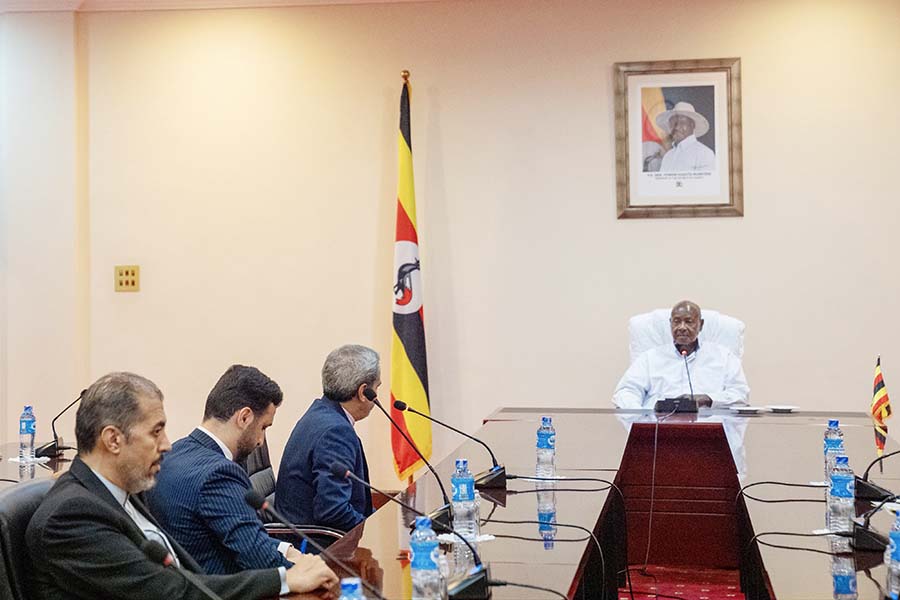
What it means for farmers
For smallholders, the president's insistence on processing over land purchases is reassuring in principle. Large land acquisitions by commercial investors are a sensitive issue in a country where smallholders dominate, and a processing-led model keeps ownership with growers while creating a local buyer. But a factory is only as good as its supply contract. Farmers in Uganda's tea and cooperative sectors have recently learned how fragile processor relationships can be: the Igara Growers Tea Factory in Bushenyi faced a mortgagee auction notice this month over liabilities exceeding Shs25 billion, including arrears to outgrowers.
Prices matter too. Robusta FAQ fell about 14.5 percent to Shs11,500 to Shs12,000 a kilogram in the first half of September, according to the agriculture ministry. A processor with a long-term offtake contract could in theory offer growers more stable prices, but only if the contract terms, grading rules and payment timelines are transparent. Cooperatives are the natural counterparty, and Ambassador Saffar's mention of supporting cooperatives and agricultural unions is the most concrete hook for Ugandan officials to test.
What to watch
Three things will show whether this audience produces anything beyond rhetoric. The first is whether the Ministry of Trade or the Uganda Investment Authority publishes a pipeline of Iranian-linked projects with sites and financing. The second is whether the Nonda coffee park actually breaks ground this month as planned, which would validate the model on which the president is leaning. The third is whether the government pairs its exhortations with the unglamorous enablers processors need: reliable power, affordable credit when the central bank's policy rate stands at 12 percent after the emergency hike of 14 October, and enforceable supply contracts.
Museveni's formula is simple and politically attractive: farmers produce, foreigners process, everyone earns. The test is whether Uganda can make it true at the farm gate, and whether the factories that arrive will pay for the crop rather than merely collect the margin.



