Written By | Staff Writer
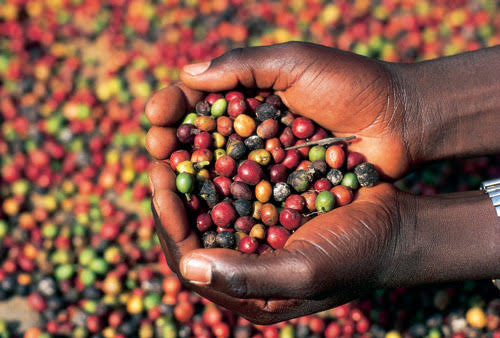
A government statement issued on 20 September puts hard numbers on a squeeze growers have felt since the season opened
Feature and Analysis
For most of two years, Uganda's coffee farmers lived through something close to a windfall. A global supply crunch pushed robusta to historic highs, and the country posted record export earnings in the 2024/25 financial year. Coffee became the crop people planted on land they had previously kept under bananas, cassava or nothing at all.
That window is now closing. In a statement dated 20 September 2026, Agriculture Minister Frank Tumwebaze confirmed what buyers in Nakaseke and Kyotera have been telling growers for weeks: the price of commercial-grade robusta has fallen sharply over the past twelve months, and the cause lies almost entirely outside Uganda's borders.
The numbers
According to the ministry's indicative farm-gate prices, robusta FAQ traded at Shs11,500 to Shs12,000 per kilogramme in the first half of September 2026, down from Shs13,500 to Shs14,000 in the same period of 2025 — a decline of about 14.5 percent. Kiboko, the unhulled dried cherry that most smallholders actually sell, fell further in proportional terms, from Shs6,000–7,000 to Shs5,000–6,000.
The volume picture is worse than the price picture. Uganda exported 846,376 sixty-kilogramme bags in July 2026, against 997,105 bags in July 2025 — a fall of roughly 15 percent. Because prices dropped at the same time, earnings fell faster: from US$250.7 million to US$204.1 million, an 18.6 percent decline. Of July's shipments, 775,148 bags were robusta and 71,228 arabica, a split that shows how completely the country's export receipts ride on one variety.
On international markets, the ministry cited arabica at about US$3.03 per pound by 3 September and robusta at roughly US$3,426 per tonne. Cocoa, Uganda's fast-growing second agricultural export, is moving the same way: MAAIF pointed to a reported 30 percent increase in Ivory Coast's harvest, a 5.9 percent single-session fall in London cocoa and a 7.1 percent drop in December New York cocoa.
Two shocks arriving at once
What makes this moment difficult is not the price fall on its own. Commodity prices cycle; farmers know that. The problem is that the price shock has landed on top of a production shock.
Tumwebaze acknowledged that prolonged drought and unusually high temperatures in Greater Masaka, Kyotera, Sembabule, Luwero and other coffee zones have disrupted flowering, cherry development, bean filling and processing. The ministry estimates that out-turn in the affected areas is running about 10 percent below normal. Nile Post reported from Nyakyera on the same day that coffee farmers there were counting losses from blackened, shrivelled cherries that never filled.
A farmer facing a 14.5 percent price cut is poorer. A farmer facing a 14.5 percent price cut and a 10 percent out-turn loss on the same trees has seen gross income from the crop fall by roughly a quarter — and the input costs of that season, from labour to the fertiliser many bought on credit, were committed months before either shock was visible.
A study published in late August by Aaron Davis of the Royal Botanic Gardens, Kew, argued that robusta's reputation for climate resilience is a misreading of the evidence: the species tolerates heat well but is markedly intolerant of drought. Uganda's robusta is overwhelmingly rain-fed, on a national irrigation base still under two percent of cultivated land.
The break-even argument, and its limits
The ministry's most contested claim is that falling prices do not mean farmers are losing money. A grower receiving Shs12,500 per kilogramme instead of Shs13,750, Tumwebaze argued, has taken an income cut but is not necessarily producing at a loss. Ministry production models, he said, put break-even for FAQ at around Shs7,000 per kilogramme — well below current prices — particularly where productivity and basic value addition are improved.
The qualifier is doing considerable work. Break-even is a cost-per-kilogramme calculation, and the denominator is yield. A farm that loses a tenth of its out-turn to drought spreads the same pruning, weeding, spraying and harvesting labour over fewer kilogrammes, which pushes unit cost up precisely when the price is coming down. Farmers who borrowed against the 2024–25 price peak — and there were many, including Parish Development Model borrowers who put loans into new coffee — are servicing debt sized to a market that no longer exists.
Tumwebaze conceded the point in part, noting that growers badly affected by drought may face considerable financial losses. The honest reading of the ministry's own figures is that the sector average is comfortably above break-even while a meaningful minority of farms, concentrated in the worst-hit districts, are not.
Why Arabica went the other way
The divergence between the two varieties is the most useful signal in the data. While robusta fell 14.5 percent, arabica parchment rose about 8.5 percent, from Shs14,000–15,000 to Shs15,500–16,000 per kilogramme, with drugar at Shs14,000–14,500.
That gap has a geography. Arabica grows on Mount Elgon, in parts of the Rwenzori highlands and in West Nile; the robusta belt runs through the Lake Victoria crescent and the central and western districts. This season the highlands are being paid more and the crescent less — a reversal of the pattern that drew thousands of new entrants into robusta.
There is a second, quieter signal. Tumwebaze said traders are becoming more selective, widening the premium for coffee that meets quality requirements. "Farmers bringing well-dried, properly fermented and good-quality coffee may be offered a substantially better price than one bringing immature, poorly dried or mixed coffee," he said. In a tight market, buyers take what they can get; in a glut, they can afford to discriminate. The kiboko-to-FAQ spread — the difference between selling wet-ish cherry at the roadside and selling properly dried, hulled coffee — is where a farmer's own decisions still move the number.
Hence the ministry's blunt advice: "Do not panic. Do not harvest immature coffee. Do not compromise quality." The warning matters because panic-stripping of immature cherries is exactly what cash-squeezed households do, and it is self-defeating: it depresses the price received, damages next season's trees and, at scale, damages Uganda's reputation with the buyers whose premiums the strategy depends on.
What the glut is made of
The supply that is pushing prices down is not a weather accident. It is the predictable second act of the 2024–25 price spike. High prices told farmers in Brazil and Vietnam to plant, fertilise and harvest more, and they did. Brazil's completed harvest has now reached the international market, Vietnamese exports have risen, and traders are pricing in higher global production for the 2026/27 season.
This is the structural vulnerability in Uganda's coffee strategy. The country is a price-taker selling an almost entirely unprocessed product — roughly 95 percent of its coffee leaves as green bean — into a market whose direction is set by two producers on other continents. Every additional bag towards the national target of 20 million by 2030 is a bag whose value is decided elsewhere.
The policy gap
MAAIF says it is responding through subsidised fertiliser distribution under a presidential directive, expanded irrigation work with the Ministry of Water and Environment, and climate-smart agriculture interventions. All three are the right instruments. All three are also arriving slowly relative to the shock.
The 173,913 bags of fertiliser flagged off at Entebbe on 31 August were allocated to tea first, with coffee and cocoa in subsequent tranches. Irrigation coverage remains below two percent nationally, and the micro-scale irrigation matching grant is capped at 2.5 acres — helpful for a market gardener, marginal for a coffee farm. Meanwhile the drought that cut this year's out-turn happened in the first half of 2026, before any of these programmes could have made a difference to the trees now bearing.
The six-month question
Tumwebaze expects a slight recovery and some stability over the coming six months, with Brazil's harvest and Vietnam's robusta exports remaining the key drivers. Continued supply growth would keep prices under pressure; a weather shock in either country could tighten the market quickly.
For Uganda, the more consequential question is what the sector looks like if the price does not recover fully. Coffee is the country's leading agricultural foreign-exchange earner, and a sustained 15 to 20 percent cut in earnings tightens the current account, pressures the shilling and drains rural cash circulation — with knock-on effects for school fees, SACCO repayments and the PDM loan book.
The farmers best placed to ride this out are those who can raise yield per tree and capture the quality premium: fewer, better-managed trees, proper drying, and sale as FAQ rather than kiboko. That is not an answer to a global glut. It is, for now, the only part of the equation a Ugandan farmer controls.



