Written By | Staff Writer
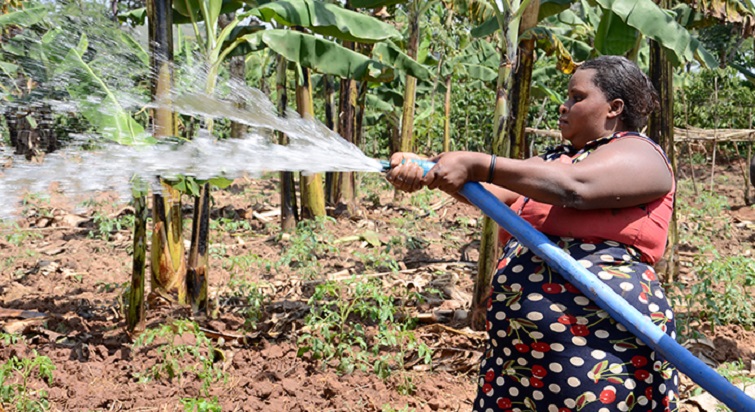
In a northern district facing hunger, a government-backed irrigation programme is paying farmers millions of shillings - and exposing how slowly it scales.
Agriculture Feature
In Tee-Ogwang village, in Agago District's Parabongo Sub-county, farmer Titus Okello says three-quarters of an acre of tomatoes earned him Shs4.5 million. He started in the second season of 2025, and even lost part of that crop to heavy rain. Now, with another crop standing, he expects more than Shs10 million and plans to plant more. In an economy where most smallholders measure a good season in a few hundred thousand shillings, the figures stand out. They also come from a district in northern Uganda that, by the district's own health records, is battling hunger.
The story, reported by the Uganda Radio Network and carried by The Independent on 21 October 2026, is small in scale: 14 farmers in one district. But it is a rare ground-level test of a national promise. Uganda's policy goal is to expand irrigated land to 1.5 million hectares by 2040. Between that target and Okello's tomato plot sits the Micro-scale Irrigation Programme, and Agago offers an unusually clear view of what makes it work and where it strains.
What the programme is
The Micro-scale Irrigation Programme is run by the Department of Agricultural Infrastructure, Mechanization and Water for Agricultural Production at the Ministry of Agriculture, Animal Industry and Fisheries. Rather than building large schemes, it helps individual farmers buy and install small systems such as sprinklers and drip lines. Government covers between 25 and 75 percent of the equipment cost, depending on distance to water, terrain, soil type and acreage, and its contribution is capped at Shs7.2 million per acre. The farmer pays the remainder, in what officials call co-funding.
That design matters. Large public schemes tend to take years and, as earlier reporting on Uganda's Shs500 billion solar irrigation loan showed, can stall at the construction stage. Micro-scale support puts water on a field within a season and ties the farmer's own money to the outcome. It is closer to an input subsidy than to a utility.
The Agago results
According to the report, 14 smallholders in Agago have received government-supported systems. They grow tomatoes, onions, cabbages and eggplants, crops that are vulnerable to dry spells and that sell for relatively high prices. David Ochieng, the district irrigation focal person, said all 14 are actively using their systems.
The income numbers are the headline. A second farmer, Lanyero of Pampara Village in Agago Town Council, joined the project in the 2023/2024 period. She earned Shs6.9 million from tomatoes in her first three months and a further Shs3 million from onions and eggplants. She used the proceeds to buy a maize-milling machine and now employs two men. That sequence, from irrigated vegetables to a small processing business to wage jobs, is the multiplier that rural-development planners hope for but seldom document.
These are individual testimonies reported by a news agency, not an audited evaluation, and they should be read that way. Selection also matters: farmers who can afford a co-funding share, and who live near water, are not a random sample of Agago. Even so, the pattern is consistent with what irrigation does in a place that has had prolonged drought: it lets a farmer plant when the rains fail, and sell when others cannot.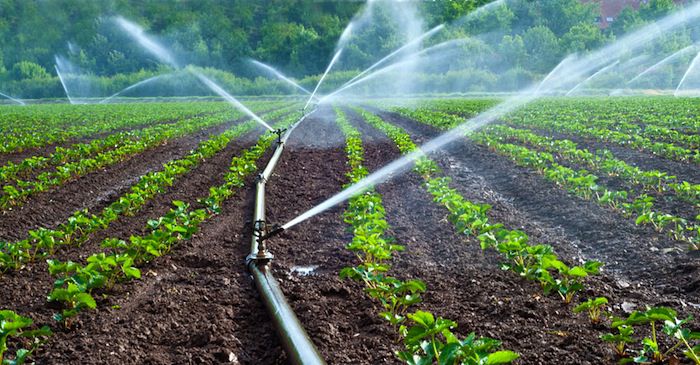
A district still hungry
The same report notes that health facilities in Agago recorded 351 cases of severe malnutrition, according to district officials. The juxtaposition is uncomfortable but instructive. Fourteen irrigated farms cannot change a district's nutrition outcomes. They do, however, show the mechanism by which cash income from irrigated vegetables could eventually buy food and diversify diets.
The national picture is serious. Uganda's latest food-insecurity analysis, launched in late October, projected that 4.4 million people, or 21 percent of those analysed, could face crisis or worse between February and June 2027, with the Karamoja region worst affected. Agago, in the Acholi sub-region, is not Karamoja, but northern farmers have repeatedly lost crops to long dry spells. Independent reporting earlier this year had farmers in Acholi advised to delay second-season planting after a failed harvest. In that context, any technology that decouples production from rainfall deserves a hard look.
Where it strains
Officials were frank about the obstacles. Contractors have sometimes delivered too few sprinklers. Drip systems are expensive. Farmers struggle to raise their co-funding shares, which is the central design tension: the farmers best placed to match government money are probably those who need it least.
Agago's terrain adds a technical problem. "Here our terrain is flat," Ochieng said, and flat land gives little natural pressure. The district responds by raising water-tank stands to three metres, a modest engineering fix that adds cost and requires supervision. Anyone planning irrigation for northern Uganda's plains should expect to pay for height.
Money is the other constraint. Agago received Shs618 million under the programme in the 2023/24 financial year, but Shs464.3 million of that, or about 75 percent, went on operations, administration, extension and other costs rather than directly on equipment, according to the report. If correct, only about Shs154 million reached farmer-facing systems, which helps explain why just 14 farmers have been served. The district is processing 27 more beneficiaries this year. At that pace, reaching a meaningful share of Agago's farming households would take decades. Whether the overhead share reflects necessary extension and training or avoidable cost is a question the Ministry and Parliament should ask.
Why it matters beyond Agago
Three threads connect this small story to national debates. First, irrigation policy is being pulled in two directions. In October, Agriculture Minister Frank Tumwebaze said President Museveni had directed a plan for mass irrigation infrastructure covering food crops, coffee, cocoa, fodder and fish farming, and the ministry began engaging districts on the National Irrigation Development Project, asking them for verified data. Parliament approved, on 10 June, a loan of about EUR 168.98 million for the second phase of the solar-powered irrigation project covering 427 sites. Big-ticket schemes and household-scale systems need not compete, but budgets are finite. Agago suggests that small systems deliver visible income quickly, while the large schemes' benefits depend on delivery that has been uneven.
Second, the economics of vegetables. Reporting from Bugiri earlier this month described farmers with failed tomato and eggplant crops and Kampala markets supplied from Kenya and Tanzania. A country that imports tomatoes while its farmers cannot water them has a policy gap, not a market gap. Irrigated vegetable production in places like Agago is one answer.
Third, finance. With the central bank's emergency rate rise in October pushing commercial lending rates higher and the shilling at record lows, a farmer's ability to borrow for a co-funding share has worsened. Imported pipes, fittings and pumps are also dearer in shilling terms. A programme that asks farmers to find 25 to 75 percent of costs becomes harder to reach in this environment unless the government adjusts the cost-sharing ratio for the poorest.
What to watch
The next indicators are practical ones. Does Agago's list of 27 additional beneficiaries translate into installed systems by the first season of 2027? Do contractors fix sprinkler shortfalls? Does the Ministry publish a breakdown of how much of the programme's budget goes to equipment versus overhead? And can districts link irrigators to buyers, so that a glut of tomatoes in one harvest month does not crash prices? Okello's plan to plant more is encouraging, but if dozens of neighbours do the same at the same time, the Shs10 million expectation depends on markets as much as water.
For now, Agago is a modest proof of concept. Fourteen farmers, a handful of crops and some good incomes will not feed a district. They do show that when water reaches the field, smallholders in northern Uganda respond, and that the binding limits are less about farmer willingness than about money, supply chains and how efficiently public funds are spent.



