RUBANDA
On the steep, terraced slopes of Kigezi, where roughly 80 percent of the land is hilly and every acre is already stretched across food crops, cash crops and a growing population, Uganda's National Agricultural Research Organisation (NARO) is betting that better seed can do what more land cannot: lift household incomes without pushing farmers further up increasingly fragile hillsides.
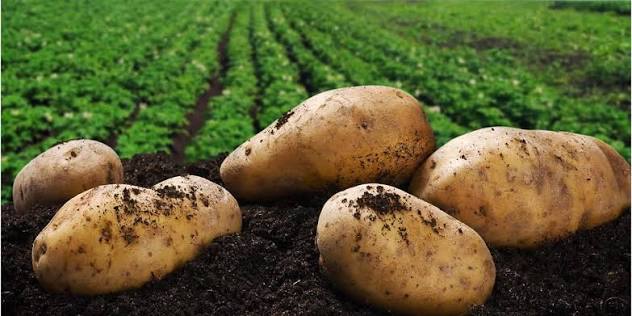
NARO has begun harvesting seed for four newly released Irish potato varieties — NAROPOT 7, NAROPOT 8, NAROPOT 9 and NAROPOT 10 — at its Kachwekano Zonal Agricultural Research and Development Institute (KAZARDI) in Rubanda District. The varieties were officially launched by Agriculture Minister Frank Tumwebaze during last year's World Food Day celebrations, but the multiplication drive now under way marks the point at which the breeding programme moves from laboratory promise toward the seed volumes farmers, seed companies and processors actually need.
“We cannot afford to use the little land we have for commodities which are not very productive,” said Dr Jerome Kubiriba, Director of Research at KAZARDI. “These new potato varieties promise more yield and will enable farmers to utilise their land more optimally.”

A crop bred for a shrinking, eroding landscape
Kigezi — spanning districts including Kabale, Kisoro, Rubanda and Rukungiri — is one of Uganda's principal potato-growing zones, prized for its cool highland climate. But that same topography is a liability. Steep slopes are highly vulnerable to soil erosion, and Kubiriba said similar pressures are now evident in other highland farming areas the new varieties are intended to serve, including Mount Elgon, the Rwenzori region and Zombo.
The consequences extend beyond individual farms. Soil washed off Kigezi's hillsides is contributing to siltation in water bodies such as Lake Bunyonyi and to the formation of new wetlands, Kubiriba said — an environmental cost layered on top of the productivity losses farmers experience directly.
“It is a double tragedy for the farmers and the lake,” he said. “We need technologies to save the hills so that farmers can practise productive agriculture while also saving the lakes.”
NARO's response pairs the new potato varieties with soil-conservation technologies such as calliandra and Napier grass, which stabilise hillsides while doubling as livestock feed — an attempt to address yield, income and environmental degradation as a single interlinked problem rather than three separate ones.
What the four varieties offer
Each of the four NAROPOT varieties targets a slightly different niche in Uganda's potato value chain, reflecting a breeding process that NARO says was shaped deliberately by both farmer and processor feedback.
NAROPOT 7 matures fastest, in roughly 90 to 100 days, with a yield potential of 30.2 tonnes per hectare. Its early maturity and disease resistance could, under favourable conditions, allow farmers to squeeze two crops from the same plot in a single year — effectively doubling potential output from a fixed piece of land, a critical advantage in a region where farm sizes are shrinking with every generation of subdivided inheritance.
NAROPOT 8 carries a dry matter content of 22.1 percent, a characteristic that makes it well suited to processing into crisps and chips. NAROPOT 9 delivers the highest yield potential of the four, at 31.4 tonnes per hectare. NAROPOT 10, maturing in 100 to 120 days, has the highest dry matter content at 28.1 percent, making it particularly attractive for industrial processing, and also carries strong disease resistance.
That resistance matters economically as much as agronomically. NARO potato breeder Dr Prossy Namugga said late blight — a fungal disease that has plagued Ugandan potato farmers for decades — often forces growers into heavy, recurring spending on chemical sprays just to protect a harvest. Varieties bred for resistance could cut that cost significantly, freeing up scarce household cash for other inputs or expenses.
Namugga said the breeding programme deliberately sought input from processors, including Psalms Food Industries and Café Javas, before finalising the varieties released to farmers. “Because we were looking for varieties for industrial use, we took our samples to processors. We considered their recommendations for improvements,” she said — an approach intended to ensure farmers are not just producing more potatoes, but producing potatoes the market actually wants at a premium.
Early results from the field
The varieties are not purely theoretical. Fidel Kamali, chairperson of the Kisoro District Potato Growers Cooperative Union, said he planted five kilogrammes of NAROPOT 9 seed and was struck by its performance under ordinary farmer conditions.
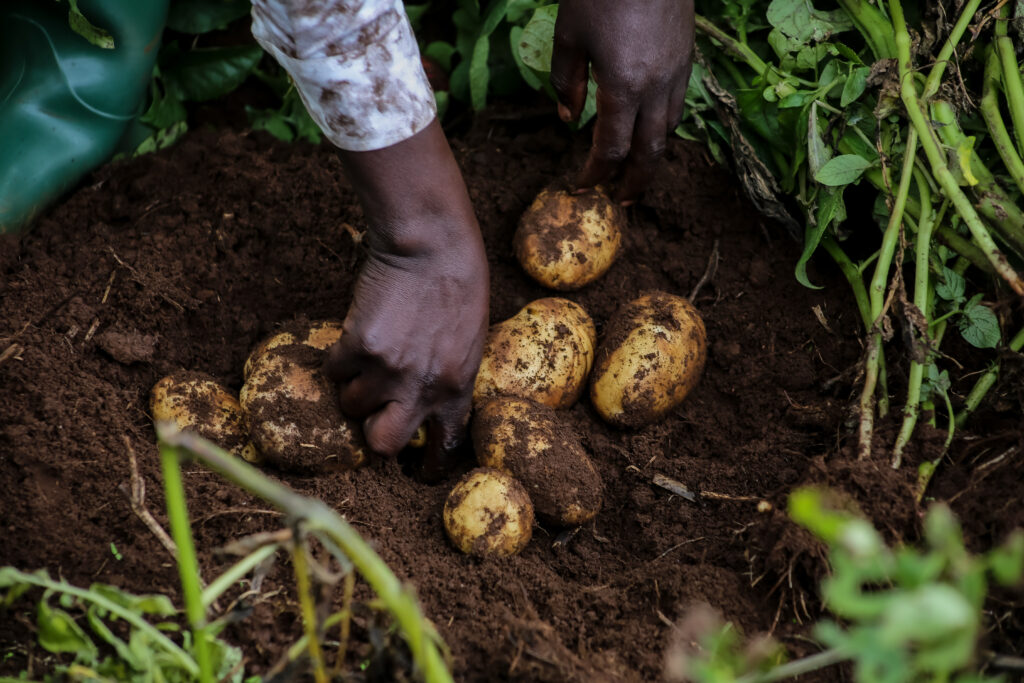
“Along the way, I found that it is drought-resistant and tolerant to potato blight, so there was no need to spray. On average, I harvested nine to 13 tubers per plant. Its performance is better than the other varieties,” Kamali said. His cooperative already has a supply contract with Psalms Food Industries to grow the variety commercially, and he is appealing to government for greater support scaling up seed multiplication so more farmers can access the planting material.
Stephen Tindimuboona, chairperson of the Uganda National Seed Potato Producers Association and a veteran of Uganda's seed system since 1995, said the new varieties answer a demand seed producers have voiced for years: a potato that combines processing quality, drought tolerance and short dormancy, allowing two plantings annually.
“We pioneered farmer-based seed production, and along the way we have been searching for varieties good for processing, tolerant to drought and with short dormancy... These new varieties ticked off these requirements, and farmers are eager to get the seed,” he said.
Private seed companies are positioning to support distribution. Ninsiima Nivious of Abid Farm Seeds Company said seed shortages and disease susceptibility have long constrained potato farmers, and that her company intends to actively popularise the new varieties among its supplier network.
The bottleneck now: getting seed to farmers at scale
The consistent theme across NARO researchers, cooperative leaders and private seed producers is that the science is, for now, ahead of the supply chain. Multiplying enough certified, disease-free seed to satisfy national demand — from smallholders, larger seed producers and processors alike — is a multi-year undertaking, and Uganda's potato seed system has historically struggled to keep pace with farmer demand for clean planting material.
NARO is moving to close that gap by expanding seed multiplication infrastructure at KAZARDI itself, which has been selected to host a potato hub capable of producing up to one million plantlets annually. Kubiriba said the facility's designs have been completed and construction is expected to begin this quarter. Once operational, plantlets will be distributed through other Zonal Agricultural Research and Development Institutes serving the Mount Elgon, Rwenzori and Zombo regions — extending the varieties' reach well beyond Kigezi.
Even with that infrastructure in place, Kubiriba said the technology alone will not be enough. “The missing link is strong linkage between research and extension,” he said. “We also need support to mass multiply this seed at NARO and with private-sector players.”
Why it matters beyond Kigezi
Uganda's potato-processing industry — crisps, chips and other value-added products aimed at a growing urban middle class — has been expanding demand for exactly the kind of high-dry-matter, disease-resistant varieties NARO has now released. If seed multiplication scales as planned, the NAROPOT varieties could simultaneously raise smallholder incomes in some of Uganda's most land-constrained farming communities, reduce pesticide costs and associated health and environmental risks, supply a domestic processing sector currently competing for limited quality raw material, and ease pressure on fragile highland ecosystems whose degradation threatens water bodies far beyond the farms themselves.
Whether that promise is realised now depends less on the varieties themselves — which have already demonstrated strong results in farmer trials — than on Uganda's ability to build the seed multiplication and extension systems needed to get NAROPOT 7 through 10 into the hands of farmers who, as Kamali put it, are “eager to get the seed.”
Published By | Features Editor