Written By | Staff Writer
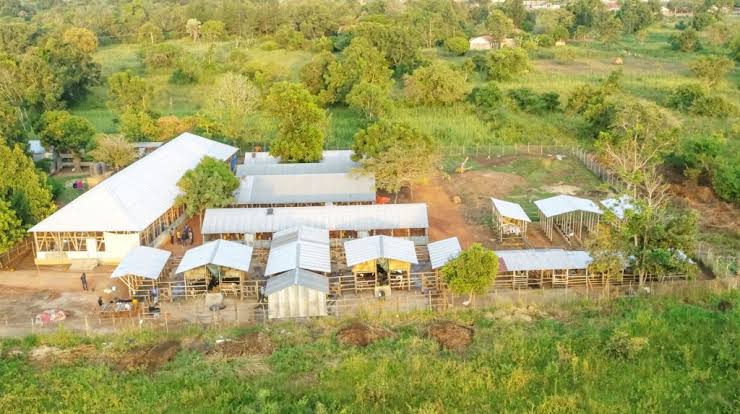
The Four-Acre Model is one of President Museveni's oldest agricultural arguments
Feature / Analysis
Prime Minister Robinah Nabbanja was in Kakumiro on Monday, training Local Council I and II chairpersons from Kibijjo, Kyabasaija, Kakumiro Town Council and Bwanswa Sub-county on wealth creation, when she disclosed an instruction that could redraw the map of what Ugandan farmers plant.
“The President has directed me to draft a law that will bar people with small land holdings of less than four acres from growing sugarcane, tobacco, cotton and maize,” she told the local leaders, according to a report published by Nile Post on 21 September.
Her prescription for those excluded was equally specific. “Those with small land should focus on coffee, poultry, piggery, dairy cows and fruit farming which bring in a lot of money on small land,” she said. She also warned the leaders against selling land: “Land is your wealth, protect it.”
No draft text exists publicly. No Cabinet paper has been tabled, no bill has been gazetted, and the Prime Minister was speaking at a district training session rather than announcing government policy from the floor of Parliament. But the statement is significant for what it reveals about how far the long-running Four-Acre Model has travelled - from presidential advice, to extension messaging, to a proposed statutory prohibition.
From advice to instruction
The Four-Acre Model is one of President Museveni's oldest agricultural arguments. Its standard formulation allocates one acre to coffee, one to fruit, one to pasture for dairy, and one to food crops, supplemented by backyard poultry, piggery and, where water allows, fish farming. The logic is intensity: on a small plot, returns per acre matter more than volume, and a household with two acres planting maize will never produce enough of it to escape poverty.
The model has always been framed as guidance. What Nabbanja described on Monday is different in kind. A prohibition backed by law would move the state from persuading farmers to prohibiting them - and it would do so using an acreage threshold that captures, on the best available national data, the overwhelming majority of Ugandan farming households.
Uganda Bureau of Statistics data put the average agricultural household landholding at roughly 1.2 hectares nationally - under three acres - with sub-regional averages falling to about 0.5 hectares in Karamoja, Bukedi and Teso and rising to 4.3 hectares in Acholi. Household surveys have consistently found that around 80 percent of Ugandans hold less than two hectares, and roughly 70 percent of surveyed farming households hold less than one. A four-acre floor is therefore not a rule for a minority of marginal growers. It is a rule that would, on its face, exclude most of the country.
Government has been careful to say the four crops are not being abandoned. The NRM's 2026-2031 manifesto describes maize, sugarcane, cotton and tobacco as commodities Uganda still needs, but argues they should be produced extensively, on larger holdings, while smallholders move up the value ladder into higher-margin enterprises. The proposed law, on this reading, is not anti-maize. It is pro-consolidation.
Who the rule would touch
Sugarcane is the clearest case. Roughly 29,000 farming households grow cane nationally, with Busoga alone accounting for an estimated 20,000 outgrowers feeding about six millers. Kakira Sugar Limited works with around 10,000 outgrowers on some 25,000 hectares; Hoima Sugar has registered about 3,500. A great many of these are precisely the sub-four-acre growers the proposal targets - and their cane is the raw-material base on which a licensing scramble is currently under way, with the Ministry of Trade, Industry and Cooperatives issuing fresh factory licences in Kayunga and elsewhere while the Uganda Sugar Board mandated by court order remains unconstituted.
Tobacco is the second. More than 75,000 smallholders in West Nile are estimated to depend on tobacco leaf, with British American Tobacco Uganda alone contracting over 18,000 of them. Tobacco has been a declining earner - annual export revenue fell from about US$120 million in 2013 to roughly US$50 million by 2020, recovering to around US$70 million - and it is also the crop most frequently blamed for food insecurity in Arua and its neighbours, where curing wood and labour demands crowd out food production. A restriction here would find some sympathy among public-health and food-security advocates. It would also strip income from households with no obvious substitute.
Cotton in Bukedi and Teso, and maize almost everywhere, are harder cases. Cotton's revival has been built on exactly the small-acreage grower groups that have spent the past two seasons learning to bypass village middlemen and sell directly to ginneries. Maize is more awkward still.
The timing problem
The proposal arrives in the middle of a maize price event. Kenya's 25-million-bag deficit has pulled Kenyan buyers into Bugiri, Iganga, Mbale, Kapchorwa, Mubende, Mityana and Nakaseke, lifting farm-gate prices in Mbale and Busia from around Shs900 to roughly Shs1,400 a kilogram and pushing the 100-kilogram bag in Kampala's Kisenyi from Shs105,000-125,000 to Shs135,000-150,000. For a Bugisu household with two acres, maize is currently the single most cash-generative thing it can plant.
The crops offered as alternatives are, this season, going the other way. The Ministry of Agriculture's own statement of 20 September recorded robusta FAQ farm-gate prices at Shs11,500-12,000 a kilogram in the first half of September, down 14.5 percent year on year, with July export earnings off 18.6 percent. Coffee also carries a three-to-five-year establishment period before first meaningful yield - a lag no household living on a two-acre plot can finance without credit, and agricultural lending is priced at 19.6 percent. Dairy in the western districts has been squeezed by drought and by foot-and-mouth quarantines that have closed markets in Ntungamo, Kazo, Kamwenge and, since 15 September, Nakasongola. Poultry feed costs are rising precisely because maize and soya are in short supply - the Poultry Association of Uganda told the inaugural Uganda Poultry Show this month that feed manufacturers are importing raw material.
In other words, the policy asks smallholders to exit the crop whose price is rising and enter enterprises whose economics are currently under strain.
Can it be enforced?
Uganda's recent record on agricultural prohibition is instructive. The Sugar Act's 25-kilometre zoning requirement and the statutory Uganda Sugar Board were the subject of a High Court ruling in January 2025 that nullified ministerial licences issued since 2010 and ordered the Board constituted within three months; twenty months later the Board does not exist and licences continue to be issued. The Contract Farming Bill, which would have governed exactly the grower-miller relationships at issue here, was withdrawn in March 2026. The ban on nine agricultural chemicals, announced with import permits halted from 21 May 2026, is still working through a transition in which enforcement sweeps - like the one that sealed roughly 30 percent of inspected agro-input shops in Luweero last week - are the visible instrument.
Enforcing a crop prohibition would require something Uganda's agricultural administration does not currently have: a reliable, parish-level register of who holds how much land, checked against what they planted. The national extension ratio is roughly one worker to 1,800 farmers against a recommended 1:500. The Parish Development Model's own information system has struggled to verify beneficiary lists accurately enough to recover loans. A rule keyed to acreage is only as good as the cadastre behind it, and on mailo and customary land - where kibanja holders farm without title and boundaries are social rather than surveyed - that cadastre is largely absent.
The legal question nobody has asked yet
There is also a constitutional dimension that the eventual draft will have to address. Article 26 protects property rights, and the Land Act's protections for bona fide occupants have repeatedly been read to include the crops standing on the land - which is why destruction of a coffee or banana garden is prosecuted as a criminal offence, as eight people arrested in Butuntumula, Luweero, discovered earlier this month. A statute that tells a lawful occupant which crops he may not plant on his own holding raises a different question from one that regulates how a crop is sold, graded or exported.
Comparisons to the colonial crop-zoning ordinances of 1910-1942 will be made, and they are not entirely fair - those regimes compelled production of export crops rather than forbidding them. But the structural echo is real, and Bukedi's experience is the cautionary tale: a sub-region locked into rice monoculture on 80 percent of its wetland economic activity, with a 34 percent poverty rate, because an earlier round of crop direction narrowed its options and nothing replaced what was lost.
What to watch
Three things will determine whether this becomes law or remains a training-session remark. First, whether a drafting instruction actually reaches the First Parliamentary Counsel and a bill is gazetted - Nabbanja described a directive, not a Cabinet decision. Second, whether the threshold survives contact with the sugar, cotton and tobacco industries, each of which depends on smallholder supply and none of which can replace it quickly with estate production. Third, whether government pairs prohibition with anything resembling a transition package: seedlings, credit at something below 19.6 percent, irrigation beyond the 2.5-acre cap on the micro-scale matching grant, and extension staff to deliver it.
Without those, a four-acre floor would not consolidate Ugandan agriculture. It would simply make a large share of it illegal.



