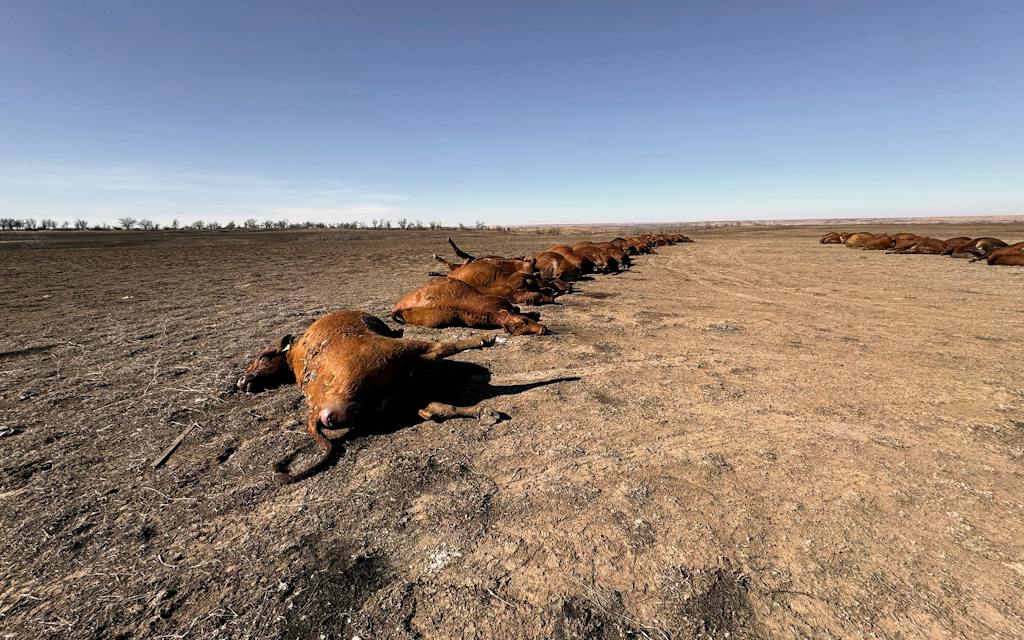
A foot-and-mouth outbreak that began in one sub-county has now closed every cattle market, butchery and loading point in one of Uganda's busiest livestock transit districts — just as parents were counting on selling animals to pay third-term school fees.
An indefinite ban, announced on a Tuesday
On Tuesday, 15 September 2026, Nakasongola District imposed a total, indefinite ban on the movement of livestock across all of its sub-counties. The order, announced by Resident District Commissioner Festus Bandeeba on behalf of the District Security Committee and the district Veterinary Department, followed laboratory confirmation of foot-and-mouth disease (FMD) in the district.
The numbers attached to the announcement are what make this more than a routine administrative notice. According to Mr Bandeeba, the outbreak has so far killed 55 cows and affected roughly 1,300 animals across five sub-counties — Wabinyonyi, Kakooge, Nakitoma, Nabiswera and Lwampanga. That is a substantial geographic spread for a disease that, two weeks earlier, appeared to be contained.
The earlier quarantine, issued on 2 September 2026, had targeted Wabinyonyi Sub-county alone. Within thirteen days the containment line had failed, and the district's response escalated from a single sub-county cordon to a district-wide shutdown. Under the new order, cattle markets are closed, butcheries are closed, and trade in all animal products within Nakasongola is prohibited until the outbreak is brought under control. No end date has been set.
Crucially, the ban is not only about animals inside Nakasongola. "The livestock movement ban cuts across all Sub-counties in Nakasongola," Mr Bandeeba said. "Because the District is a transit route for livestock from other districts, the security teams are under instruction not to allow any trucks unloading or loading livestock through the major transit routes." Both farmers and traders, he added, were cautioned against flouting the guidelines.

School fees and the timing problem
Quarantines are never convenient, but this one arrived at a particularly cruel point in the household calendar. Third term has just opened, and across the cattle corridor the ritual is familiar: a family identifies an animal it can spare and converts it into school fees, uniforms and scholastic materials.
Nakasongola LC5 Chairperson Rogers Kulaba Ssemanda named the problem directly. "It is unfortunate that the FMD has struck at a time when several of the parents who derive their respective livelihood from the livestock industry are taking their children to school," he said. He did not, however, suggest any alternative: "The District security team and the other stakeholders are already aware of the inconvenience and challenges that come with the quarantine. We have no other option outside the quarantine."
That is an honest statement of the bind. A movement ban is the only tool a district has that reliably slows FMD transmission, and it works by destroying the market it is protecting. The cost falls hardest on households that cannot hold an animal for six months waiting for the market to reopen.
The transit corridor nobody is policing
The most pointed criticism in this week's reporting came not from an official but from a farmer. Stephen Misanga Kato, a livestock keeper in Nabiswera Sub-county, told the Daily Monitor on 15 September that individual farmers are doing their part on vaccination while the state is not doing its part on movement control.
"We may not effectively fight the FMD disease in Nakasongola District if we fail to check the animals in transit through Nakasongola," Mr Kato said. "Our efforts as individual farmers to embrace the FMD vaccination campaign should not be paralysed by the ineffectiveness of particular guidelines meant to check the livestock in transit."
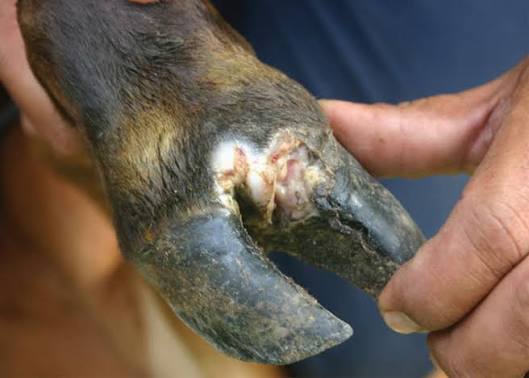
This is the structural weakness at the centre of Uganda's FMD problem. Nakasongola sits on trunk routes carrying cattle from the western and northern rangelands toward Kampala's abattoirs. Animals pass through constantly, under a movement-permit system that depends on paper documents issued at origin and inspected — when they are inspected at all — at improvised checkpoints. A permit certifies that an animal came from somewhere; it does not certify that the animal is not incubating FMD.
The result is an asymmetry that farmers experience as unfairness. A farmer who vaccinates pays a real cost and still cannot protect his herd, because the exposure arrives on the road. Over enough cycles, that erodes voluntary participation in vaccination campaigns.
The arithmetic that has never worked
Uganda has known the cost of controlling FMD properly for years. In February 2024, Agriculture, Animal Industry and Fisheries Minister Frank Tumwebaze told Parliament that his ministry needed roughly Shs671 billion to buy vaccines for an estimated 44 million susceptible animals, vaccinated twice a year — the biannual cycle the virus's short immunity window demands. Cabinet subsequently approved Shs10 billion for vaccine purchases targeting high-risk areas.
That is not a funding shortfall; it is a different programme altogether. Ten billion shillings against a Shs671 billion requirement is roughly 1.5 percent of the identified need. What it buys is a targeted, reactive campaign in districts already burning — which is a rational use of a small budget, but structurally guarantees that the ring of protection is always narrower than the ring of exposure.
The government's answer to that gap, announced this month, is to shift part of the cost to farmers. On 8 September 2026, Mr Tumwebaze clarified the terms of a new FMD cost-recovery scheme: Shs8,000 per head of cattle or pig and Shs4,000 per goat or sheep, per vaccination cycle, paid into a revolving vaccine account, with government continuing to fund cold chain, surveillance, laboratory work and registration. Over the mandatory six-month cycle, that is Shs16,000 per head of cattle per year, and payment is to be digital rather than cash.
For a Nakasongola farmer with twenty head, that is Shs320,000 a year — before any of it translates into a market he is allowed to sell into. The scheme is defensible on public-finance grounds and may well be the only way to get to national coverage. But it will be judged by farmers on a simple test: does paying it mean the markets stay open? This week in Nakasongola, the answer was no.
A district that has been here before
Nakasongola is not an unlucky outlier but a chronically affected corridor district. An outbreak in January 2024 triggered a quarantine that ran roughly a year, lifted on 27 January 2025. Nineteen months later, the district is locked down again. The pattern repeats across the corridor: Ntungamo spent eight months under quarantine before restrictions lifted in August 2026, and more than 22,000 FMD cases were recorded nationally between 2010 and 2025.
What the losses actually look like
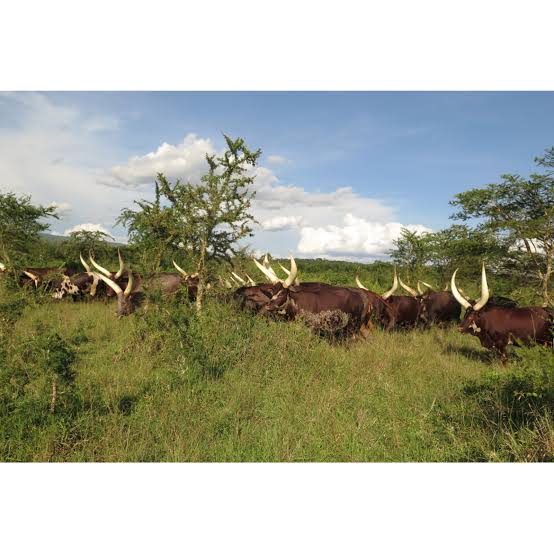
Published research gives a sense of what the 1,300 affected animals represent beyond the 55 deaths. Infected cattle have been documented losing about 42 percent of milk yield for roughly twelve weeks.
The sharper losses come from distress selling. Work on the Isingiro cattle marketing chain found bulls and cows salvage-sold during FMD episodes at roughly 83 and 88 percent below market value respectively — annual losses in the order of US$196 for small herds and US$1,553 for medium farms. A Soroti study put average household loss at about US$323.
The export ceiling nobody can raise
The quarantine also has a longer shadow. Uganda's meat and edible offal exports were worth only about US$5.03 million in 2024 — a rounding error against a global halal market valued above US$3 trillion. Every ambition the country has voiced this year about breaking into Gulf and Ethiopian meat markets runs through disease freedom, and disease freedom runs through a functioning National Livestock Identification and Traceability system. Uganda has the enabling Act. What it does not have, at scale, is the ear tags, the database and the checkpoint discipline that would let an importing country verify where an animal has been. The link between Nakasongola's roadblocks and a Gulf importer's desk is not abstract: the same missing infrastructure explains both.
What would break the cycle
Three things would change the arithmetic, and none are new ideas. The first is transit control that matches the vaccination ask — permanent, staffed inspection points on the corridor routes with the authority to turn trucks back. Farmers are already paying; enforcement is the reciprocal obligation.
The second is vaccine supply matched to circulating serotypes. FMD in East Africa is dominated by SAT serotypes whose antigenic drift can render a mismatched vaccine near-worthless. Until Uganda's planned local production capacity at Mpigi delivers, matching depends on timely typing of field isolates — laboratory work the cost-recovery scheme explicitly leaves on the government's side of the ledger.
The third is compensation or credit for quarantined households. A district that tells a family it may not sell its only liquid asset in the month school fees fall due has levied a tax on that family for a public good, and nothing in the current framework recognises it. The Uganda Agriculture Insurance Scheme remains weighted toward crop and weather-index products; livestock disease cover reaching corridor smallholders is, for practical purposes, absent.
Until those three gaps close, the sequence that played out this week in Nakasongola will keep repeating: a sub-county outbreak, a narrow cordon, a failed containment, a district-wide shutdown, and a farmer in Nabiswera explaining, correctly and without being heard, that he did everything he was asked to do.
Published By | Features Editor