Written By | Staff Writer
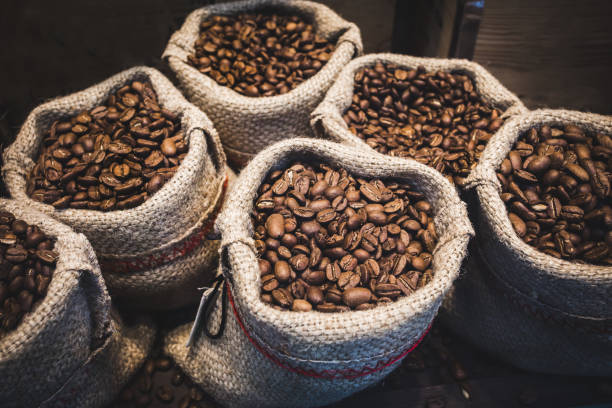
Coffee shipments fell 12.4 percent in September to 735,435 bags, but a price per kilo roughly 7 percent above last year softened the blow to earnings.
Markets and Trade
Uganda's coffee exporters shipped 735,435 bags of 60 kilogrammes in September 2026, earning US$186.9 million (about Shs723 billion), according to figures from the Coffee Department at the Ministry of Agriculture, Animal Industry and Fisheries, reported on 30 October by CEO East Africa Magazine. That is 12.4 percent fewer bags than the 853,543 shipped in September 2025, and earnings fell 13.9 percent from US$202.6 million a year earlier.
The headline looks gloomy, but the detail is more interesting. September's volume was marginally above the ministry's own forecast of about 700,000 bags, and earnings edged above August's US$181.7 million. Arabica shipments jumped 56 percent, partly cushioning a smaller robusta harvest. The month offers a clean look at how a sector that earned a record last year is settling into a leaner, more price-dependent phase.
What the September numbers actually say
Start with the arithmetic. Divide September's earnings by the weight shipped (735,435 bags at 60 kilogrammes, or roughly 44.1 million kilogrammes) and the implied average export price comes to about US$4.24 per kilo. This is a calculation from the published figures rather than a number the ministry reported. Run the same sum on September 2025 and the price was about US$3.96. On that basis, exporters earned roughly 7 percent more per kilo this September than last, yet total revenue still fell because the volume drop was steeper than the price gain.
August tells a similar story. Volumes fell 13.6 percent to 737,766 bags, while earnings fell a smaller 10.3 percent to US$181.7 million, according to the ministry report summarised by Uganda Business News on 1 October. The average export price rose to US$4.1 per kilo from US$4 in July, and was 3.7 percent higher than a year earlier. Taken together, August and September delivered about 1.47 million bags and some US$369 million.
The twelve-month picture is steadier. In the year to August, Uganda exported about 8.1 million bags worth US$2.1 billion. Volume was up 1.6 percent, but value was down 5.2 percent. In other words, the country is moving slightly more coffee than a year ago and being paid somewhat less for the whole basket, a gap that the recent monthly price improvement has only begun to narrow.
A thinner robusta crop, a record base year
Robusta is the engine of Uganda's coffee trade, making up 92.3 percent of August volume. Robusta shipments that month fell 14.2 percent to 680,945 bags, while arabica fell 5.2 percent to 56,821 bags, per the ministry data. September reversed the arabica trend: the 56 percent rise in arabica shipments reported by CEO East Africa could not offset the robusta decline.
Why is robusta lighter? Officials and analysts offer two overlapping explanations. The first is weather. Agriculture Minister Frank Tumwebaze has blamed prolonged drought and high temperatures in parts of Greater Masaka, Kyotera, Sembabule and Luwero, saying the dry conditions hurt flowering, cherry development and bean filling, leaving output about 10 percent below normal in affected areas. The ministry says the main harvest in Greater Masaka and the south-west has now ended, which helps explain why it expected September to come in near 700,000 bags, roughly 17 percent below the same month last year.
The second explanation is statistical. The International Coffee Organization has described the decline as largely a return to normal after an exceptionally high benchmark. Uganda shipped a record 8.26 million bags in the 2024/25 coffee year, helped by strong production and by stock releases when prices were high. The ICO says the drop may be better read as normalisation than collapse. Both stories can be true at once: a record year pulled stocks out of the system, and a dry season then thinned the following crop.
Where the coffee goes
The destination pattern in August, the latest month with a full breakdown, shows how exposed Uganda remains to a handful of buyers. Italy remained the top market but its share slipped to 25.2 percent from 29.3 percent in July. Sudan took 15.2 percent, Germany 9.9 percent and India 5.7 percent, up from 4.1 percent. Europe received 63 percent of shipments and African countries 23 percent.
India's rising share is a small but noteworthy signal. Diversification toward Asia and within Africa reduces dependence on European buyers, who are also the markets with the strictest sustainability and traceability requirements. At the same time, a 15 percent share for Sudan is a reminder that regional demand can be volatile, and that exporters need payment and logistics certainty in markets with their own instability.
What farmers are seeing at the farm gate
For growers, the relevant number is not the export price but what the trader pays at the gate. In August, robusta kiboko (dried whole cherry) averaged Shs5,750 per kilo, up from Shs5,500, and robusta FAQ (fair average quality, hulled) rose to Shs12,000 from Shs11,500. Arabica parchment averaged Shs15,500. These are modest improvements, but they arrive when many farmers in the worst-hit districts have less coffee to sell. A better price on a smaller harvest does not restore household income, and farmers who borrowed against the crop face the same repayment calendar regardless.
The ICO's composite indicator price averaged 287.29 US cents per pound in August, nearly unchanged from July. That stability is helpful, but the Coffee Department notes that rising supply from Brazil and Vietnam continues to press on prices. The ICO estimates world production in 2025/26 at 183.6 million bags, a surplus of about 3 million bags. If that surplus materialises, the room for further price gains is limited, which makes volume recovery more important for Uganda than waiting for the market to lift revenue.
Why it matters beyond the farm
Coffee is Uganda's largest single agricultural export, so a run of months with lower earnings reaches well beyond the coffee belt. Fewer dollars earned means less foreign exchange inflow for a shilling that has been under pressure, thinner margins for the exporters and hullers who finance purchases, and less spending power in trading centres across Masaka, Mubende, Luwero and the Mt Elgon region. Because earnings are priced in dollars but farmers and processors pay costs in shillings, the combination of volume decline and currency swings can squeeze middlemen quickly.
There is also a policy dimension. The government has set an ambition to lift coffee output well beyond the current 8 to 9 million bags a year, backed by large seedling distribution drives. Those trees will take years to bear. In the near term, the figures argue for attention to the practical drivers of yield: water, mulching and shade management, rehabilitation of ageing trees, and access to affordable credit. September's data suggests that weather resilience, not only planting, is what determines how many bags reach Entebbe and Mombasa each month.
What to watch next
Three indicators will show whether September was a trough or a trend. First, October and November shipments, which will reveal how much of the smaller south-western harvest has already cleared. Second, whether the monthly average export price holds above US$4 per kilo as Brazilian and Vietnamese supplies build. Third, whether the arabica surge in September proves durable or reflects timing of harvest in the Mt Elgon and Rwenzori highlands.
For now, the figures carry a measured message. Uganda is not losing its place as a major African coffee exporter, and prices are firmer than a year ago. But after a record season, the sector is learning that volume can swing quickly with the rains, and that a stronger price per kilo only translates into better livelihoods if farmers have coffee left to sell.



