As the Ministry of Agriculture rolls out insecticide to 41 high-risk districts, a dry spell, a threat of arrests for shortchanging farmers and a decades-old compliance problem will decide whether the money works.
Agriculture
On 6 October 2026, the Ministry of Agriculture, Animal Industry and Fisheries (MAAIF) formally launched the distribution of deltamethrin, a synthetic insecticide that kills ticks, biting flies and tsetse flies, to 41 districts judged at highest risk of trypanosomiasis. The launch, led by State Minister for Animal Industry Bright Rwamirama and reported by New Vision and Nile Post, covers districts in Lango, Acholi, Karamoja, Ankole, the Murchison Falls area and parts of Buganda. Officials said the first phase reaches six sub-regions, with more districts to follow in a later quarter of the 2026/27 financial year.
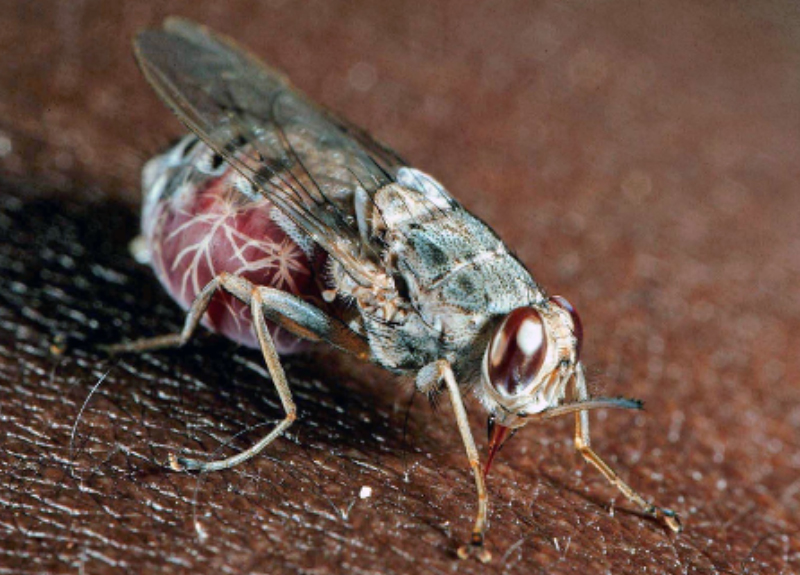
The announcement is a livestock story, but it is also a story about money and trust. For a pastoralist in Kaabong or a mixed farmer near Murchison Falls, a tsetse bite can mean nagana, a wasting disease that cuts milk yields, stunts calves and kills untreated animals. Tsetse also carries sleeping sickness to people. The question hanging over this week's launch is not whether the chemical works, but whether it reaches the animal in the right dose.
What is new this week
The newest element is the roll-out itself and the unusually blunt warning that came with it. According to New Vision, Rwamirama told officials that veterinary officers who charge farmers extra fees for the free chemical would face arrest. Nile Post quoted him more sharply: any Chief Administrative Officer found giving farmers an under-dose and keeping the rest for sale would be arrested. Those are not routine remarks. They suggest the ministry has heard, or fears, that free inputs are being diluted or resold before they reach cattle.
New Vision also reported that the dry spell between July and September 2026 may have contributed to the re-emergence of tsetse in some areas, a link the paper presented as a possibility rather than a finding. The reasoning is familiar to veterinarians. In dry months, flies concentrate near the shrinking number of water points and wooded riverbanks, which are exactly where cattle are driven to drink. Fewer places for animals to go can mean more bites per animal. The dry spell, which earlier reporting linked to pasture shortages, falling milk deliveries and cattle deaths in the cattle corridor, therefore has a disease dimension that has received less attention.

A programme with a paper trail
This is not Uganda's first push. In December 2025, the government launched what Nile Post and allAfrica described as a Shs2.4 billion tsetse control drive amid a renewed sleeping sickness risk. The two December reports, however, give different operational figures. One described 20,000 litres of deltamethrin-based acaricide and 65 at-risk districts; the other cited 120,000 litres and 78 high-risk districts. The reports agree on the Shs2.4 billion budget and on the target zones, including Ankole, Teso and Lango and the districts around Murchison Falls National Park. The difference matters, because it makes it hard for an outsider to judge how far this week's 41-district phase falls short of, or sits within, the larger plan.
The December reports also carried a funding warning. Officials said that at least Shs5 billion a year for five years would be needed for sustained control, more than double the initial outlay. They described a patchy map of progress: severe challenges in Lango, Acholi, Teso, Karamoja and West Nile, with significant improvements in Busoga, Bukedi, Bunyoro, Ankole and Kigezi. On people, officials said there had been no chronic sleeping sickness cases in five years but two acute cases near national parks in March of that year.
Dr Robert Wangoola Mandela, the ministry's assistant commissioner for trypanosomiasis, has repeatedly framed the goal as vigilance. In December he cautioned that even where the vector and the disease appear to be declining, control measures must continue to prevent resurgence. Officials also stressed this week that chemicals alone cannot eliminate the disease; surveillance and farmer sensitisation remain essential to stopping reinfestation.
Why compliance, not chemistry, is the weak link
The most telling line in the December coverage was the officials' own diagnosis of failure. Resurgence occurs, they said, when farmers abandon treatment after government-led spraying exercises. Deltamethrin on a cow's skin wears off; ticks and flies return when the next rainy period arrives. A one-off campaign delivers a temporary dip in disease and a long-term false sense of security.
That is why the threat of arrest for under-dosing matters. Acaricides are also sold commercially, and a free supply in the hands of a district officer is a tempting resale item when the private price is high. If chemical meant for many animals is thinned or diverted, farmers see their cattle still infested and conclude that the government chemical does not work, which reinforces the habit of abandoning treatment. The credibility of the programme is therefore bound up with district-level honesty.
There are also structural limits to what a minister's warning can achieve. Districts have few veterinary officers, many of whom lack transport. Farmers in remote parts of Karamoja or Acholi may live many hours from a sub-county office. Without a practical way for farmers to verify the dose they are entitled to, or to report a shortfall, the arrest threat remains a deterrent only as strong as the monitoring behind it.
What it means for farmers and markets
For smallholders, the economics are straightforward. A cow lost to nagana or tick-borne disease is a large portion of a household's capital. In the cattle corridor, where drought has been reported to cause heavy cattle deaths and collapsing milk deliveries, animals weakened by drought are more vulnerable to disease. Effective vector control is cheap insurance relative to the cost of replacing stock, particularly as restocking programmes face their own corruption and pricing problems.
For the dairy and beef value chain, disease burden is a hidden brake. Uganda's milk exports and processors rely on herds that stay productive through dry months. Tick- and tsetse-related disease reduces milk yield per cow and raises mortality, which pushes up the cost of raw milk delivered to processors. It also complicates the country's ambitions to meet the health requirements of export markets, where buyers want evidence of disease management across production zones.
There is a wider economic dimension in tourism and conservation. The 41-district list includes areas bordering wildlife parks, where tsetse live in woodland and move between wildlife, livestock and people. Officials have linked the disease to impacts on tourism. A strategy that protects cattle on park edges also protects the human communities who work and travel there.
What to watch
Three things will indicate whether this phase succeeds. First, whether the ministry publishes the volumes actually delivered to each district, which would give farmers and local councils a way to check whether they received their entitlement. Second, whether any official is in fact held to account for diversion or under-dosing; a single prosecution would give the warning real weight, while silence would drain it. Third, whether the Shs5 billion annual funding that officials said was needed in December materialises in the 2026/27 budget cycle, or whether control reverts to an episodic, donor- and campaign-dependent pattern.
The ministry has also said additional districts will receive supplies later in the 2026/27 financial year, which means the 41 districts named this week are a first tranche, not the whole map. Farmers outside the first phase, including those in areas where the dry spell has been severe, will be watching for their turn.
The deltamethrin launch is a modest piece of agricultural policy: a chemical, a list of districts and a warning. Yet it addresses one of the least glamorous constraints on the livestock sector. If the dose reaches the animal, and farmers keep dipping or spraying when the cameras leave, Uganda's herds will be better placed to survive the next dry season. If not, the money will have been spent on a temporary dip in a disease that has proved patient.
Published By | Features Editor