Agriculture
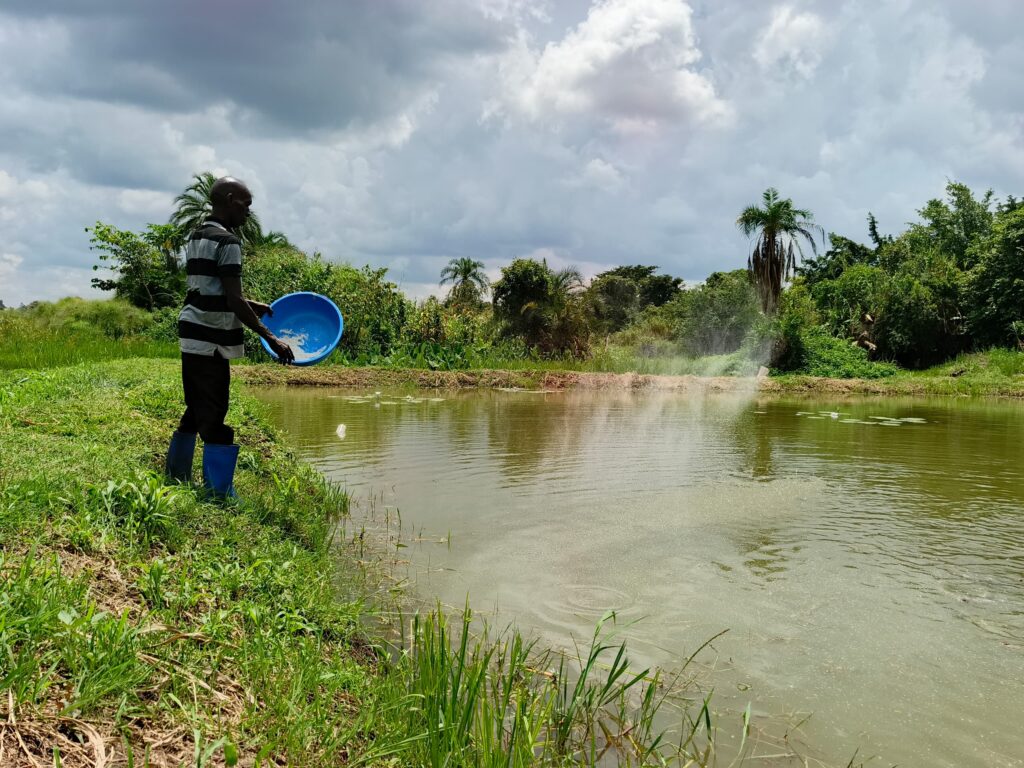
The order handed down in Agirigiroi village, in Kapir sub-county in Ngora District, was simple enough to state in a single sentence: farmers cultivating in the local wetland must harvest whatever is left standing and clear out by December 30, 2026. Behind that sentence, however, sits a conflict that has quietly reshaped rural livelihoods across Uganda for years — the collision between crop farmers who depend on wetland moisture to survive an increasingly erratic climate, cattle keepers who need the same land for grazing, and a government that has decided wetlands are worth more intact than cultivated.
The directive was issued by Ngora Resident District Commissioner Josephine Omara during a mediation meeting convened after repeated, and at times violent, disputes between crop farmers and cattle keepers over access to the wetland. Some of the farmers accused of cultivating illegally in the marshland apologised at the meeting and pledged to comply. Community members largely welcomed the intervention, arguing that firmer enforcement of wetland protection rules would restore peace between the two groups and help conserve an environment that both ultimately depend on. But the Ngora case is not an isolated local squabble — it is a small, sharply drawn instance of a nationwide reckoning over who gets to use Uganda's shrinking wetlands, and on what terms.
A resource that vanished, then partly came back
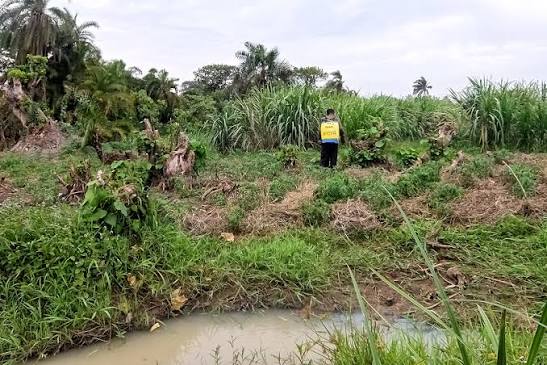
Uganda's wetlands have been in near-continuous retreat for a generation. National coverage stood at 15.5% of the country's land area in 1994; by 2016 it had fallen to just 8.9%, and independent analysis puts the loss between 2000 and 2021 at roughly 7,500 square kilometres — about 750,000 hectares, or nearly a quarter of the country's historical wetland area. The National Environment Management Authority (NEMA) attributes the bulk of that loss to subsistence and commercial farming, sand mining, brick-making and the outward creep of urban settlement.
More recently, the trend has partially reversed. NEMA data cited around World Wetlands Day 2026 put national wetland coverage back up to between 13% and 13.9%, crediting a restoration campaign that has rehabilitated more than 55,000 hectares of degraded marshland and marked over 3,000 kilometres of wetland boundaries with concrete pillars — a physical, unambiguous line between where cultivation is permitted and where it is not. The Ngora directive sits downstream of that campaign: it is what boundary enforcement looks like when it reaches an individual village rather than a national statistic.
The law is blunt, and unforgiving on compensation
Uganda's legal framework gives NEMA and local administrators little room for compromise. Section 36 of the National Environment Act prohibits any person from reclaiming a wetland or erecting or demolishing any structure fixed in, on, under or above a marshland without authorisation. Penalties for violating the provision can reach Shs600 million or 12 years' imprisonment. Critically, the government has taken the position that anyone found cultivating or building in a protected wetland is an “offender” under the law and is therefore not entitled to compensation when evicted — a policy NEMA has defended even as it has triggered protest and, in some cases, violent confrontation between residents and enforcement teams in and around Kampala.
That no-compensation stance is precisely what has made wetland enforcement so combustible elsewhere in the country. In Kasese District, expanding cultivation and livestock-keeping have sharpened resource competition between Bakonzo crop farmers and Basongora pastoralists from neighbouring Nyakatonzi sub-county — a dynamic that mirrors what has just played out in Ngora, where the same underlying pressure (too little usable land for two groups with legitimate but conflicting claims on it) produced the same result: a government-imposed deadline rather than a negotiated land-sharing arrangement.

Selective enforcement, and who gets to keep farming
The most persistent criticism of Uganda's wetland crackdowns is not that they exist, but that they appear to fall unevenly on rich and poor. Investigations into wetland use around Kampala have documented commercial flower farms linked to prominent, well-connected owners expanding into protected marshland with little apparent enforcement pressure, even as poorer smallholders and informal settlers face eviction orders with no compensation and, in some documented cases, no advance notice. A widely cited assessment of the pattern summarised the perception bluntly: “the rich are untouchable.” Whether or not that perception is fully accurate in every district, it colours how directives like Ngora's are received by the farmers on the receiving end — as, potentially, selective justice rather than even-handed conservation.
For subsistence farmers, the calculation is also more urgent than it might appear on paper. Wetland fringes retain moisture long after surrounding upland fields have dried out, making them a de facto insurance policy during the kind of prolonged dry spells that have devastated harvests in Karamoja, Acholi and Teso this year and driven hunger deaths and emergency food relief operations in the north. Telling a farmer to stop cultivating a wetland plot by a fixed date, without offering an alternative parcel of land or compensation, is in practice telling that household to absorb a second blow in a year when the rains have already failed them once. That is the tension Ngora's mediation meeting was trying, imperfectly, to manage: protecting a shared natural resource without simply transferring the cost of that protection onto the households least able to bear it.
Why it matters beyond Ngora
Wetlands are not simply idle land pending a decision on who farms it. They filter water before it reaches rivers and lakes, buffer flooding during the increasingly intense rains that have accompanied Uganda's shifting climate, recharge groundwater used for irrigation and livestock, and store carbon in ways that matter to the country's broader climate commitments. Degrading them for short-term cultivation gains can undercut the water security that irrigated and rain-fed agriculture elsewhere in the same district depends on — a trade-off that is easy to state in the abstract and much harder to enforce fairly on the ground, as Ngora's cattle keepers and crop farmers have just discovered.
For policymakers, the episode is a reminder that wetland protection and rural livelihoods cannot be treated as separate policy problems to be solved in sequence — enforce first, worry about farmer welfare later. Without parallel investment in alternative farmland, irrigation for upland plots, or some form of compensation or resettlement support, directives like the one issued in Kapir sub-county risk becoming a recurring feature of Uganda's agricultural calendar: a boundary drawn, a deadline set, and a household left to work out on its own where its next harvest will come from. Community members in Ngora say they want peace between farmers and pastoralists and a healthier wetland. Whether the district, and the country, can deliver both without quietly deepening rural poverty in the process remains the harder question the December 30 deadline has not answered.
Published By | Features Editor